Oxygen facial
A spray treatment A handheld applicator sends out a stream of gas with a mist of serum. "Oxygen facial" is not a brand or a regulated term, so what goes in the machine and in the mist varies from clinic to clinic.
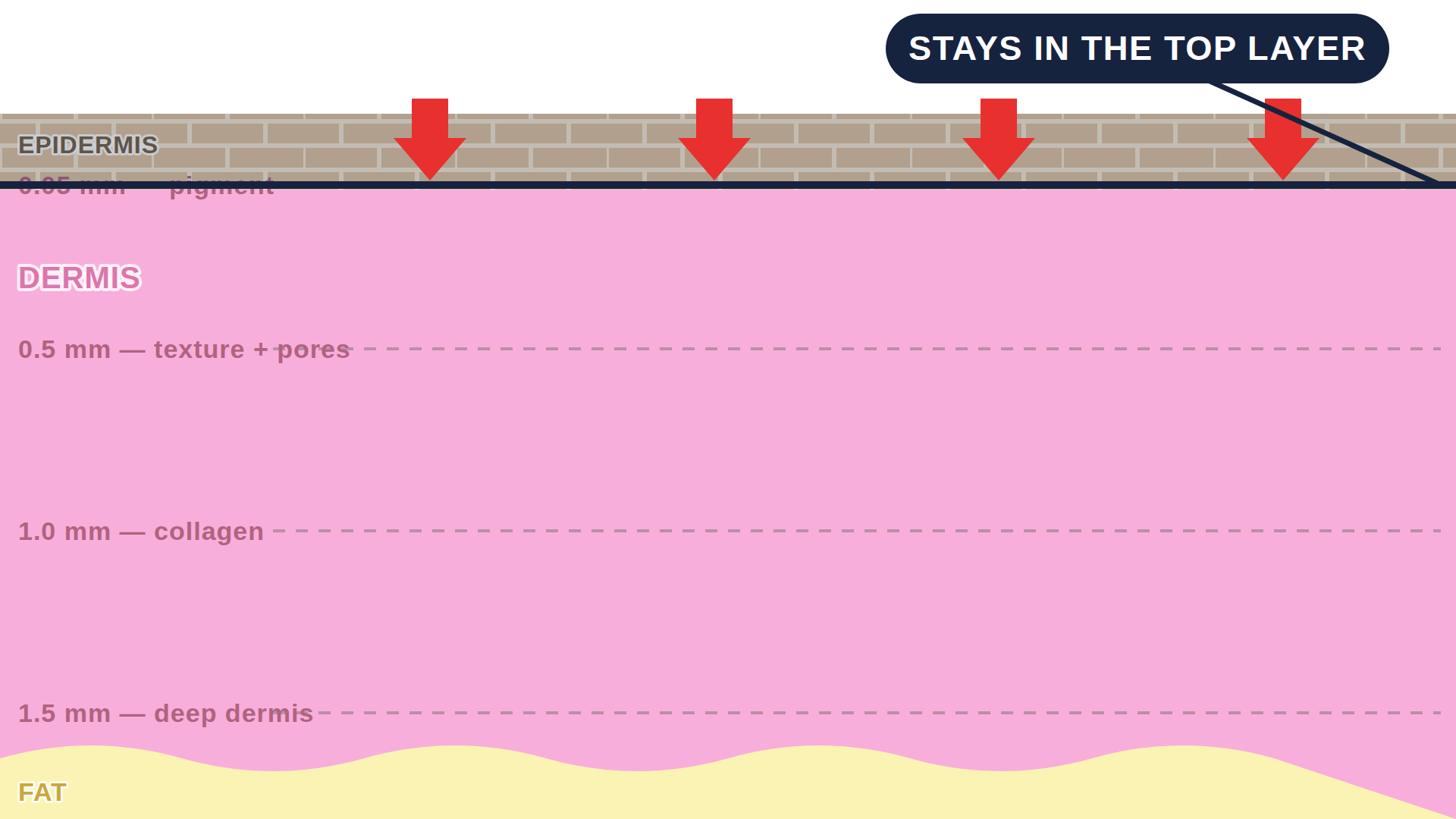
An oxygen facial is a short-lived glow, not a treatment for anything. A wand blows gas at your face along with a fine mist of serum. A HydraFacial is better for clogged pores and rough texture. A spiral tip runs over the skin with an acid solution while a vacuum pulls the fluid and loosened debris away. Nobody has compared the two in a study, and the oxygen facial has no controlled trials at all.
| The difference | Oxygen facial | Hydrafacial |
|---|---|---|
| Cost | No reliable published price | Around $209, self-reported |
A spray treatment A handheld applicator sends out a stream of gas with a mist of serum. "Oxygen facial" is not a brand or a regulated term, so what goes in the machine and in the mist varies from clinic to clinic.

Side by side
Oxygen facial
A spray treatment
A handheld applicator sends out a stream of gas with a mist of serum. "Oxygen facial" is not a brand or a regulated term, so what goes in the machine and in the mist varies from clinic to clinic.
Hydrafacial
A branded machine treatment
A disposable spiral tip is drawn across the skin. Serum is pumped through the tip, and suction pulls the fluid, dead cells and pore contents into a waste jar. The full protocol has seven steps, including a gentle peel, extraction and LED light.
Oxygen facial
Mist, pressure and flush
The mist puts fluid on the surface, so skin looks plumper for a while. The stream pushes on the skin, and the skin flushes in response. None of that needs oxygen. Some machines use concentrated oxygen and some use ordinary air, and nobody has tested whether that matters.
Hydrafacial
Abrasion plus delivery, in a fluid film
The abrasion happens inside a constant film of liquid. The fluid lubricates the surface, carries mild acids and hydrates the outer layer. The same vacuum that clears the fluid also clears debris and pore contents.
Oxygen facial
Not for acne, pigment or lines
Nothing has shown that it treats any of them. It also does not put oxygen into your skin.
Hydrafacial
Not for collagen or lines
An imaging study of eight people looked at the collagen under the skin. At two weeks, it found no visible difference.

Limited evidence. The dry version of the same idea, sanding the surface instead of using liquid and suction. Slightly more abrasive, no serum step, generally cheaper.

Moderate evidence. Reaches the deeper layer and works on indented scars and texture. Real downtime and real discomfort, for a different order of result.
Oxygen facial
None, and it feels like being misted
Cool, damp, painless. People walk out and go straight back to their day.
Hydrafacial
An hour or two of pinkness
It feels scratchy and slightly stinging, with a tug during extraction. Tightness and redness are the usual after-effects. How rough it feels depends on which tip the provider picks.
Oxygen facial
No tested schedule
Usually sold as a single treatment or a package. No study has tested how often to have one.
Hydrafacial
Studies used a course of six
The published protocols all used six treatments, spaced seven days to two weeks apart. None tested the spacing, and none looked at what happens after the course ends. The monthly plan comes from clinics, not from a trial.
Oxygen facial
No reliable published price
No professional society tracks it.
Hydrafacial
Around $209, self-reported
One consumer database lists an average of $209. That figure comes from 261 self-reported reviews. No professional society tracks a price.
Oxygen facial
Hydrafacial
Oxygen facial
Skin gets its oxygen from blood, not from air. The outer layer of skin has no blood vessels of its own. Oxygen reaches it from the vessels in the layer below. The very top is dead cells, which have no use for oxygen. Air already sits on your face all day at about 21% oxygen. Raising that at the surface for 20 minutes does not change what the vessels deliver.
Oxygen facial
Nothing has been published on the cosmetic oxygen facial. No trial, no case series, no complication report.
Oxygen facial
With an oxygen facial you are buying a service, not a technology. The machine is cheap and the supplies are serum. With a HydraFacial you are also buying a supply chain: single-use tips, branded solutions and add-on boosters all come from the maker. That is what sets the price floor.
Oxygen facial
Oxygen facial machines are sold as cosmetic equipment and enter the US market by registration and listing rather than by review. Registration is a paperwork step, not an assessment of whether a treatment works.
Hydrafacial
HydraFacial is listed with the FDA as a Class I powered dermabrasion brush, product code GFE, under 21 CFR 878.4820. That category is exempt from premarket notification. There is no K-number and there are no cleared indications, because no 510(k) clearance was ever required or granted.
Exempt does not mean unsafe or unregulated. Listing rules, manufacturing quality rules and the ban on false labeling all still apply. It does mean the FDA has never evaluated any claim about what this machine achieves.
The only part of the HydraFacial lineage with real FDA clearances is the LED light module. "FDA-cleared HydraFacial" is language from clinics and distributors, not from the manufacturer.
Common questions