Hydrafacial

The Hydrafacial tip works by suction. It loosens debris and lifts it away while putting fluid back, which is why the skin looks damp rather than red afterwards.
A HydraFacial is better for looking good today. A machine sands the very top of the skin, feeds in serum, and suctions the loosened debris away. There is no wound and no peeling. A chemical peel is better for fading brown patches and rough texture for good — but the acid has to injure the skin to do it, and that costs you several days of shedding. No trial has ever compared the two directly.
| The difference | Hydrafacial | Chemical Peel |
|---|---|---|
| Cost | Cheaper, and sold as a course | More per session, plus healing time |
The Hydrafacial tip works by suction. It loosens debris and lifts it away while putting fluid back, which is why the skin looks damp rather than red afterwards.

A chemical peel being brushed on. The solution is painted over the skin and left for a set number of minutes — nothing is passed over the skin and nothing is injected.
Side by side
Hydrafacial
A 30-minute machine treatment
A disposable spiral tip is pressed to the skin while serum is pumped to it. The suction pulls the fluid, dead cells and pore contents into a waste jar. There is a mild acid step, but that is surface exfoliation, not a peel.
Chemical Peel
Acid goes on, then you shed
Acid is put on the skin and left long enough to destroy tissue to a chosen depth. As the skin repairs itself, the new tissue carries the change in colour and texture. The peeling you see is dead skin coming off, not the treatment working.

A peel works on the surface layers. Scars that dip below the skin are missing tissue further down than a peel reaches. The flat marks beside them do respond.

A series of light peels speeds up the shedding of surface pigment, so it helps brown marks far more than gray ones. Done gently and spaced out, it adds to a good home routine rather than replacing it. Done too strongly, especially on deeper skin tones, the peel itself inflames the skin and creates a fresh round of marks.

Light peels, spaced out, speed up the clearing of surface pigment when they are added to creams and sun protection. They are an addition and never a replacement. Depth is the whole issue: a peel strong enough to leave the skin red and peeling can inflame it and leave the patch darker than it started, which is one of the commonest ways melasma gets worse.
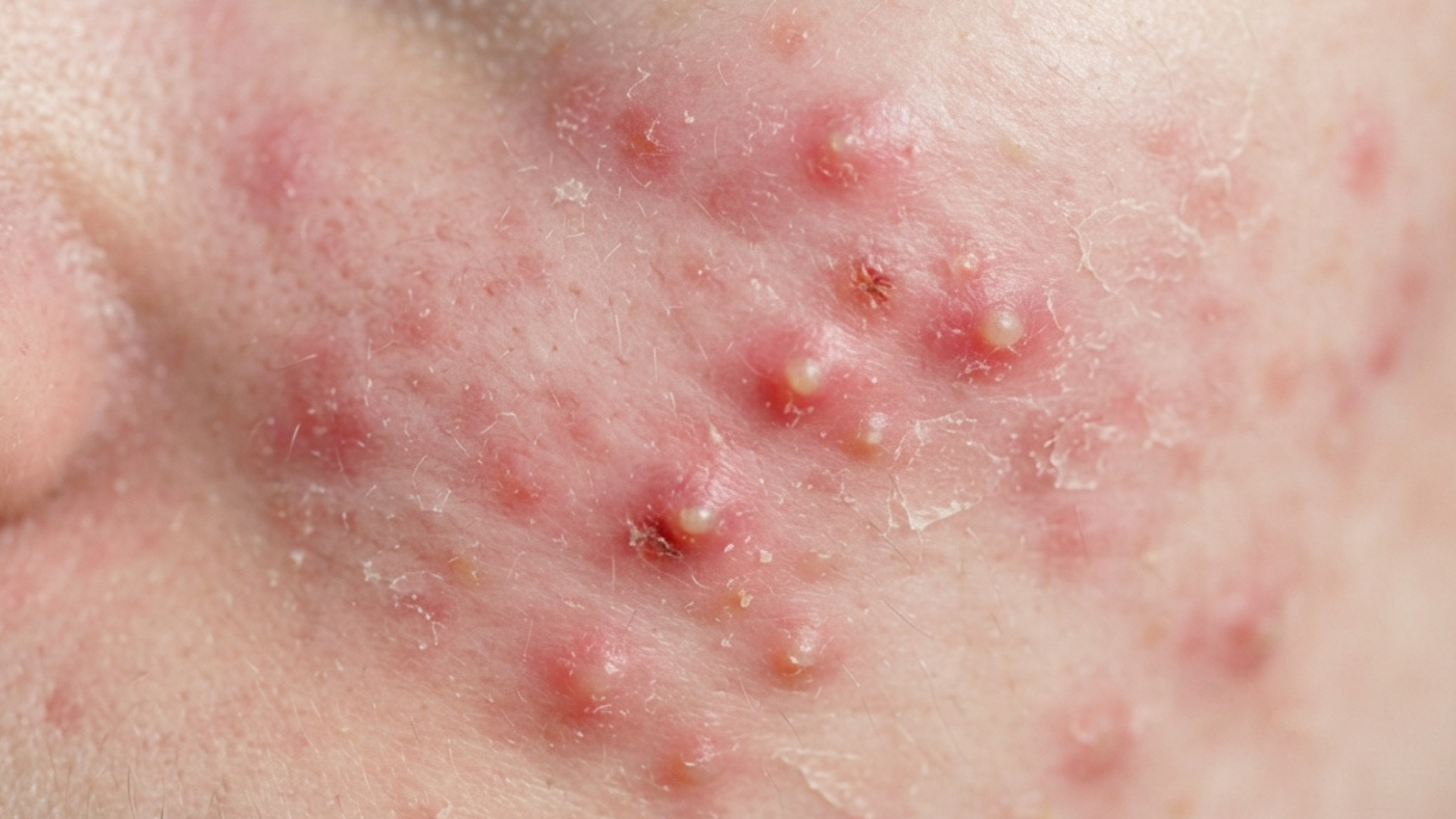
Modest benefit for clogged pores and a better one for the dark marks left behind. Needs repeat sessions, and the benefit fades if the daily treatment stops.

Light peels done around the eye can lift brown pigment over a course of treatments, and they are a reasonable next step when creams have stalled. Settings have to be gentle, spaced further apart and often preceded by weeks of a preparation cream, because over-treating eyelid skin leaves more pigment than it removed. On deeper skin tones, ask directly how many people with your skin tone the clinic treats.
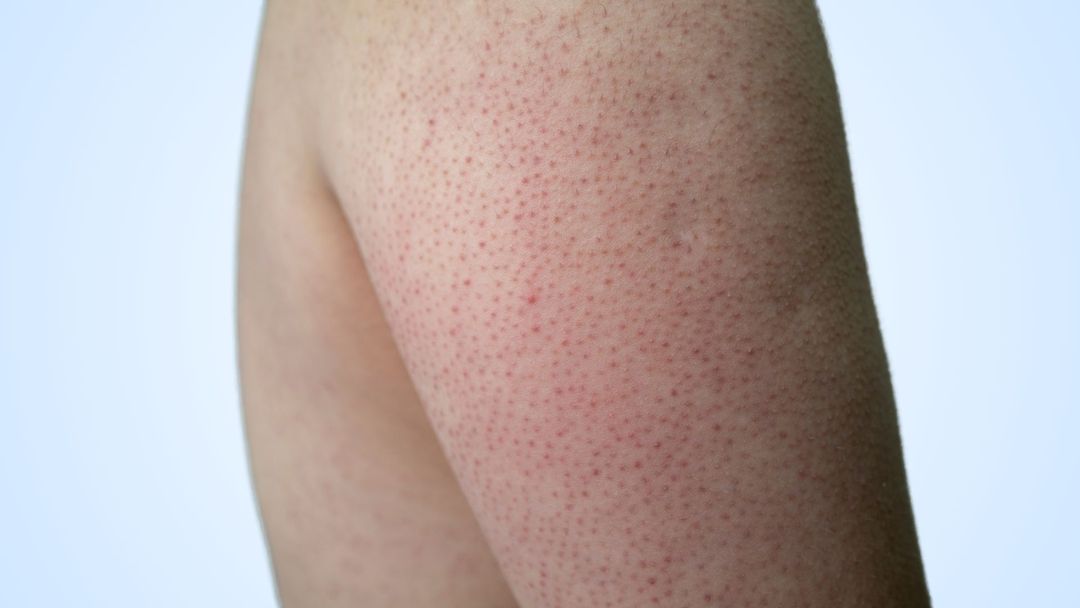
A stronger version of the acid creams, applied in a clinic to the arms or cheeks. It can smooth the texture for a while, and the effect fades in the same way, so the daily cream is still needed afterwards. It is an add-on for people who want a faster start, not a replacement for the routine.

Lightens spots across a whole area rather than one at a time, which suits the backs of the hands, the forearms and the chest where spots are scattered widely. Usually a course rather than a single treatment, and the result is a general evening out rather than each spot disappearing. Depth matters: a peel strong enough to leave the skin raw can leave a darker mark instead.
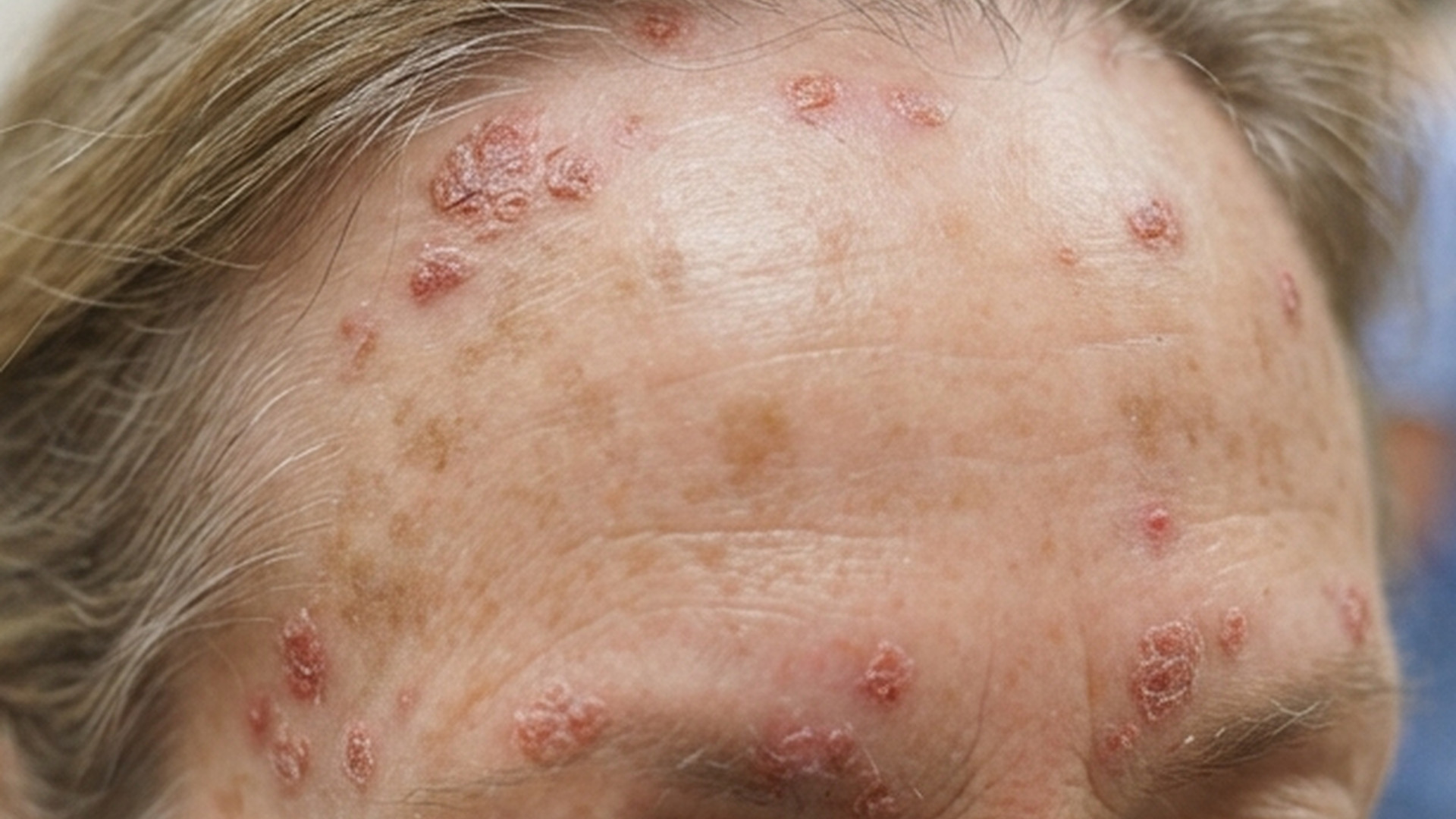
A medium-depth peel takes off the damaged top layer across a whole face or scalp at once, so it treats the field rather than single spots. It is an option when creams have not been tolerated. The skin is red and peeling for about a week, and results depend a lot on who is doing it and at what strength.

Medium-depth peels have some evidence for modest improvement in mature marks, mostly when used alongside another treatment rather than on their own. Because they work by controlled injury, the same pigment cautions apply on deeper skin tones, and a test patch is worth insisting on.
Repeated medium-depth peels smooth the edges of shallow scars and even out the tone around them. The effect on texture is modest next to laser or needling. On this page peels earn their place mostly for the flat marks sitting alongside the scars rather than for the scars themselves.
Hydrafacial
The dead surface layer only
Imaging of eight volunteers measured the surface layer at 9.4 micrometers before treatment and 6.7 straight after. Two weeks later it was 9.8 — back above where it started, with no change in collagen.
Chemical Peel
Whatever depth is chosen in the room
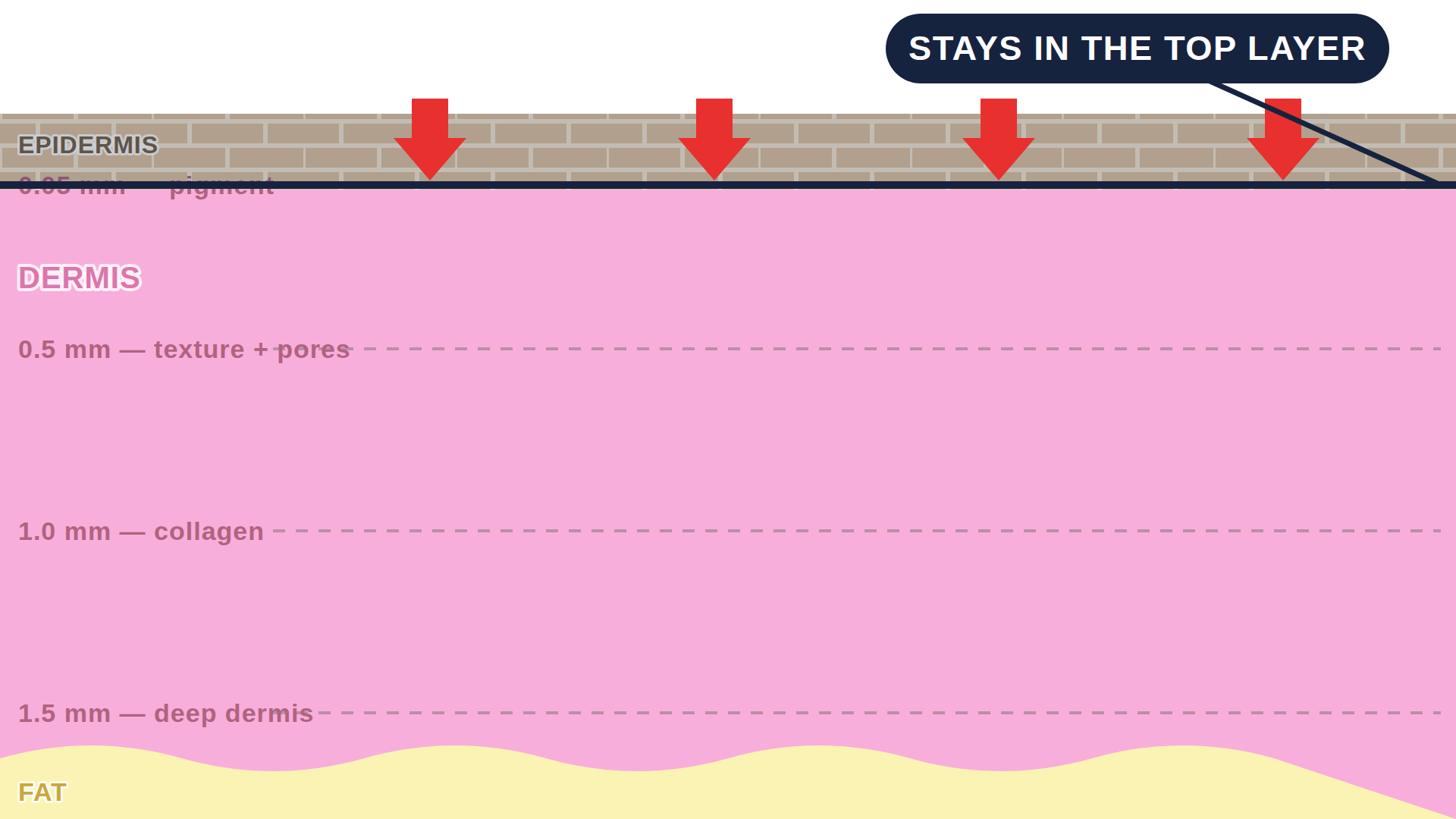
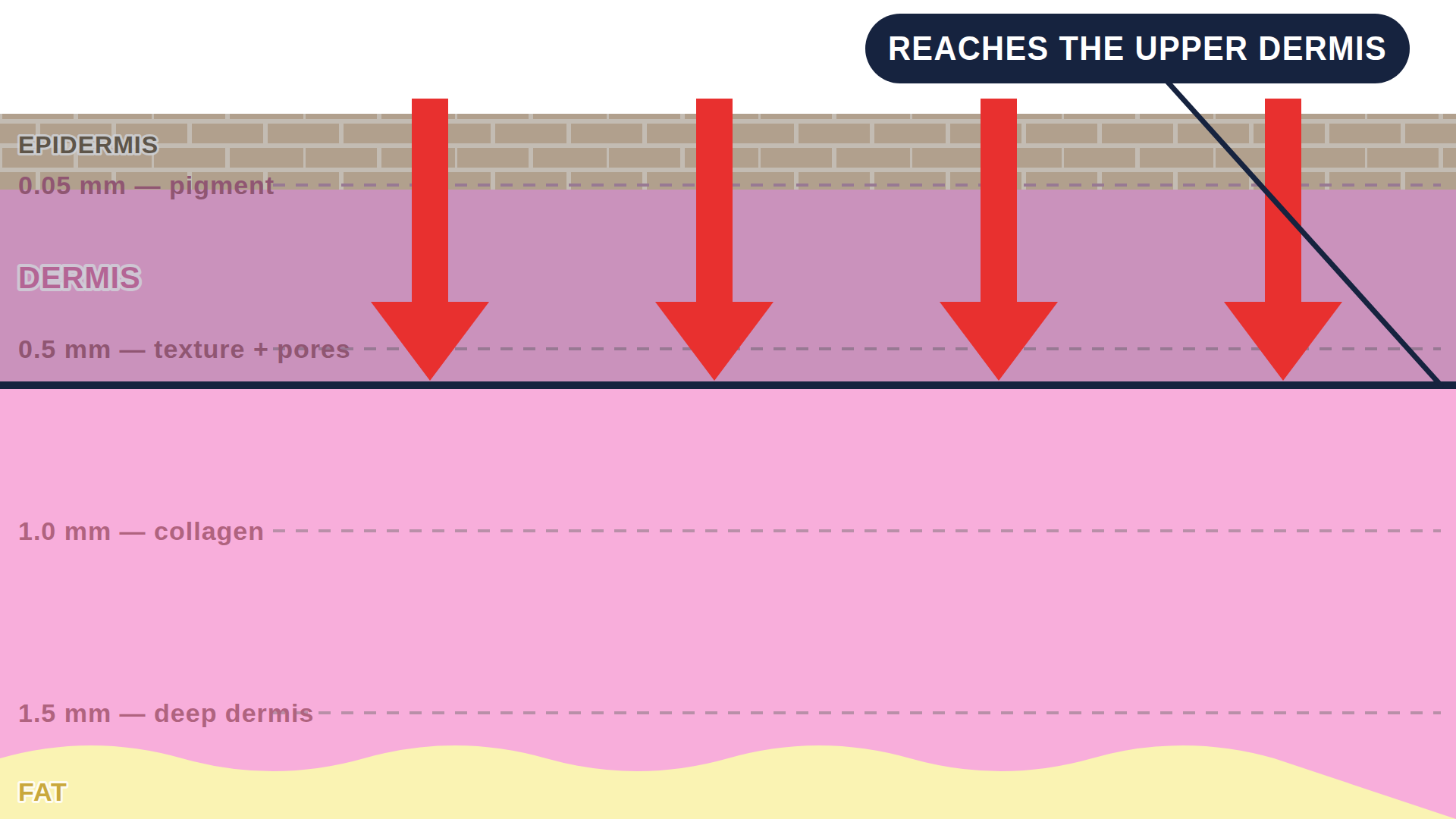
Superficial peels stay in the outer layer. Medium peels reach the upper part of the true skin, and deep peels go further. Each step buys more change and costs more days of looking peeled.
Hydrafacial
Cleaner, smoother, hydrated today
The published evidence is thin, and the maker was involved in much of it. The best result is a 12-week study of 20 adults with mild to moderate acne. The share rated clear or almost clear rose from 20% to 65%. There was no control group.
Chemical Peel
Change that is still there after healing
For melasma in darker skin, a review of 13 studies and 478 people found glycolic acid beat trichloroacetic acid, and both beat hydroquinone cream. Branded peels are the weak spot: the Perfect Derma Peel and BioRePeel have no published studies at all.
Hydrafacial
Gone within about two weeks
The effect fades within about two weeks. This is maintenance, so it lasts as long as you keep booking.
Chemical Peel
As long as the healed skin holds
The new tissue carries the change, so it stays after the shedding stops. Give it 8 to 12 weeks before you judge it.
Hydrafacial
None to speak of
Redness and a tight, scratchy feeling for a few hours is the usual description. Makeup the same day is normal.
Chemical Peel
Days of shedding, longer if deeper
After a superficial peel, expect about 3 to 5 days of redness. A medium peel takes 7 to 10 days to heal, with redness for 15 to 30 days. Deep peels take 14 days or more. Branded peels do not publish their strengths, so no one can tell you which timeline applies.

Limited evidence. The dry version of the same idea, sanding the surface instead of using liquid and suction. Slightly more abrasive, no serum step, generally cheaper.

Moderate evidence. Reaches the deeper layer and works on indented scars and texture. Real downtime and real discomfort, for a different order of result.
Moderate evidence. Aimed at indented scars, which a superficial peel does not touch. More downtime per session, and usually done once the acne itself is under control.
Limited evidence. Sands the surface instead of dissolving it. No peeling and little lasting effect on acne, which is why it is often bundled rather than sold on its own.
Hydrafacial
Cheaper, and sold as a course
Every published protocol used six treatments, a week to two weeks apart. The "once a month" rule comes from clinics, not the maker. RealSelf reported an average of $209 from 261 self-reported prices, and add-ons push that up.
Chemical Peel
More per session, plus healing time
Published protocols use three to six sessions. RealSelf reported an average of $438. The last peel fee the American Society of Plastic Surgeons published was $519, in 2020.
Hydrafacial
Chemical Peel
Hydrafacial
Book a HydraFacial if the question is how you look this week. It leaves you looking good the same day, with no wound to plan around.
Hydrafacial
The HydraFacial machine has no FDA clearance. It is registered as a Class I "powered dermabrasion brush" under 21 CFR 878.4820 and is exempt from premarket review, so there is no K-number. The manufacturer's clearances cover only the LED light modules (K061470 blue, 2006; K072399 red, 2008) and sterile tubing; the abrading, suction and infusion engine has never been the subject of a 510(k).
Exempt does not mean unregulated: registration, device listing, quality rules and the ban on false labelling still apply. What is missing is any FDA evaluation of whether it works, so every therapeutic claim on a clinic page sits outside the basis on which the device is marketed. "FDA-cleared HydraFacial" is a clinic and distributor claim, not one the company's consumer pages make.
Chemical Peel
No chemical peel product has FDA approval, and none has been cleared as a device. In a drug alert on 30 July 2024 the agency said consumers should use peels only under the supervision of a dermatologist or a licensed, trained practitioner. Professional-only products are exempt from consumer ingredient-labelling rules, which is why branded peels do not publish their concentrations. When FDA acts here it acts on the selling: in July 2024 it went after online retailers offering trichloroacetic acid at 50 to 100 percent. The marketing is regulated federally; who may hold the applicator is set state by state.
Common questions
Neither treatment has been through an FDA review of whether it works. That is normal for cosmetic procedures, but it is not what clinic pages imply.