Oligio
Radiofrequency heat through the skin A Korean-made device. Current passes through the tissue to a pad on your body, and the skin's resistance to it makes the heat.
Oligio is a radiofrequency treatment for skin quality. It heats a block of skin gently and steadily, the session is easy to sit through, and it is aimed at crepey texture and mild slackness. Ultherapy is a focused ultrasound treatment aimed at lift. It places heat much deeper, in the layer a surgeon pulls on in a facelift, and that depth is what makes it hurt. Different energy, different depth, different problem solved.
| The difference | Oligio | Ultherapy |
|---|---|---|
| What it is | Radiofrequency heat through the skin | Ultrasound focused to a point |
| What it feels like | Warm, with a buzzing vibration | Sharp, deep pulses of heat |
| How long until it works | One to three months | Two to three months |
| Downtime | None | None, but you may be sore |
| Cost | Usually the cheaper of the two | Usually the dearer of the two |
Radiofrequency heat through the skin A Korean-made device. Current passes through the tissue to a pad on your body, and the skin's resistance to it makes the heat.
Side by side
Oligio
Radiofrequency heat through the skin
A Korean-made device. Current passes through the tissue to a pad on your body, and the skin's resistance to it makes the heat.
Ultherapy
Ultrasound focused to a point
Sound energy does nothing until it reaches the chosen depth, where it makes a tiny spot of heat.
Oligio
A block of tissue, not a plane
Warmest in the skin itself, spreading into the fat below. It cannot be aimed at one layer.
Ultherapy
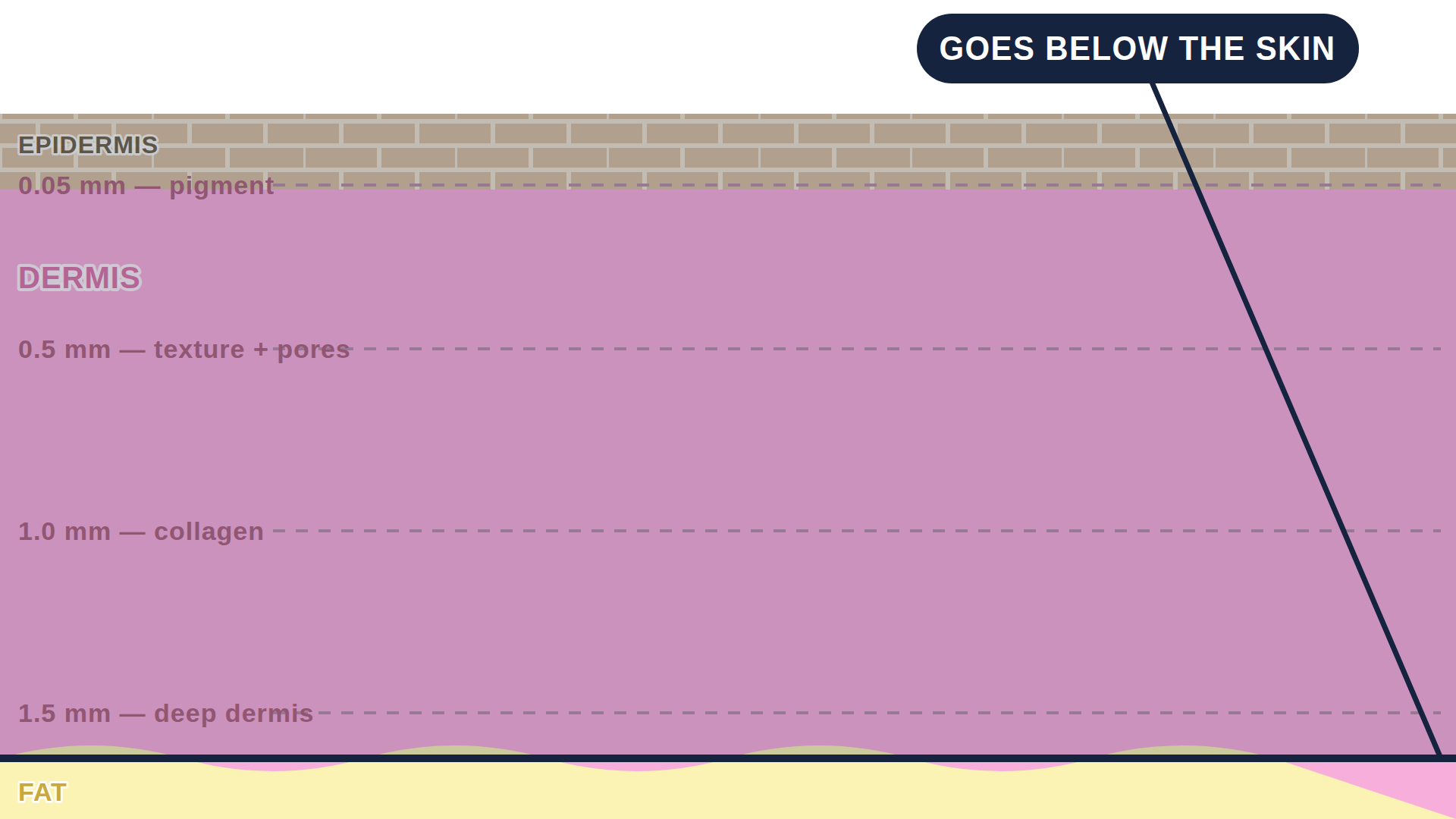
Whatever depth is dialled in
Usually about 1.5, 3 and 4.5 mm. The deepest setting sits under the fat, in the layer that holds the lower face up.
Oligio
Firmer, better-quality skin
Crepey texture, fine lines, a mild tightening across the cheek and jaw.
Ultherapy
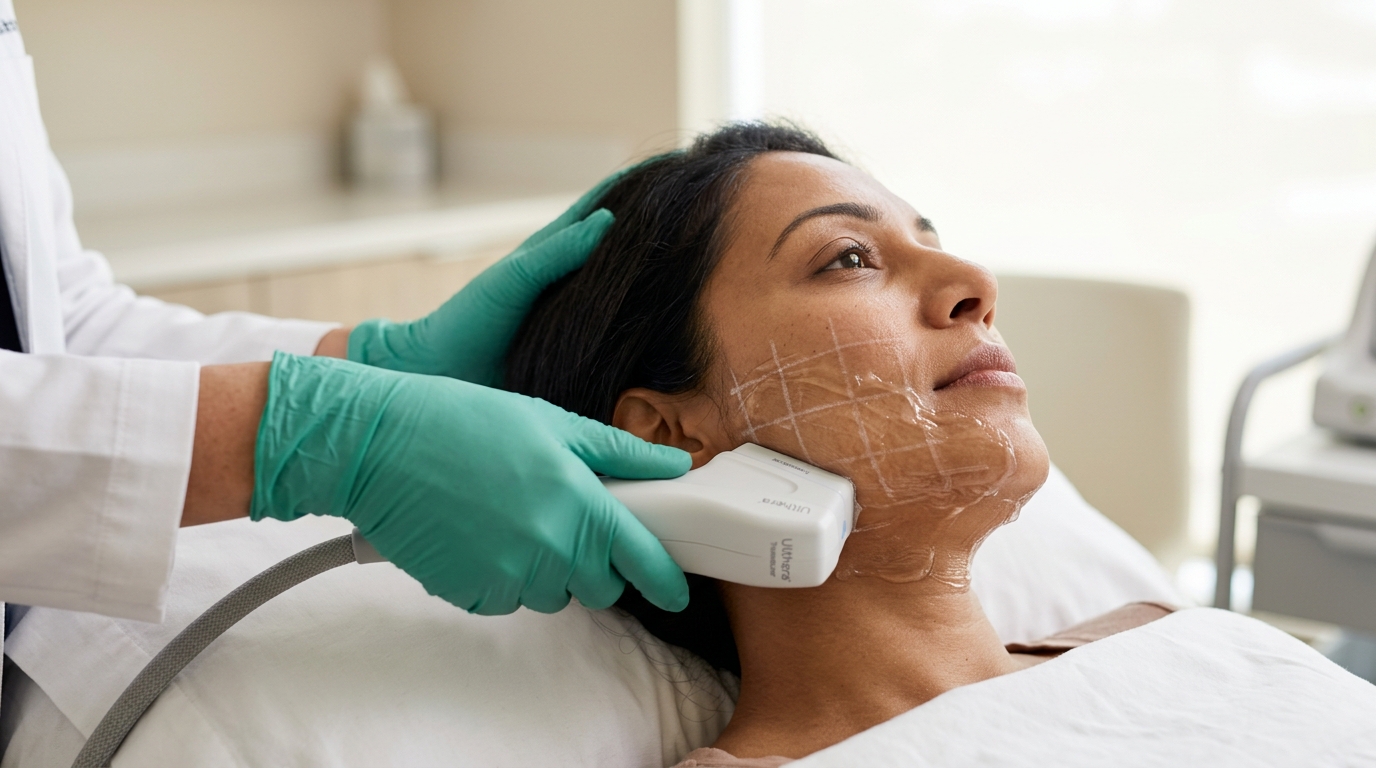
Some lift along the jaw and neck
Jowls, a heavy jawline, a loose neck, a drooping brow.
Oligio
It does not lift a dropped jawline
Ultherapy
It does little for surface texture

Focused ultrasound heats a deep layer to tighten it, aimed at the jaw, neck and brow rather than at lines. The change is modest and takes three to six months to show, and it is nothing like a surgical lift. It can be uncomfortable, and results vary enough that it is worth seeing a provider's own before-and-after photographs.
Strong evidence for lines caused by movement, and no effect on laxity. Frequently done alongside rather than instead.
Oligio
Warm, with a buzzing vibration
The handpiece cools the surface and vibrates as it works, which is designed to blunt the heat. Most people manage without medication.
Ultherapy
Sharp, deep pulses of heat
Numbing cream is standard and many clinics add oral pain medicine. The brow and neck are the worst of it.
Oligio
One to three months
A little tightening in the first weeks, then a slow build.
Ultherapy
Two to three months
Occasionally a small lift on the day, but the real change is the collagen.
Oligio
Six months to a year
It is often sold as regular upkeep rather than a one-off.
Ultherapy
About a year, sometimes longer
Oligio
None
Redness and warmth for a few hours.
Ultherapy
None, but you may be sore
Swelling and tenderness for a few days. Patchy numbness along the jaw can last a week or two.
Oligio
Usually the cheaper of the two
Often priced per number of shots. Ask how many are included.
Ultherapy
Usually the dearer of the two
Priced per area. Face, neck and under the chin are often billed separately.
Oligio
Home radiofrequency wands are far weaker
They warm the top of the skin a little. The clinic device drives current through the full thickness with a return pad, which is a different scale of heating.
Ultherapy
There is not one
Home ultrasound wands do not focus. They spread a fraction of the power across the surface and never reach the depth this works at.
Oligio
Ultherapy
Oligio
Oligio uses the same principle as Thermage. Both are monopolar radiofrequency devices with surface cooling, and both heat a volume of skin rather than a chosen layer.
Oligio's selling point is comfort and price. It delivers energy in a steadier, gentler way and adds vibration to distract from the heat, and in the markets where it is sold it usually undercuts Thermage.
Oligio
Oligio cannot choose a depth. It heats a volume. That is fine if the skin itself is the problem, because the skin is what you want warmed.
Ultherapy
Ultherapy can choose a depth, and that is why people book it. Its deepest setting reaches the fibrous sheet below the fat.
Ultherapy
Ultherapy's rare problems come from working deep. Temporary numbness or tingling along the jaw is the usual version. Rarely a nerve is irritated enough to cause a few weeks of weakness or a drooping lip, and it recovers.
Common questions
Oligio is a Korean-made monopolar radiofrequency device for skin tightening. It heats a block of skin through the surface to prompt new collagen, and it uses cooling and vibration to keep the session comfortable.
Ultherapy, if the sagging is real. It reaches the deep layer that holds the lower face up. Oligio works in the skin itself, so it firms texture more than it lifts.
Ultherapy, clearly. Oligio is warm with a buzzing vibration and most people need nothing for it. Ultherapy delivers sharp bursts of heat several millimetres down.
Not the same machine, but the same principle. Both are monopolar radiofrequency with surface cooling. Oligio is newer, usually cheaper, and has a much shorter published record.
Yes, and some clinics pair them because one works on skin quality and the other on depth. Space them out and ask what the second treatment is meant to add.
It is usually sold as upkeep every six to twelve months rather than as a one-off. Ultherapy is more often repeated every one to two years.