Moxi Laser

The Moxi handpiece is glided over the skin in passes. It is a fractional laser set gently, so the skin looks flushed rather than raw afterwards.
Both are fractional lasers, but Moxi is the gentler one. It works at the surface of the skin, on brown spots and dullness, and asks less recovery time of you. Fraxel can work at the surface too, but it also has a deeper setting for texture and scarring. The choice is really about strength and recovery, not brand.
| The difference | Moxi Laser | Fraxel |
|---|---|---|
| What it is | Non-ablative fractional thulium laser | Non-ablative fractional, two wavelengths |
| What it is best at | Brown spots, dullness, early sun damage | The same, plus texture and scarring |
| Downtime | Redness, then a few rough days | Similar on 1927, more on 1550 |
The Moxi handpiece is glided over the skin in passes. It is a fractional laser set gently, so the skin looks flushed rather than raw afterwards.

The Fraxel handpiece is rolled slowly across the skin in overlapping passes. It treats in a grid of tiny columns, leaving untreated skin in between to speed healing.
Side by side
Moxi Laser
Non-ablative fractional thulium laser
One wavelength: 1927 nm. It is absorbed by water very near the surface, so it works in and just under the top layer of skin.
Fraxel
Non-ablative fractional, two wavelengths
1927 nm for surface pigment. 1550 nm for deeper work.
Moxi Laser
Roughly 100 to 200 microns
It is a surface treatment and nothing more.
Fraxel
Shallow or deep, by setting
The 1550 nm wavelength reaches deeper into the skin than 1927 nm does.
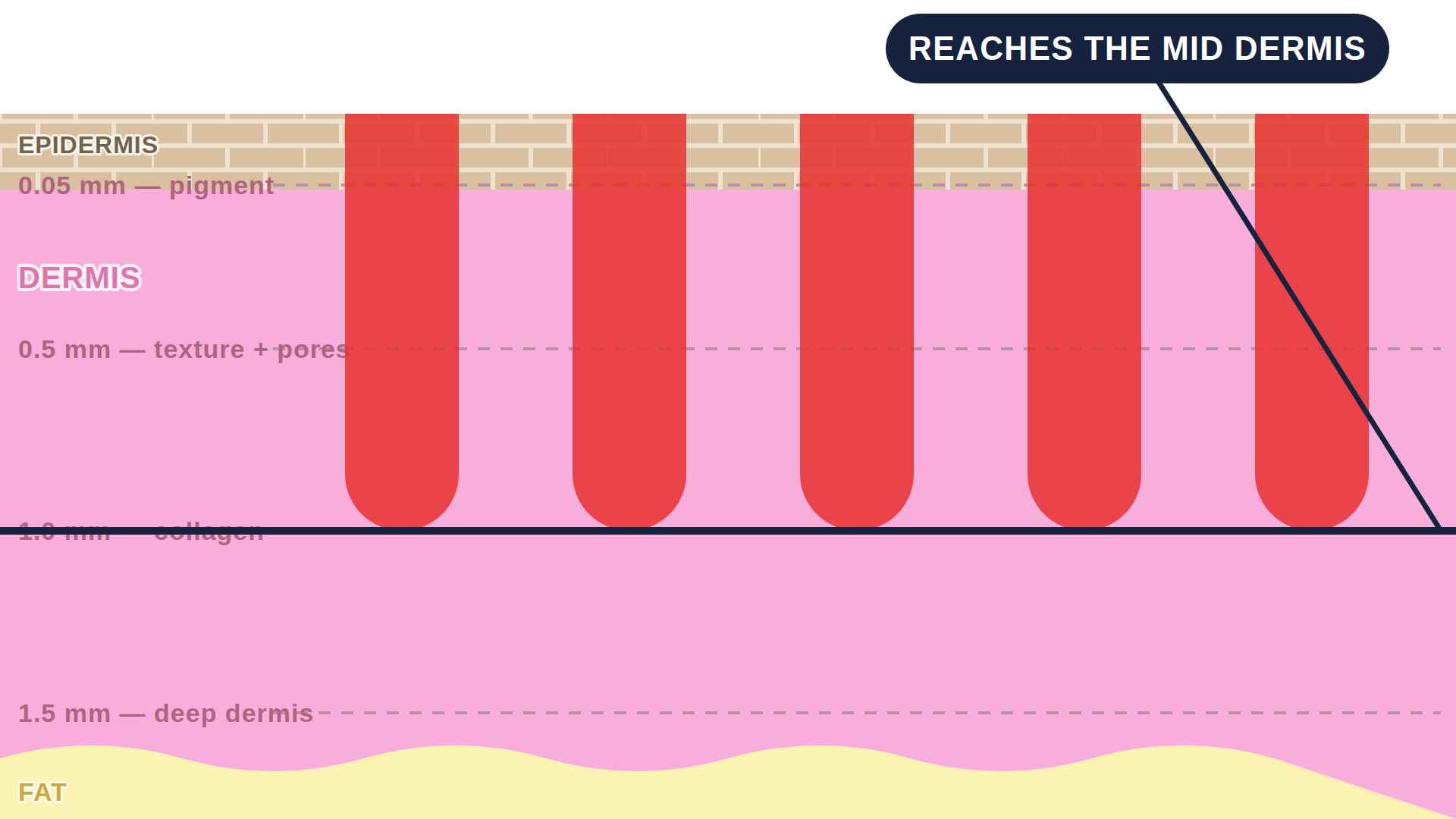
Moxi Laser
Brown spots, dullness, early sun damage
Fraxel
The same, plus texture and scarring
Texture, fine lines and some scarring need the deeper 1550 nm setting.

The best-evidenced device for mature white marks, and useful on red ones too. It puts columns of controlled heat into the supportive layer to force a fresh round of collagen remodeling, over three to six sessions spaced weeks apart. Expect partial improvement in texture and how noticeable they are, not removal. On deeper skin tones it is used at conservative settings after a test patch, because of the pigment risk.

Heats columns in the dermis without removing the surface, so it improves fine lines, texture and pigment with a few days of redness and swelling instead of a week of raw skin. It takes three to five sessions to match a fraction of what one ablative treatment does. It is the more sensible starting point on deeper skin tones.

Treats the sun-damaged skin as a whole rather than targeting individual spots, so it improves texture and fine lines alongside the pigment. That makes it a reasonable choice when the spots are only part of what is bothering you. For clearing spots alone it is slower, dearer and less precise than freezing or a pigment laser.

Resurfaces without removing the surface, so recovery is a few days of redness and swelling rather than a week of raw skin. It gives less improvement per session than CO2 and needs more sessions to get there. It is the sensible middle option when the downtime of ablative laser is not workable.
Moxi Laser
Redness, then a few rough days
Red on day one. Then a bronzed, rough texture for a few days.
Fraxel
Similar on 1927, more on 1550
The deeper setting brings swelling and several days of peeling.
Moxi Laser
Tolerable with numbing
Fraxel
The deeper setting is harder
The 1550 nm setting is the more uncomfortable of the two.
Moxi Laser
A series, commonly three or more
Fraxel
Depends on the wavelength
Fewer on the deeper setting. A series on the surface setting.
Moxi Laser
Home devices are far weaker
Home "laser" gadgets sold for dark spots put a fraction of the power into the skin. They do not reach the depth a clinic laser works at.
Fraxel
Home devices never reach 1550 nm
Same answer, and more so. Nothing sold for home use delivers the deeper wavelength, which is the setting Fraxel is chosen for.
Moxi Laser
Fraxel
Moxi Laser
Moxi is made by Sciton. Its 100 to 200 micron treatment depth is Sciton's own figure. Fraxel Dual is made by Solta Medical.
Moxi's FDA clearance covers surface pigment, not wrinkles. It names soft tissue coagulation, actinic keratosis and benign pigmented spots, meaning lentigines, solar lentigines and freckles. Wrinkles, texture and melasma are not in it. Fraxel is the device Sciton's 1927 nm laser was compared against to win that clearance, so the two are the same family rather than rival technologies.
Fraxel
Fraxel's 1550 nm clearance covers more: melasma, actinic keratosis, wrinkles around the eyes, acne scars and surgical scars. That is the clearest regulatory difference between the two.
A reviewed indication is not proof of a result. Fraxel being cleared for melasma does not mean Fraxel fixes melasma, only that the indication was reviewed. Providers treat off-label all the time, which is legal and routine. But if a clinic cites FDA clearance for melasma, ask which device and which wavelength, because for one of these two the answer is real and for the other it is not.

Moderate evidence. Aimed at the same acne scar and texture problems, without light or heat, so the pigment risk is lower, which matters on deeper skin tones. Generally cheaper per session and gentler, and generally slower to show the same amount of change.

Strong evidence for surface pigment and clogged pores. Much cheaper and available almost anywhere. It works on the surface, so it does not reach indented scars and does far less for texture.

Limited evidence, from the same manufacturer. A far gentler version of the same idea, with about a day of downtime and a much smaller result per session. A reasonable choice for early texture and dullness, not a substitute for a course of Fraxel on scars.
Moxi Laser
Ask for the Moxi course price, including each planned session and any maintenance visits.
Fraxel
Ask which Fraxel device is being quoted and whether the price includes numbing and follow-up. A single session and a course are different purchases.
Common questions