← All comparisons
Dermapedia / CompareProcedures

Hydrodermabrasion vs Hydrafacial

HydraFacial is a brand name. Hydrodermabrasion is the category it belongs to. The treatment is a wet abrasion: a handpiece works on your skin inside a film of fluid, while suction pulls the fluid, loose surface cells and pore contents away. Every HydraFacial is a hydrodermabrasion treatment, and most hydrodermabrasion treatments are not HydraFacials. No study has compared a branded machine with a generic one.

At a glance

The differenceHydrodermabrasionHydrafacial
CostCheaper, with no published priceThe one dated figure available

Hydrodermabrasion

A wet abrasion with suction Any powered device that works on your skin inside a film of fluid, then suctions the fluid and debris away. The liquid lubricates, so the pass is gentler than a dry treatment. It carries mild acids. And it wets the surface layer before that layer comes off. Nothing is blasted at your face.

Hydrafacial

Hydrafacial

Side by side

The differences that matter

10 comparison points

What you actually do

Hydrodermabrasion

A wet abrasion with suction

Any powered device that works on your skin inside a film of fluid, then suctions the fluid and debris away. The liquid lubricates, so the pass is gentler than a dry treatment. It carries mild acids. And it wets the surface layer before that layer comes off. Nothing is blasted at your face.

Hydrafacial

The same treatment, one brand's kit

One company's machine, tips and solutions. The company markets the treatment either as three steps in about 30 minutes, or as seven therapies in a fuller version. Both are current wording, so ask which you are booking.

What it will not do

Hydrodermabrasion

It will not build collagen

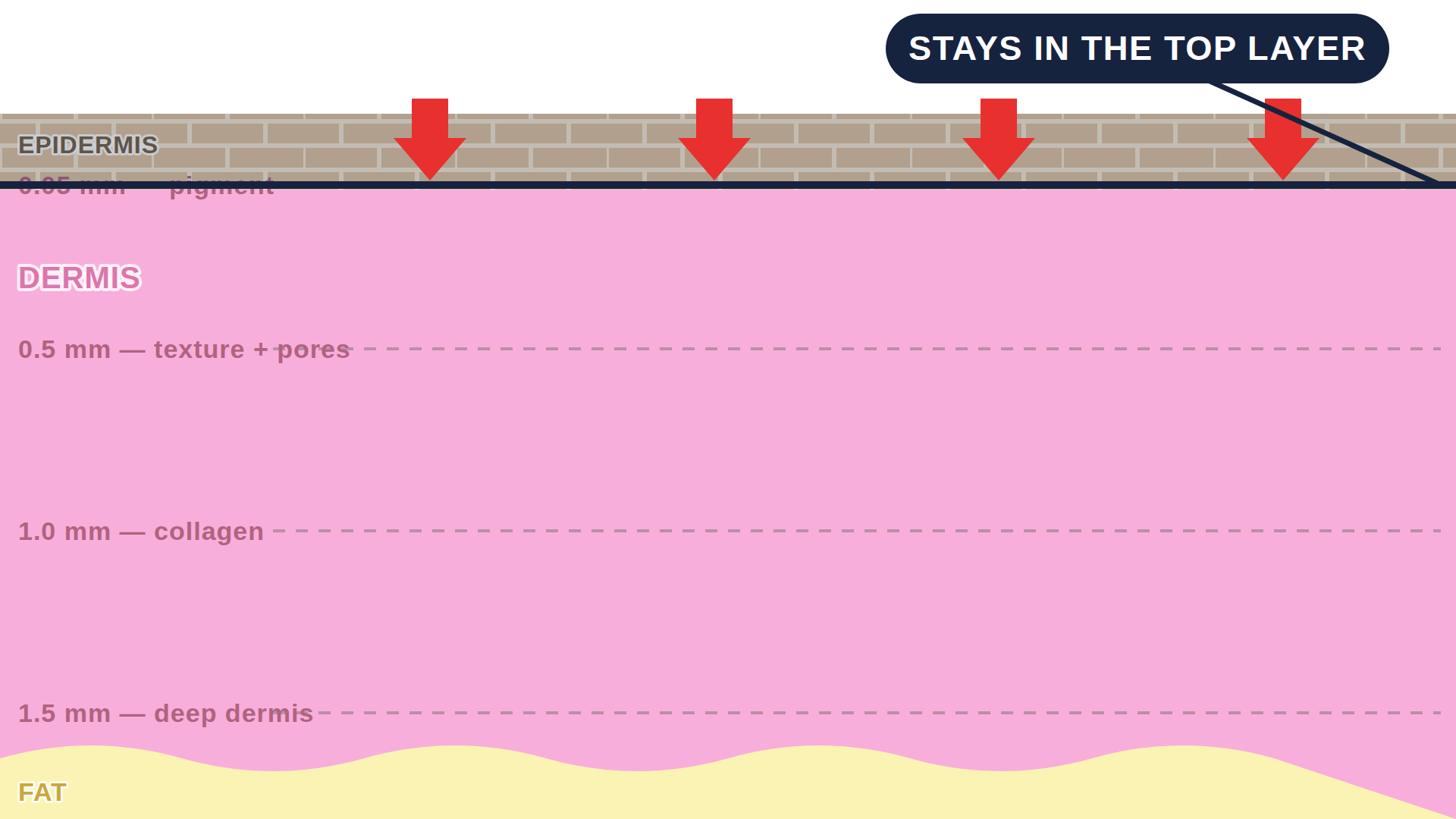
An imaging study looked at the skin two weeks after treatment. The collagen had not changed.

Hydrafacial

The brand does not buy a better result

No study has tested a branded machine against a generic one. Anyone who tells you a brand gives a better result is describing a belief, not a measured finding.

What the evidence covers

Hydrodermabrasion

The whole literature is five papers

There is no published study of any unbranded machine. Five papers cover this technology in total, and none of them tests one machine against another.

Hydrafacial

Small studies, one company-linked

A study of 20 women compared six treatments with a serum against the same serum rubbed on by hand. The device group showed changes on biopsy, and the hand group showed none. An acne study of 20 adults, with an author employed by the company, found the share rated clear or almost clear rose from 20% to 65%. Neither had a sham arm.

How long it lasts

Hydrodermabrasion

Nobody has tested how often

The published protocols all used a course of six treatments, seven days to two weeks apart. None tested a different interval, and none followed people after the course ended.

Hydrafacial

The surface effect is short

The imaging study found the surface layer was back to normal within two weeks. The familiar "once a month" advice comes from clinics, not from any study.

The downside

Hydrodermabrasion

Usually no downtime

Some pinkness and a tight feeling for a few hours is the usual account. Suction that is too strong can leave small bruise-like marks.

Hydrafacial

The same picture

A closely related device lists a scratchy, stinging feeling during treatment. Tightness and redness follow, and both fade. Severe irritation and allergic reactions are listed as rare.

Cost

Hydrodermabrasion

Cheaper, with no published price

Clinic menus for non-branded versions usually sit below branded ones. There are no consumables to buy from a maker. No professional body publishes a price.

Hydrafacial

The one dated figure available

RealSelf reported an average of $209 from 261 consumer reviews, with prices up to $320, last updated July 2023. That is self-reported, US-only and several years old. Boosters cost extra.

Who tends to be happy with it

Hydrodermabrasion

  • Best for - Someone who wants the treatment rather than the label.
  • The mindset - The brand on the casing matters less than the person holding it.

Hydrafacial

  • Best for - Someone who wants a set routine, throw-away tips and a trained operator, and will pay for that.
  • The mindset - You are buying standardisation and a supply chain, not a proven advantage in results.

Wet abrasion versus the dry version it replaced

Hydrodermabrasion

Hydrodermabrasion is the wet form of microdermabrasion. The dry version drags an abrasive tip across bare skin. Here the same abrasion happens inside a film of liquid.

What the record shows about harm

Hydrafacial

The FDA's public database holds two harm reports for HydraFacial in about fifteen years. One is a consumer report of next-day redness and a lasting full-face breakout in a person with darker skin. In the other, acid fluid got into a patient's eyes because the operator did not shield them.

The fine print

Hydrafacial

Neither HydraFacial nor any generic machine is FDA-cleared, because the category is exempt from FDA review. They are registered as Class I devices under product code GFE, "powered dermabrasion brush," regulation 21 CFR 878.4820, which is 510(k) exempt. There is no K-number to quote, and no cleared use for acne, pores, fine lines or anything else, because nothing was submitted and nothing was reviewed.

Exempt is not the same as unregulated. The maker still has to register with the FDA, list the product, follow manufacturing quality rules, and must not label it falsely. It only means the FDA has never judged whether these machines do what they are sold to do. A two-thousand-dollar imported machine and a thirty-thousand-dollar HydraFacial Syndeo stand in exactly the same place.

HydraFacial is made by Edge Systems, which calls the swirling flow through its spiral tip Vortex-Fusion. Edge Systems holds only three FDA clearances in total, and none is the HydraFacial; they cover sterile tubing and the blue and red LED light modules. A manufacturer statement about a related product line says the serums are meant to meet the FDA definition of a cosmetic, not to treat any disease.

"FDA registered" and "FDA listed" are not quality signals. Every machine in this category has to be registered and listed, whatever it costs. Neither phrase means anything was reviewed.

Common questions

Questions Patients Ask

Is HydraFacial FDA-approved or FDA-cleared?

Neither. The whole category is registered as Class I, product code GFE, and is exempt from FDA premarket review, so there is no clearance number and no FDA-reviewed use. The maker still has to register the device, list it, follow manufacturing quality rules and avoid false labeling. It simply means no FDA reviewer has ever assessed whether the machine does what it is sold to do. Generic machines sit in exactly the same category.

Does a branded machine give better results than a generic one?

No study has tested that. What genuinely differs is tip design, what is in the solutions, whether the parts touching your skin are single-use, and how well trained the operator is. A branded system buys consistency and disposables, which is a real thing to pay for, but it has not been shown to produce a better result.

Which costs more?

The branded treatment, usually, because every session uses consumables bought from the manufacturer. RealSelf reported an average HydraFacial price of $209 from 261 consumer reviews, with prices up to $320, last updated in July 2023. There is no reliable published price for generic hydrodermabrasion, and no professional society publishes a price for either.

Which is better for clogged pores and blackheads?

Neither has been shown better than the other, because no trial has compared them. The mechanism itself has some support: a randomized split-face study of 23 women found that applying a mild acid with suction reduced blackheads and whiteheads more than the same acid alone. That study used a research setup, not a branded machine, so it supports the technology rather than any particular brand.

Does it build collagen?

There is no evidence that it does. The one independent imaging study, in 8 volunteers, found no visible difference in the amount or quality of collagen at two weeks. It measured the surface layer thinning from 9.42 to 6.67 micrometers straight after treatment, then returning to 9.75 micrometers by two weeks. Treat this as a surface and hydration treatment, not a remodeling one.

How do I tell whether a clinic's machine is any good?

Ask what the machine is called and who makes it, ask whether the tip that touches your skin is thrown away afterwards, and ask what is in the solutions. Being "FDA registered" or "FDA listed" is not an answer, because every machine in this category is required to be both, whatever it cost.

