VI Peel

A VI Peel being applied with gauze. It is painted on in layers and left to work, and the skin peels over the following days rather than that day.
The VI Peel already contains TCA, so this is not two rival acids. It is a fixed branded recipe against a single acid your doctor mixes to the strength they choose. The brand gives you the same bottle every time. A plain TCA peel gives your doctor a dial, and no trial has ever compared the two.
| The difference | VI Peel | TCA Peel |
|---|---|---|
| What it is | A branded blend with five variants | One acid, mixed to a chosen strength |
| How the strength is chosen | Fixed, and the amounts are not published | Your doctor picks it |
| Downtime | Peeling from about day three | Depends on the depth reached |
A VI Peel being applied with gauze. It is painted on in layers and left to work, and the skin peels over the following days rather than that day.

A TCA peel part way through. The white patches are frosting — the acid reacting with protein in the skin — and it tells the clinician how deep the peel has gone.
Side by side
VI Peel
A branded blend with five variants
All five share one base: TCA, phenol, salicylic acid, retinoic acid and vitamin C. Precision Plus adds hydroquinone and kojic acid for pigment. Purify adds benzoyl peroxide and hydrocortisone for acne. You pick a variant, not a strength.
TCA Peel
One acid, mixed to a chosen strength
TCA is one of the oldest peeling agents. It is used alone, or layered over a primer such as Jessner's solution. It is self-neutralising, so nothing is rinsed off to stop it. Laying on too much is unforgiving.
VI Peel
Fixed, and the amounts are not published
The maker lists the ingredients but not the amounts. Professional products do not have to publish them, so nobody outside the company knows the numbers.
TCA Peel
Your doctor picks it
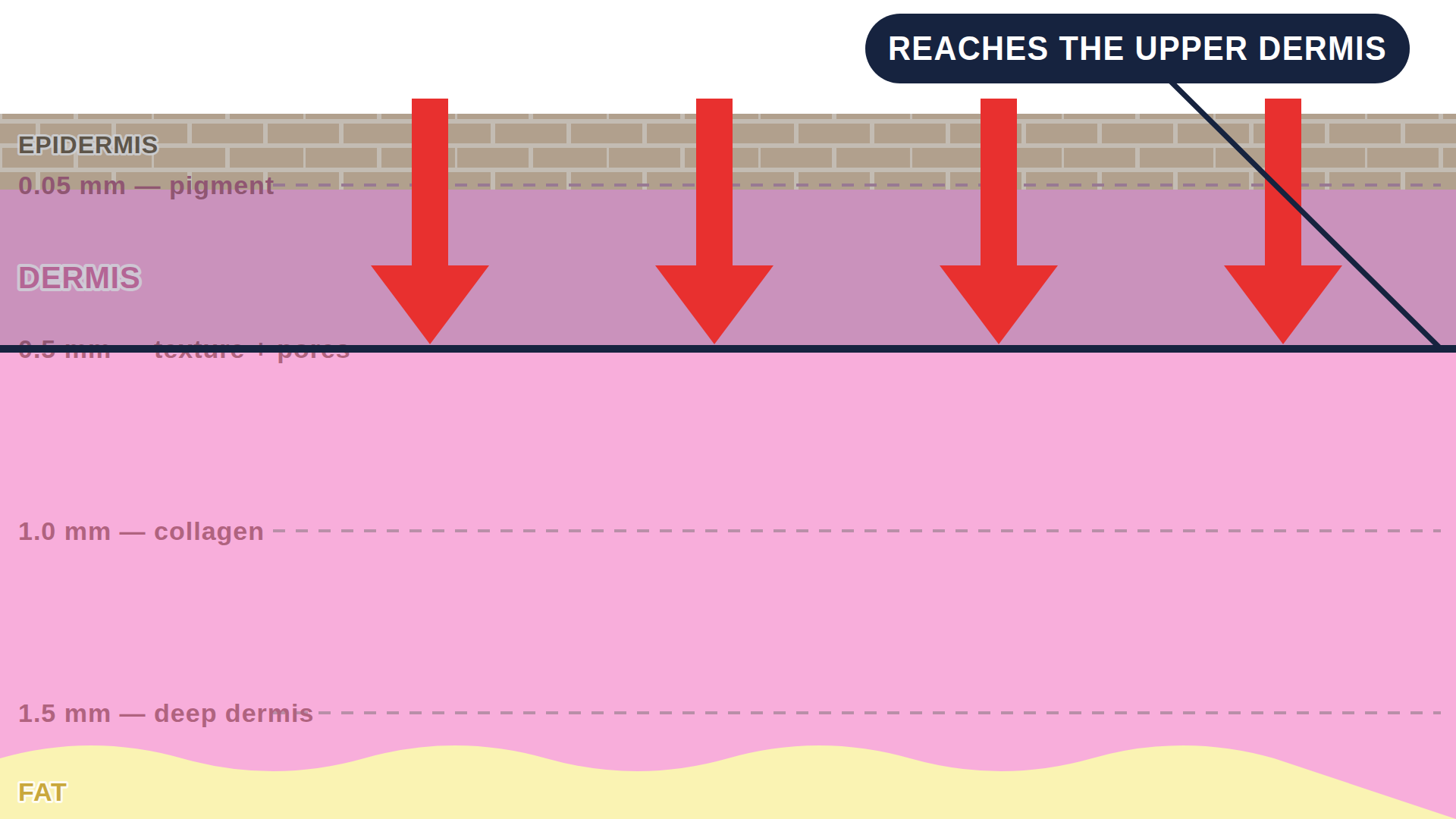
You can ask about the concentration. A second or third coat goes deeper without changing the bottle. The doctor watches for frosting, the white film that appears on treated skin. Patchy frosting is shallow, a solid white look is deep.
VI Peel
Marketed as medium-depth, not checkable
The maker has not published a depth figure. So any number a clinic gives you is a claim, not a fact.
TCA Peel
Depends on strength and number of coats
Sources do not fully agree. One calls 35 to 50 percent medium-depth, another calls 10 to 20 percent very light. Both agree above 50 percent is deep.
VI Peel
One study, 30 people, no control group
The only published study gave 30 people a VI Peel and Botox on the same day. Scores improved. With a neurotoxin in the same session and no control group, that cannot be credited to the peel.
TCA Peel
Decades of small trials
Against salicylic acid for acne, across 12 trials in 387 people, TCA showed no difference. Against a fractional laser for melasma, it came out the same.
VI Peel
Peeling from about day three
The maker says peeling starts around day three and lasts three to four days. No exercise for 72 to 96 hours. No swimming for 7 to 10 days.
TCA Peel
Depends on the depth reached
Shallow peels settle in 3 to 5 days. Medium-depth peels take 7 to 10 days to close over, with redness for 15 to 30 days. Deep peels take 14 days or more.
VI Peel
3 to 6 peels, 4 to 6 weeks apart
Then about 4 a year. That is the maker's protocol, not a trial result.
TCA Peel
Fewer sessions at medium depth
Shallow peels cluster at 3 to 6 sessions two weeks apart. Medium-depth peels are usually one session with a long recovery.
VI Peel
Not sold to the public
Clinics buy the VI Peel. You cannot, so there is no home version to compare.
TCA Peel
Sold online, and that is the problem
Bottles of TCA are sold to the public at up to 100 percent. The only brake is a trained eye watching the skin frost, and at home nobody is watching. FDA says these products "may cause severe chemical burns, pain, swelling, infection, skin color changes, and disfiguring scars."
VI Peel
TCA Peel
VI Peel
For the VI Peel there are no numbers. It is marketed as safe for all skin tones, but no trial supports that. Priming the skin first with hydroquinone is worth asking about either way.

A medium-depth peel with good evidence for fine lines, rough texture and sun-related pigment, done in a clinic with about a week of peeling afterwards. The deeper it goes the more it does and the more it risks. On deeper skin tones the strength is kept low and a test area is done first, because dark marks afterwards are common at higher strengths.

Strong evidence. Gentler, neutralized on a timer, essentially no downtime. Better for dullness and surface marks and much easier to repeat, with less effect on texture and deeper pigment.

Moderate evidence. Reaches indented scars and texture with far less pigment risk, but does much less for sun spots and surface pigment. Often combined with TCA CROSS rather than chosen instead of it.
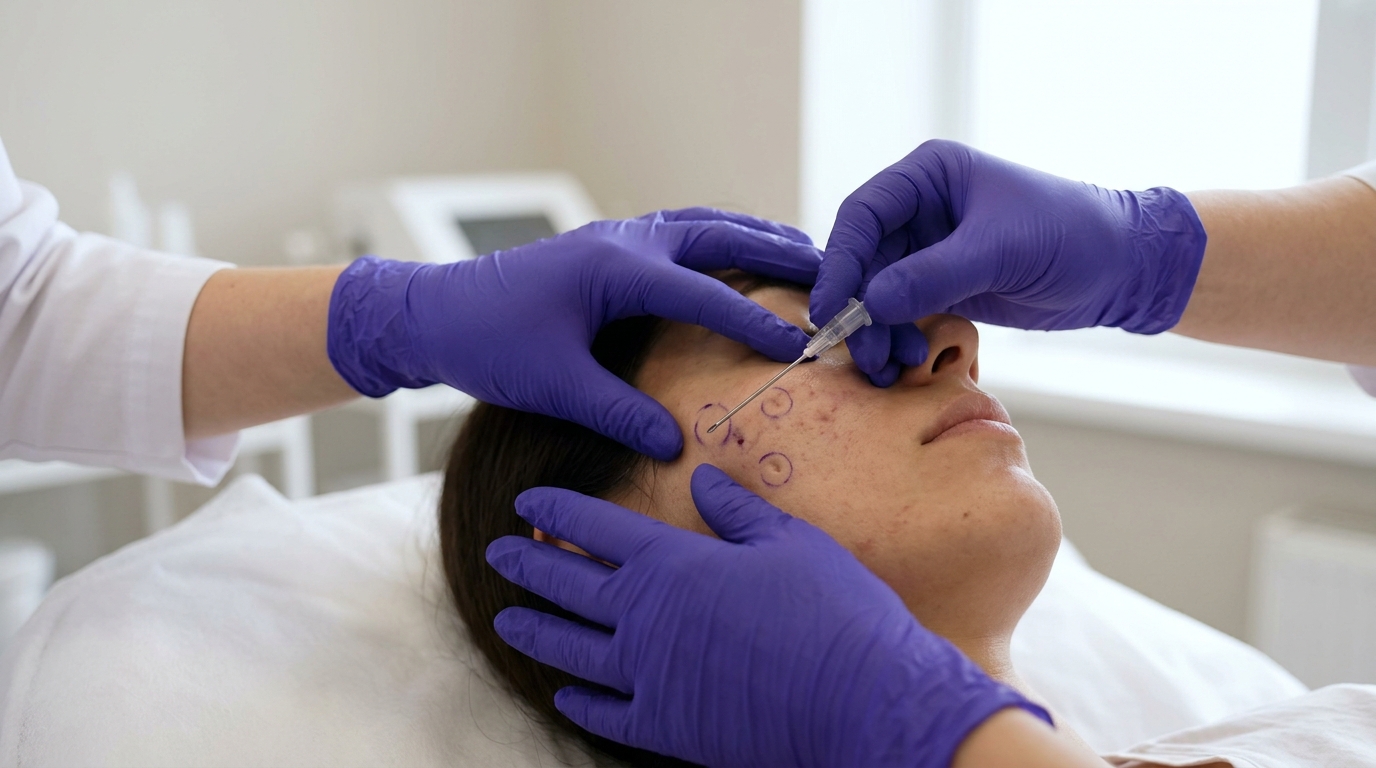
Moderate evidence. For tethered rolling scars specifically, releasing the bands underneath. It does nothing for pigment and pairs with scar-directed TCA rather than replacing it.
Common questions
No chemical peel is FDA approved, and that includes both of these. FDA said so on 30 July 2024: "The agency has not approved any chemical peel products, and consumers should only consider using chemical peel products under the supervision of a dermatologist or licensed and trained practitioner." No peel has been cleared as a device either.
Nobody reviews a peel formula before it goes on sale. FDA acts against sellers after the fact, usually over marketing claims.
FDA's July 2024 action was aimed at high-strength acid sold direct to consumers, naming TCA at 50 to 100 percent. A warning letter on 25 July 2024 to the seller Repare Skincare cited TCA peels at 15, 20, 25, 35, 50 and 100 percent. FDA's position was that these are unapproved new drugs, not that a percentage is banned.
Professional-use products are exempt from the consumer ingredient-declaration rules. That is why the VI Peel's percentages are not public.