Sculptra

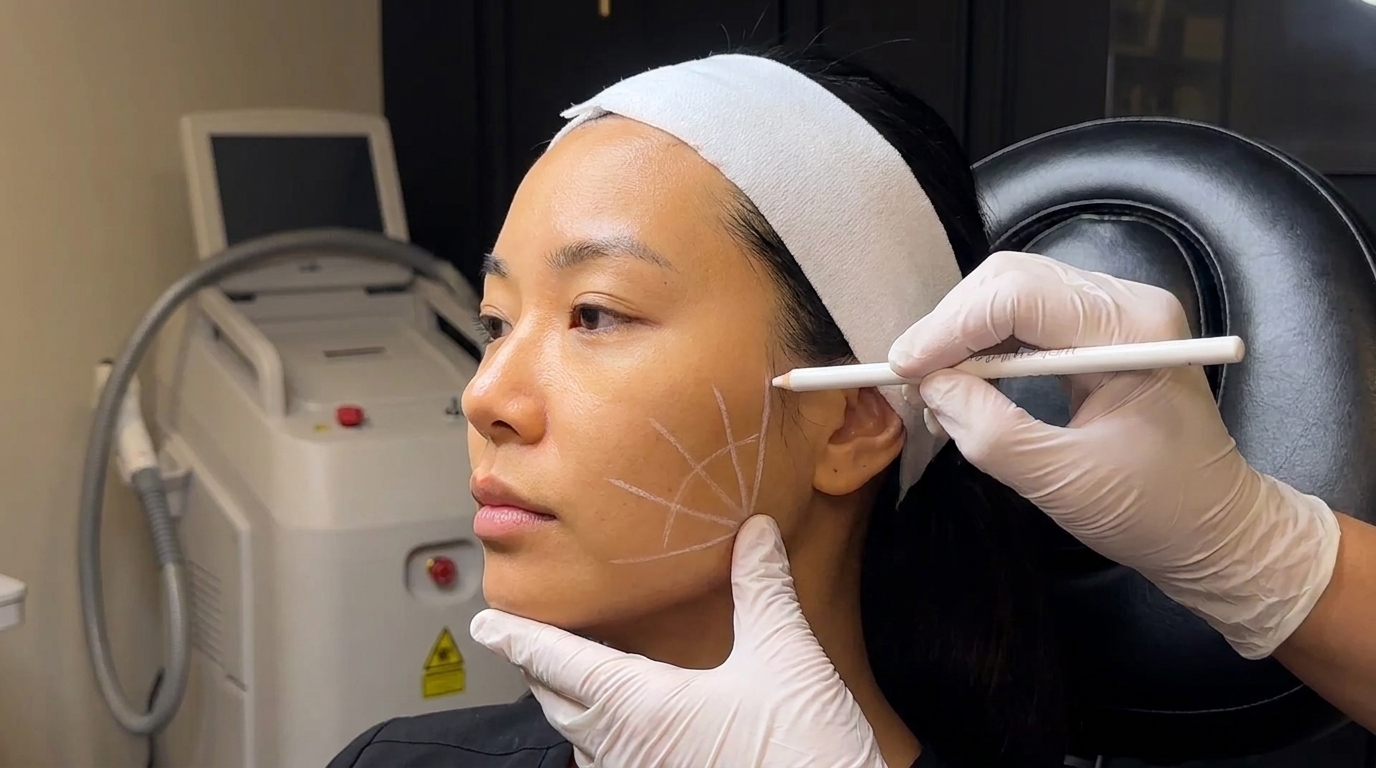
Sculptra is injected at marked points across the cheek. It adds very little volume on the day — the change comes from collagen built over the months after.
Restylane adds volume on the day. The change is there when you sit up, and it can be dissolved later if you change your mind. Sculptra works the other way round. It builds your own collagen slowly over months, and it cannot be dissolved.
| The difference | Sculptra | Restylane |
|---|---|---|
| What it is made of | Poly-L-lactic acid, mixed from a powder | Cross-linked hyaluronic acid gel |
| When you judge the result | Three to six months from the first visit | Two weeks, once swelling has gone |
Sculptra is injected at marked points across the cheek. It adds very little volume on the day — the change comes from collagen built over the months after.

Lip filler being placed. The needle enters at the lip border and the product is added in small amounts along its length rather than all at one point.
Side by side
Sculptra
A course of visits, weeks apart
A powder is mixed with sterile water and injected. In the trials it was given as a course of visits, a few weeks apart.
Restylane
One visit, with a top-up if needed
A ready-made gel is injected into one area. Trials generally allowed one treatment, with an optional touch-up a few weeks later.

A collagen-stimulating injectable given as a course, usually three sessions. Nothing looks different straight away; volume builds gradually over several months and lasts around two years. It suits overall thinning and flatness rather than a single line, and it cannot be dissolved, so it is a slower and less reversible decision than filler.
Sculptra
Almost nothing you can keep
The water it is mixed in gives a short-lived plumpness. That fades within days as the water is absorbed. What is left is the material that will do the work.
Restylane
The volume is there when you sit up
Swelling and bruising then settle over about a week.
Sculptra
Poly-L-lactic acid, mixed from a powder
Tiny particles of a polymer that breaks down in the body. Fibroblasts, the cells that build collagen, lay new collagen down around the particles over the following weeks and months.
Restylane
Cross-linked hyaluronic acid gel
The gel is the same strength in every Restylane product with a published figure. Most versions also contain lidocaine, a local anaesthetic.
Sculptra
Three to six months from the first visit
The approval documents do not measure when the change first shows. What they do give is the treatment schedule, and it runs across months.
Restylane
Two weeks, once swelling has gone
Its trials measured the result early — month 2 in the cheeks, week 8 in the lips.
Sculptra
Followed to about two years in trials
In the cheek trial, 71% of treated people looked better on both cheeks at 12 months, against 26% of untreated people. 77% were still better at 24 months. The maker ran the trial.
Restylane
Each product has its own last check
In the lip trial, 59% of people were still improved at week 24.
Sculptra
Lumps, and they can be late
In the cheek trial, lumps at the injection site were reported in 1%. That was one person, and the small lumps were still there when the study finished.
Restylane
Swelling, bruising, and its own lumps
Hyaluronic acid fillers can cause late lumps too. The rate differs by product and by clinic.
Moderate evidence. The other common biostimulator. It adds volume the same day as well as building collagen, and typically lasts about 12 to 18 months rather than two years. Also not reversible.
Sculptra
You wait
Hyaluronidase is the enzyme used to dissolve filler. It does not work on poly-L-lactic acid. No reversal agent is approved. For a lump, the published options are saline, a steroid injection, antibiotics if a biofilm is suspected, and surgery as a last resort.
Restylane
Hyaluronidase, within minutes to hours
The enzyme breaks hyaluronic acid down. In the US, using it to dissolve filler is off-label.
Sculptra
No home version exists
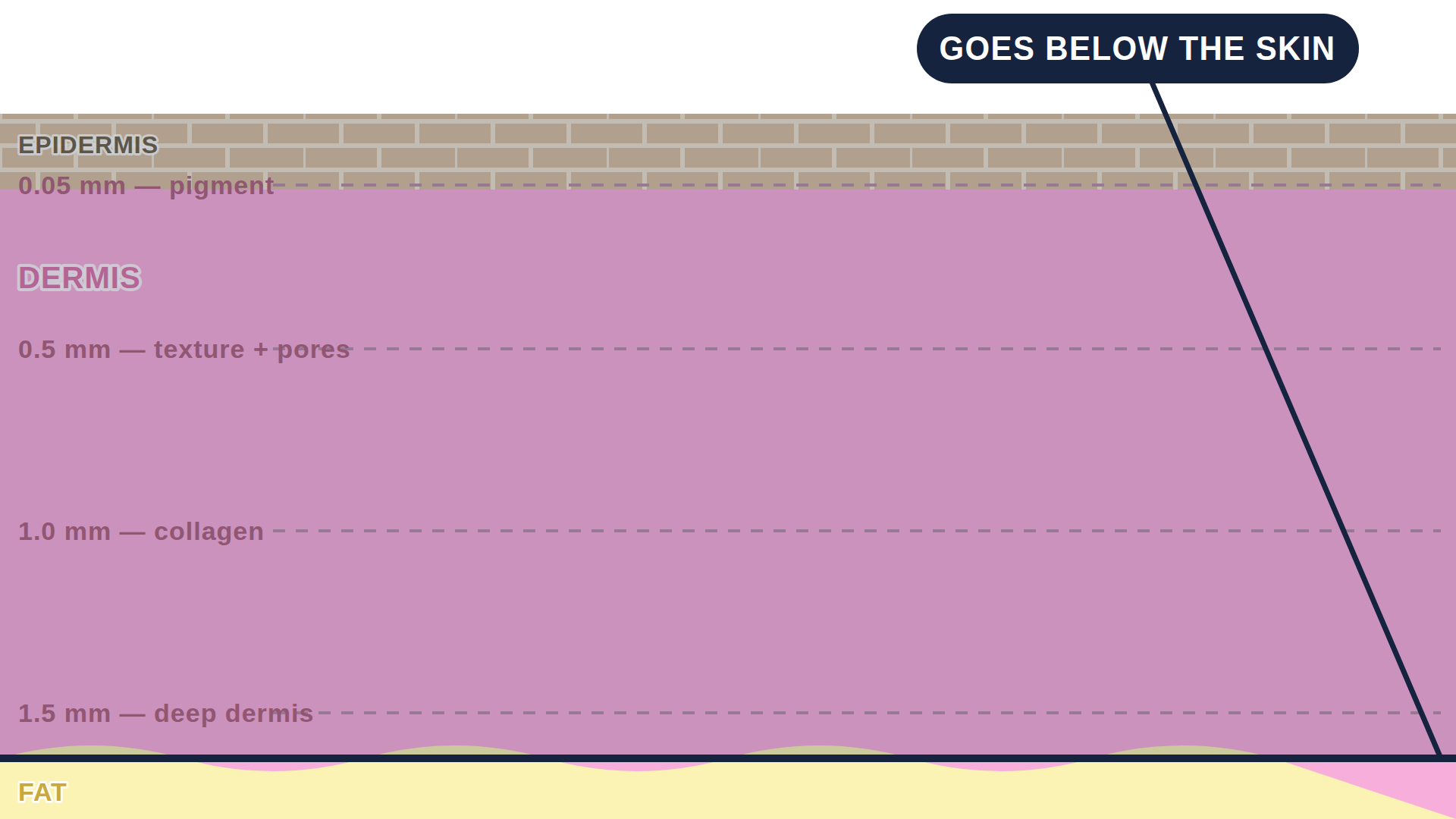
Creams and supplements sold for collagen work on the skin surface, or through the gut. Sculptra is placed in the deep layer of the skin with a needle. Nothing sold over the counter puts material there.
Restylane
Serums and plumpers are a different thing
A hyaluronic acid serum holds water in the top layer of the skin. A filler is a firm gel placed several millimetres below it. A lip plumper mildly irritates the lip so it swells for a few hours, which is not the same thing.
Sculptra
Restylane
Sculptra
You cannot judge a Sculptra session on the day. So you cannot tell whether you have had enough. That is why the trials used fixed courses, spaced weeks apart, rather than treating until the result looked right. An injector who puts in too much gel finds out at once, and can dissolve it. An injector who puts in too much poly-L-lactic acid finds out months later, and so do you.
Sculptra
Lumps are the characteristic problem with Sculptra, and they can arrive late. The labelling records the timing. Nodules began at a median of 160 days, and papules at a median of 55 days. Each lasted a median of about 100 to 110 days.
Sculptra
Sculptra holds three US approvals: facial fat loss in people with HIV, in 2004; shallow to deep nasolabial fold contour deficiencies and other facial wrinkles suited to a deep dermal cross-hatch technique, in 2009; and fine lines and wrinkles in the cheek region, in 2023. The 2009 and 2023 approvals both specify people who are immune-competent. The delayed-inflammation information was added to the labelling in 2023.
Two different figures for what is in a Sculptra vial are in circulation. The current US labelling describes 367.5 mg of powder per vial, reconstituted with 5 mL or 8 mL. An older labelling format states 150 mg of poly-L-lactic acid as the polymer content. They are not describing the same thing.
The Sculptra labelling says nothing about reversal. It makes no permanence claim and no reversibility claim. It simply does not mention a reversal agent, because none exists.
Restylane
Each Restylane product holds its own premarket approval, named area by area. Nasolabial folds and facial wrinkles: Restylane, Restylane-L, Lyft, Refyne, Defyne. Lips: Restylane, Restylane-L, Silk, Kysse. Cheeks: Lyft, Contour. Chin: Defyne, Lyft with Lidocaine. Back of the hands: Lyft. Under-eye hollows: Eyelight. Temples: Contour. The cross-linked hyaluronic acid is at 20 mg/mL in every Restylane product with a published figure.
Sculptra
Ask for the expected Sculptra course, amount of product and follow-up costs. A course quote and a single injection visit are different totals.
Restylane
Ask which Restylane product and how many syringes the intended correction requires. Include the touch-up policy.
Common questions