Sculptra

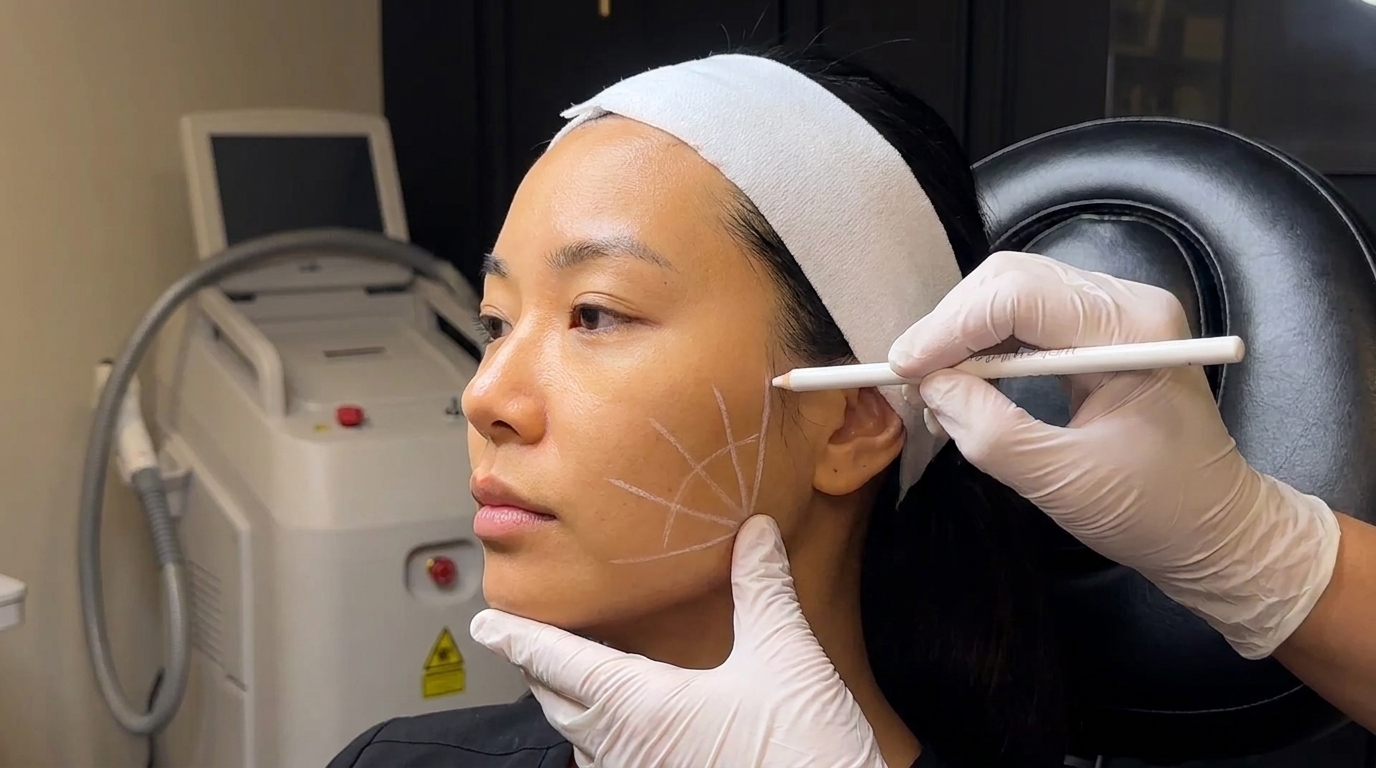
Sculptra is injected at marked points across the cheek. It adds very little volume on the day — the change comes from collagen built over the months after.
Sculptra is for lost facial volume. It is a man-made material, injected over three or four sessions. PRP is aimed at skin quality — texture, crepiness and pigment. It is made from your own blood on the day, and no study has ever compared the two.
| The difference | Sculptra | PRP (Platelet-Rich Plasma) |
|---|---|---|
| Cost | $901 average surgeon fee, 2023 | No published price |
Sculptra is injected at marked points across the cheek. It adds very little volume on the day — the change comes from collagen built over the months after.
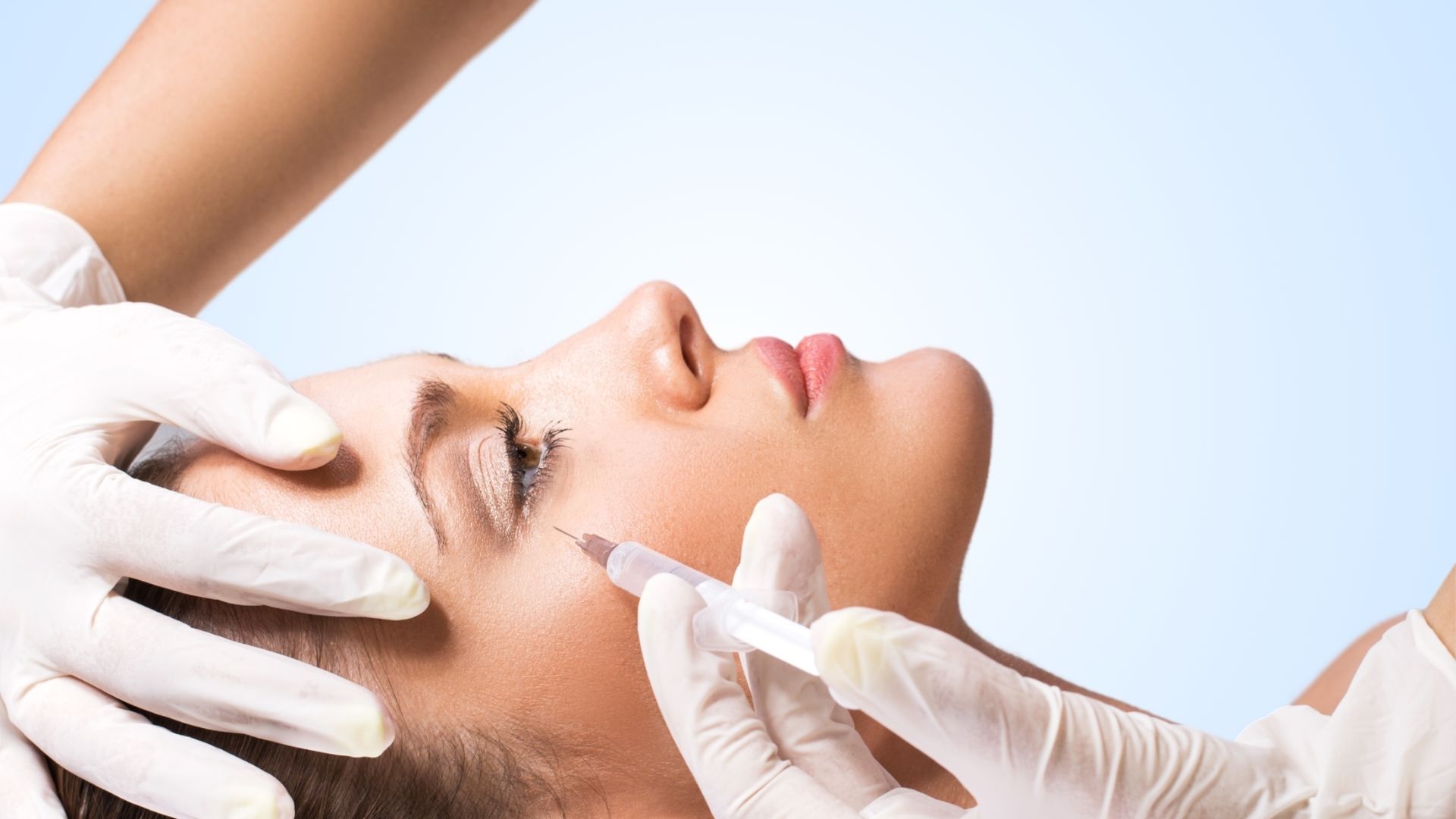
PRP is drawn from your own blood, spun down, and then injected back into the treated area with a fine needle.
Side by side
Sculptra
Injected as a course of three or four
A powder is mixed with sterile water and injected deep into the skin. Sessions are usually about three weeks apart.
PRP (Platelet-Rich Plasma)
Your blood, drawn and spun on the day
Blood is drawn on the day and spun to concentrate the platelets, then injected. Studies cluster around three treatments, about three weeks apart.
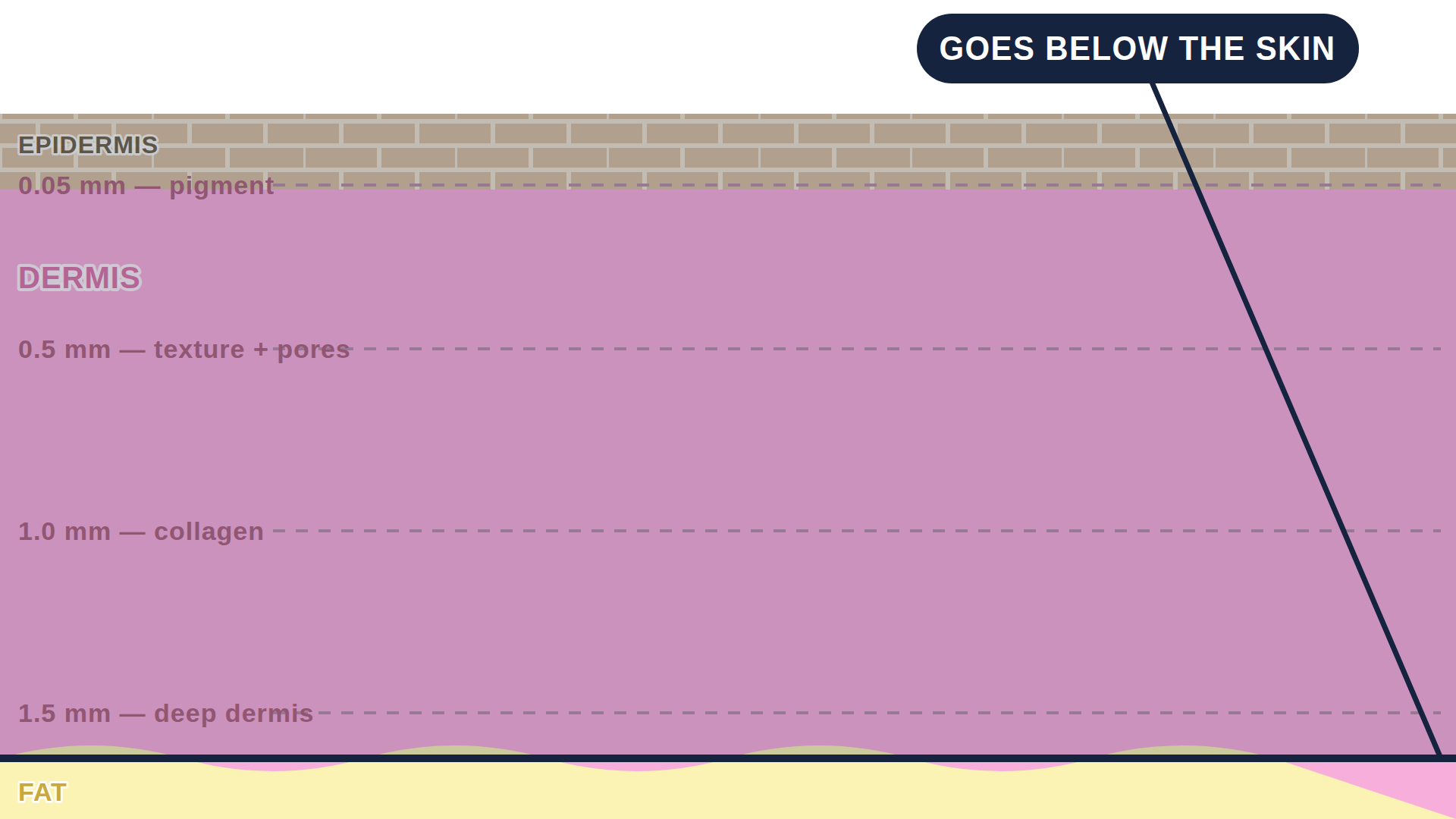

A collagen-stimulating injectable given as a course, usually three sessions. Nothing looks different straight away; volume builds gradually over several months and lasts around two years. It suits overall thinning and flatness rather than a single line, and it cannot be dissolved, so it is a slower and less reversible decision than filler.
Sculptra
Volume back in folds and cheeks
It builds collagen around the injected particles. It does not plump you up on the day. In a trial of 149 people, 71% improved on both cheeks at 12 months, against 26% of an untreated group.
PRP (Platelet-Rich Plasma)
Better texture, mixed on pigment
A review of 26 studies rated PRP only fairly good for under-eye darkness. Changes in wrinkles and texture were mixed. Satisfaction scores are high.
Sculptra
Not for pigment or loose skin
It replaces volume by building collagen around a scaffold. Lax skin stays lax.
PRP (Platelet-Rich Plasma)
Not for volume
No study has shown that PRP adds volume. Everything published about it is a skin-quality result.
Moderate evidence. The other common biostimulator. It adds volume the same day as well as building collagen, and typically lasts about 12 to 18 months rather than two years. Also not reversible.
Sculptra
Judged at about three months
Nothing changes on the day. The material builds collagen over the following months.
PRP (Platelet-Rich Plasma)
Measured at about three months
Most of the evidence follows people for about three months.
Sculptra
Roughly two years
The material breaks down over about two years. In the cheek trial, 77% still counted as responders at two years.
PRP (Platelet-Rich Plasma)
Months, then repeat
Most PRP studies stop measuring at three to six months. One review found the gains often faded by six months.
Sculptra
It cannot be undone
There is no reversal agent. Hyaluronidase dissolves hyaluronic acid fillers. It does nothing to this material. For a lump, the options are saline, a steroid shot, antibiotics, or surgery as a last resort.
PRP (Platelet-Rich Plasma)
You may not get the same product twice
What ends up in the syringe depends on your blood that day, the tube, and how it was spun. The flip side is that it is absorbed, so nothing is left behind.
Sculptra
$901 average surgeon fee, 2023
That is a 2023 US average surgeon fee for a group of fillers. It is not a per-vial price, and it leaves out clinic fees. Sculptra is sold as a course, so one session is not the full price.
PRP (Platelet-Rich Plasma)
No published price
No group publishes an average price for PRP in the face.
Sculptra
No home version of an injected implant
Nothing you can buy puts this material under your skin. A cream stays on the surface.
PRP (Platelet-Rich Plasma)
No home version of your own blood
PRP means drawing blood, spinning it, and injecting it back. Serums that advertise growth factors sit on the surface of the skin.
Sculptra
PRP (Platelet-Rich Plasma)
Sculptra
There is no published trial of Sculptra against PRP for the face. Anyone who tells you one beats the other is lining up separate studies, run in different patients, on different scales, over different lengths of time. That is not a comparison.
Sculptra
Sculptra is approved as a product: a Class III device approved through premarket approval, PMA P030050. That route required randomised, evaluator-blinded clinical trials for a named use. The named indications are facial fat loss in people with HIV (2004); nasolabial fold contour deficiencies and other facial wrinkles (2009); and fine lines and wrinkles in the cheek region (2023). US labelling describes 367.5 mg of powder per vial, reconstituted with 5 mL or 8 mL of sterile water.
PRP has no approved aesthetic use. It is prepared from your blood at the point of care, so there is no product for the FDA to approve. What the FDA clears are the kits used to spin the blood, through the 510(k) route, for narrowly worded preparation uses. Clearing a preparation device is not approving a treatment, so injecting the result into a face is practice-of-medicine use.
Neither is approved for the under-eye area.
Common questions
The two sit under different FDA processes, and that is part of why one has so much more research behind it.