Sclerotherapy

Sclerotherapy is the first choice for spider veins on the legs. A fine needle puts a solution into the vein and it closes, and the injection also reaches the slightly larger feeder veins that keep spider veins coming back. Surface laser is better for very fine veins and for the face. It works through the skin with no needle, which suits people who cannot face injections. Whichever you have, expect more than one session.
| The difference | Sclerotherapy | Surface laser |
|---|---|---|
| What it feels like | Stinging, then a brief cramp | Snapping, like a hot elastic band |
| Downtime | None, and walking is encouraged | A day or two of redness |
| Cost | Priced per session, and it is a course | Priced per session, usually more of them |
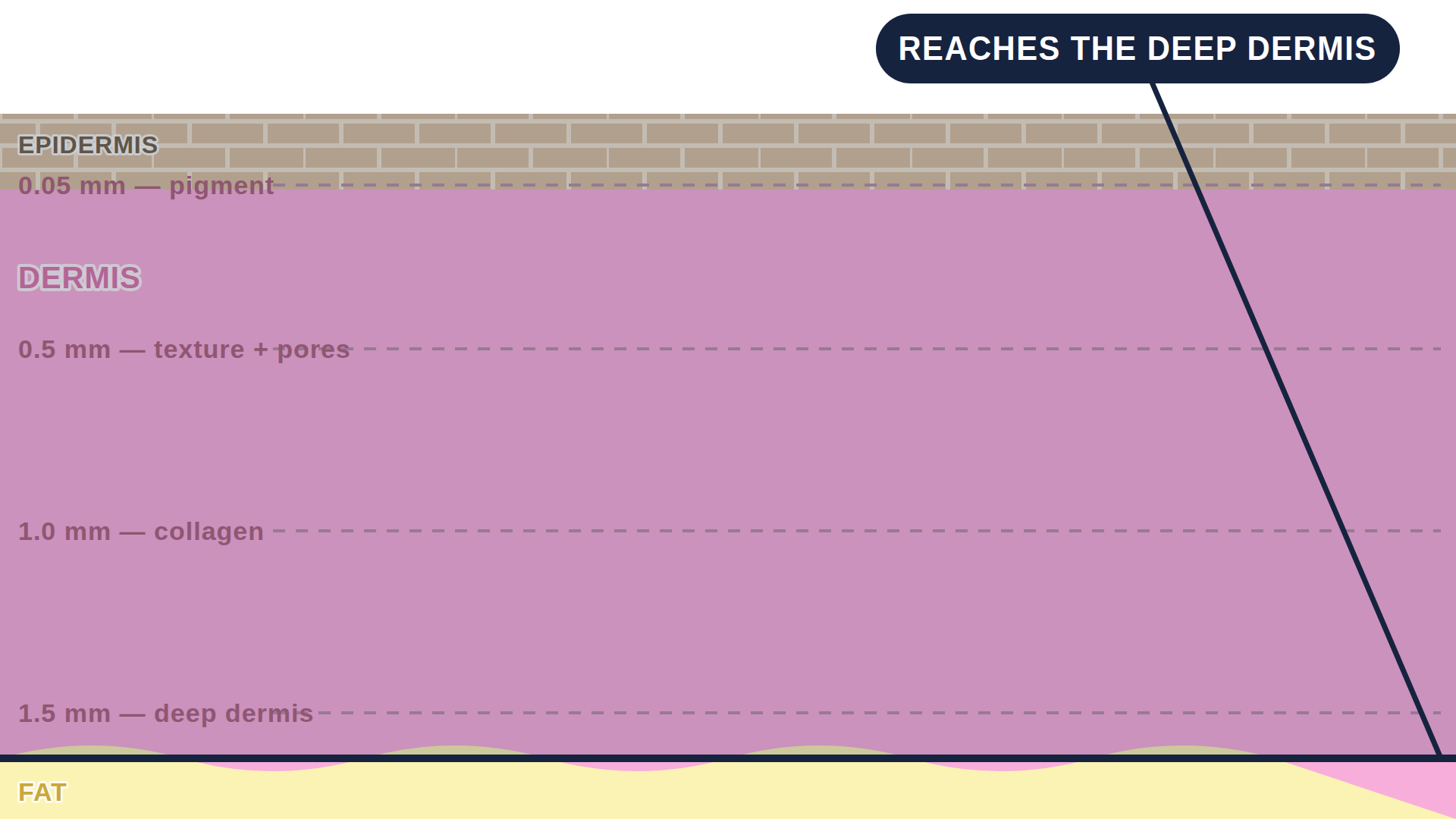
Light absorbed by the blood A beam passes through the skin. The blood inside the vessel absorbs it and heats up, and that heat damages the vessel wall so it seals.
Side by side
Sclerotherapy
A fine needle, used several times
A liquid or foam goes into the vein. It irritates the lining so the vein swells shut, and your body absorbs it over weeks.
Surface laser
Light absorbed by the blood
A beam passes through the skin. The blood inside the vessel absorbs it and heats up, and that heat damages the vessel wall so it seals.
Sclerotherapy
Spider veins and the feeders behind them
The purple and red lines, plus the slightly larger blue reticular veins under them that supply the pressure.
Surface laser
The very finest vessels
Threadlike red vessels too small to get a needle into, and veins on the face and around the nose.
Sclerotherapy
It can reach them
A needle can be placed into a reticular vein a few millimetres down and close it. That is why results tend to last.
Surface laser
It usually cannot
Surface laser works on what is near the skin. If a feeder vein underneath is still pushing, the fine veins refill.
Sclerotherapy
Stinging, then a brief cramp
Each injection stings for a second. Some solutions cause a short cramping ache in the leg afterwards.
Surface laser
Snapping, like a hot elastic band
Repeated for each pass. Skin is cooled during treatment, and legs hurt more than faces.
Sclerotherapy
Weeks to a few months
Treated veins darken, then fade. The final look takes a few months.
Surface laser
Weeks, and often gradual
Some vessels vanish on the day. Others fade over several weeks or need another pass.
Sclerotherapy
Usually two to four
Spaced a few weeks apart. Large clusters take more.
Surface laser
Usually more than sclerotherapy
Three to six sessions is common for legs, fewer for the face.
Sclerotherapy
None, and walking is encouraged
Compression stockings for a week or two. No gym or long standing for a day or so.
Surface laser
A day or two of redness
Redness, mild swelling and sometimes small scabs along the treated lines.
Sclerotherapy
Brown staining and new tiny veins
A brown line can follow the treated vein for months. A fine blush of new tiny vessels can appear nearby. Both usually fade, but not always.
Surface laser
Marks on the skin itself
The energy passes through the skin, so it can leave a lighter or darker patch, a small blister, or a fine scab. These usually settle.
Sclerotherapy
No light involved
The needle does not care what colour your skin is.
Surface laser
Needs care
Melanin in the skin absorbs some of the light. On tanned or deeper skin the settings must be gentler, and the risk of a pale or dark patch is higher.
Sclerotherapy
Priced per session, and it is a course
Ask for the cost of the whole plan, not one visit.
Surface laser
Priced per session, usually more of them
Often the more expensive route for legs, because it takes more visits.
Sclerotherapy
Stockings and vein creams
Compression stockings genuinely help aching legs and slow new veins forming. They do not remove a vein. Creams with horse chestnut or vitamin K may soothe, but nothing you rub on closes a vessel.
Surface laser
Home laser and IPL pens do not do this
Handheld devices sold for veins put a fraction of the energy in, and cannot be aimed at a specific vessel. They mostly heat the skin surface. Burns and pale patches are the usual result.
Sclerotherapy
Surface laser
Sclerotherapy
Sclerotherapy also handles a wider size range. Changing the strength of the solution, or using a foam, lets the same technique treat a threadlike vein and a small ropey one. Laser does well on a narrower band of vessel sizes.
Surface laser
A needle reaches the feeder. A surface laser does not. That single fact explains most of the difference in results. Treating only what you can see, without closing the supply, gives a good week and a disappointing month.
Common questions