Moxi Laser

The Moxi handpiece is glided over the skin in passes. It is a fractional laser set gently, so the skin looks flushed rather than raw afterwards.
These two lasers sit at opposite ends of the same scale. Moxi is the gentle end: it works near the surface, fades brown spots and costs you a few days looking bronzed. A fractional CO2 laser is the hard end: it resurfaces deep enough to change lines and scars, and asks for a week or more of real recovery. Downtime and your skin tone are the decision.
| The difference | Moxi Laser | Fractional CO2 Laser |
|---|---|---|
| Downtime | A few days looking bronzed and rough | A week or two, raw skin and peeling |
The Moxi handpiece is glided over the skin in passes. It is a fractional laser set gently, so the skin looks flushed rather than raw afterwards.
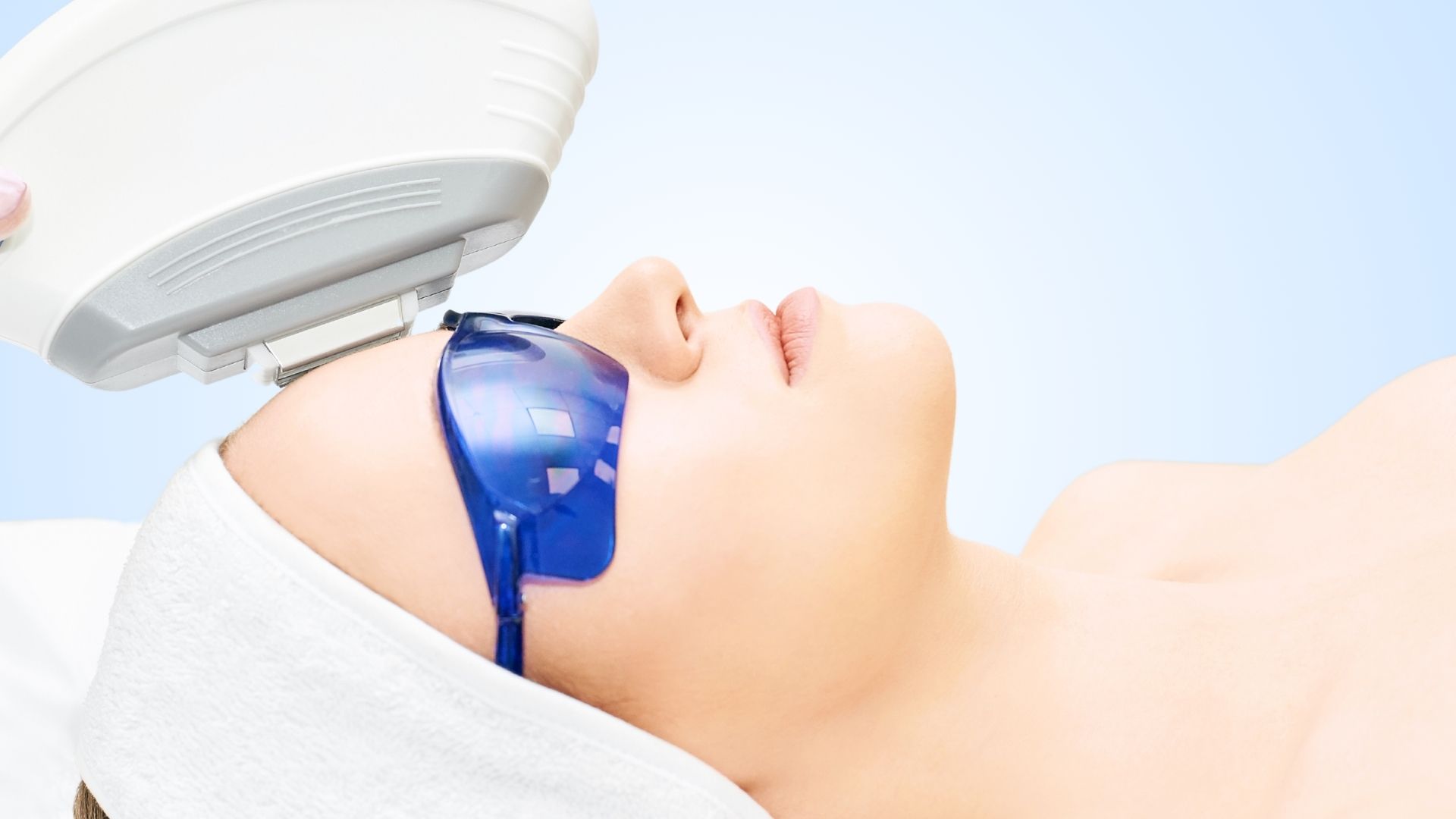
The treatment head is held above the skin rather than resting on it. The blue shields are not optional — they protect the eyes from a beam that would otherwise reflect.
Side by side
Moxi Laser
A series, commonly three or more
A laser is passed over the skin. Water near the surface soaks up the energy. That heats tiny columns of tissue just under the surface, but leaves the surface itself intact.
Fractional CO2 Laser
Often one treatment, sometimes two
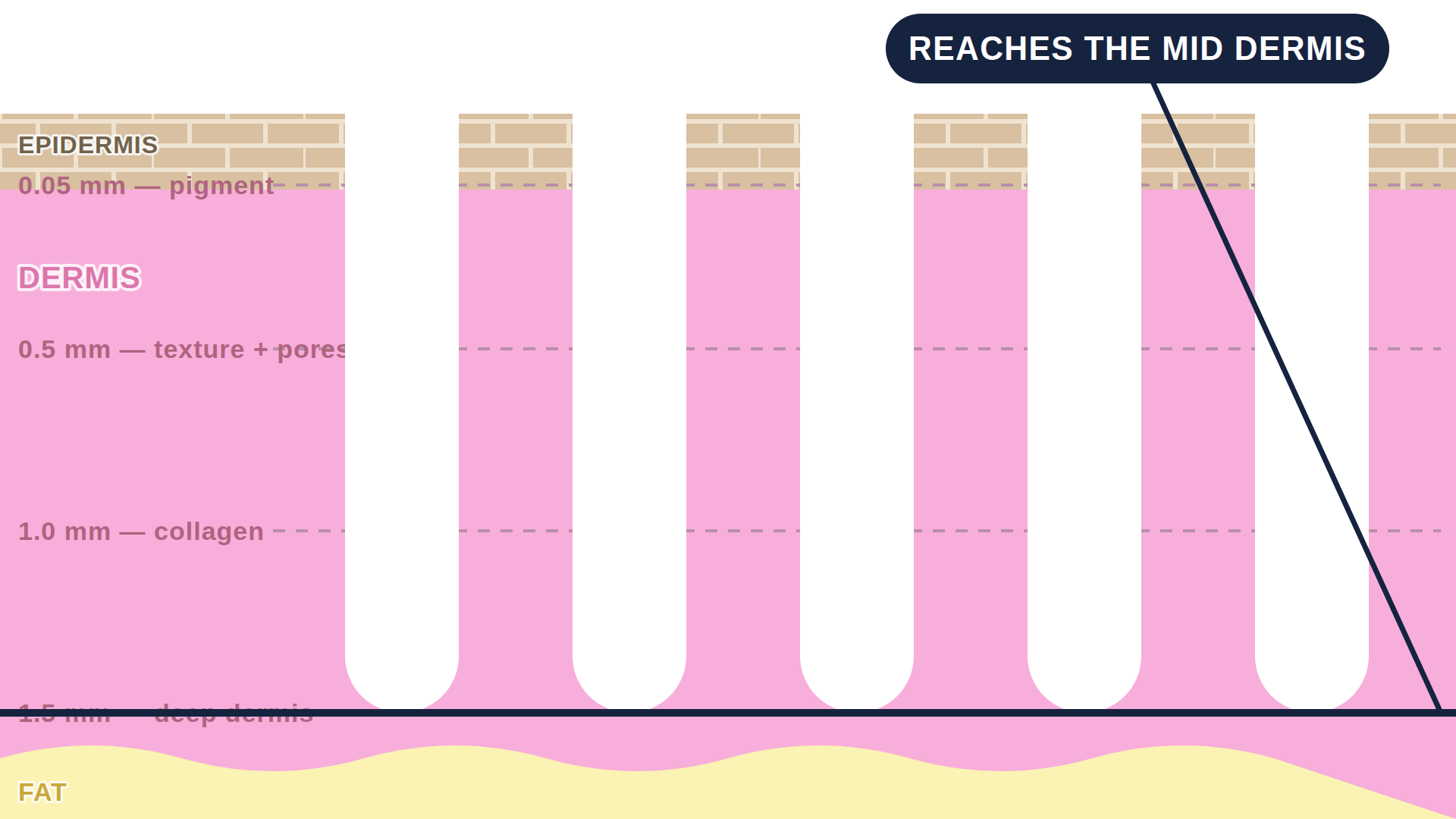
The laser vaporises microscopic columns of skin, surface included, and reaches down into the dermis.

The strongest result available from a device for fine lines, texture and sun damage, particularly around the mouth and eyes. One treatment usually does it, and the trade is a week or more of raw, red, peeling skin. The pigment risk is significantly higher on deeper skin tones, so settings are lowered, a test spot is done first, and the provider's experience with your skin matters.

The most effective single option for indented scarring, and the one with the most downtime — about a week of raw, swollen skin and months of strict sun avoidance afterwards. It does most for boxcar and rolling scars; icepick scars need something aimed at them separately. Settings are dialled back on deeper skin tones because of the pigment risk.
Used to reshape a nose that has thickened, by removing the excess tissue layer by layer. This is the answer for rhinophyma, since creams and tablets do not reverse it. It is a real procedure with real downtime of a couple of weeks, and results are strongly dependent on who does it.

An ablative laser that removes columns of skin rather than only heating them, so downtime is longer and the response can be larger. It is the highest-risk option on this page for post-inflammatory hyperpigmentation and for thickened scars on the chest, shoulders and upper back, which is why it is not a first choice on deeper skin tones.

An ablative resurfacing laser with a real risk of making melasma worse, particularly on medium and deep skin tones. Any benefit tends to be short-lived and the rebound darkening can last a long time. If a clinic is offering aggressive resurfacing as the answer to melasma, that is a reason to get a second opinion.
Moxi Laser
Brown spots fade, the surface brightens
It is built for sun spots, freckling and early sun damage.
Fractional CO2 Laser
Deep lines and scars change shape
It reaches the dermis. That is why it can reshape indented acne scars, deep lines and heavy sun damage.
Moxi Laser
Not for deep lines or indented scars
Moxi will soften these a little at best. It works above the level where they sit.
Fractional CO2 Laser
Not a gentle, repeatable option
CO2 does more in one go and asks more of you. Moxi trades depth for repeatability.

Moderate evidence. Reaches depth through needles rather than light, so melanin does not absorb the energy. Less improvement for scars, considerably less downtime, and a much smaller pigment risk. Often the better trade on deeper skin tones.

Moderate evidence. Far cheaper, minimal downtime, safest across skin tones, and clearly less effective. Needs a course of three to six rather than one to three sessions.

Strong evidence for pigment and pores, none for indented scars at superficial depth. Not a substitute here.
Moxi Laser
A few days looking bronzed and rough
Redness on the first day, then a sandpapery texture. Most people are presentable within a few days.
Fractional CO2 Laser
A week or two, raw skin and peeling
Skin oozes and peels early on. This is the biggest practical difference between the two. Do not book CO2 with a social event in the same fortnight.
Moxi Laser
Low, but not zero
Some people get darkening of the skin afterwards. It usually fades.
Fractional CO2 Laser
Higher, and some of it is permanent
Longer healing means more chance of infection and scarring. Redness lasting weeks to months is common. The one that defines this treatment is permanently lighter patches.
Moxi Laser
No home version of a clinic laser
Handheld "fractional" devices are sold for home use. They are far weaker and do not reach the depth a clinic laser works at.
Fractional CO2 Laser
There is no home version at all
Nothing sold for home use vaporises the surface of the skin. Anything that did would be a burn with no clinic to manage the healing.
Moxi Laser
Fractional CO2 Laser
Moxi Laser
Colour is Moxi's job. Brown spots, freckling, a dull uneven surface. This is what it is built for.
Moxi Laser
Moxi is a 1927 nm thulium laser made by Sciton. It heats columns of tissue roughly 100 to 200 microns down, in and just under the epidermis. Fractional CO2 devices use a 10,600 nm wavelength.
Moxi's FDA clearance covers soft tissue coagulation, actinic keratosis and benign pigmented lesions, including lentigines, solar lentigines and freckles. It is widely used for texture and fine lines, which are not in that clearance. That is off-label use — legal and normal, but it means the claim was not reviewed.
Fractional CO2 Laser
Fractional CO2 devices are cleared for skin resurfacing, including wrinkles and scars.
Common questions