Juvelook
A polymer plus a gel Tiny particles of poly-D,L-lactic acid mixed with hyaluronic acid. The gel carries the particles and adds a little water to the skin right away. The polymer is the part meant to build collagen.
Juvelook is sold for skin quality, but no trial of it has ever been published. It is poly-D,L-lactic acid mixed with hyaluronic acid. It is not approved in the US. Sculptra is the tested one: poly-L-lactic acid, approved in the US for facial folds and for fine lines in the cheeks.
| The difference | Juvelook | Sculptra |
|---|---|---|
| What it is | A polymer plus a gel | A polymer on its own |
| What it is sold to do | Skin quality | Volume, wrinkles and cheek fine lines |
A polymer plus a gel Tiny particles of poly-D,L-lactic acid mixed with hyaluronic acid. The gel carries the particles and adds a little water to the skin right away. The polymer is the part meant to build collagen.

Side by side
Juvelook
A polymer plus a gel
Tiny particles of poly-D,L-lactic acid mixed with hyaluronic acid. The gel carries the particles and adds a little water to the skin right away. The polymer is the part meant to build collagen.
Sculptra
A polymer on its own
A dried powder, mixed with sterile water just before use. It holds poly-L-lactic acid particles and nothing else.
Juvelook
Skin quality
Sold for texture, fine lines and skin condition, not for restoring shape.
Sculptra
Volume, wrinkles and cheek fine lines
It covers smile folds and other facial wrinkles. A newer use covers fine lines in the cheeks. That second one is a skin claim, not a volume claim.

A collagen-stimulating injectable given as a course, usually three sessions. Nothing looks different straight away; volume builds gradually over several months and lasts around two years. It suits overall thinning and flatness rather than a single line, and it cannot be dissolved, so it is a slower and less reversible decision than filler.
Juvelook
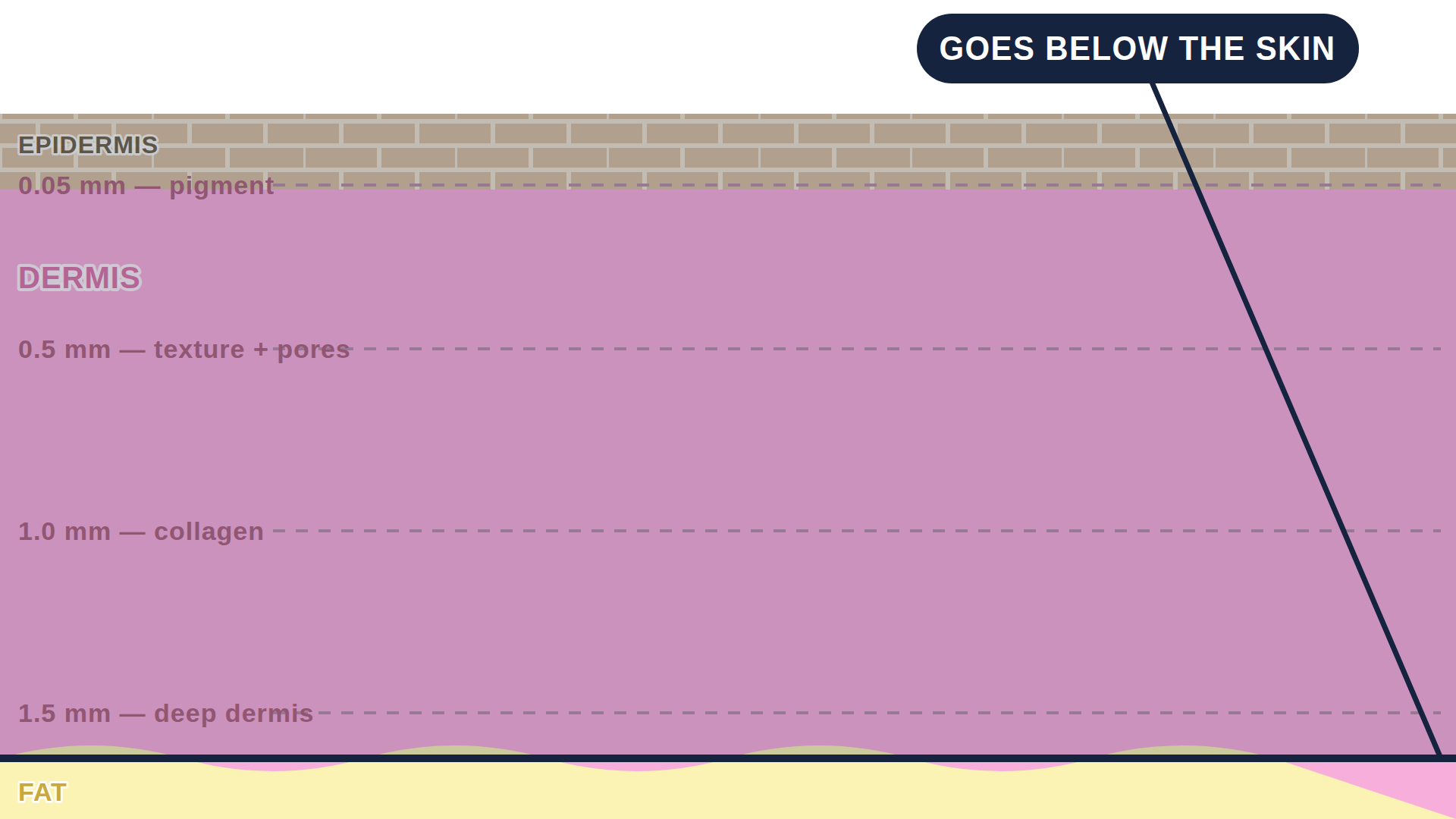
Shallow, spread across an area
That is what the word booster describes. There is no published depth protocol for the branded product.
Sculptra
Deep, threaded under the skin
The approved instructions describe a deep threading technique. It is not spread thinly across a field.
Juvelook
No published trial
There is no clinical trial of Juvelook in the medical literature. Vendor and clinic descriptions are not evidence.
Sculptra
One randomised trial for cheek lines
149 people were put at random into two groups: treatment, or no treatment. At one year, 71% of the treated group had better cheek wrinkles, against 26% of the untreated group. The maker paid for the study.
Juvelook
Only the gel part
Hyaluronidase breaks down hyaluronic acid, so it acts on the carrier. It does nothing to the polymer, which was the point of the treatment.
Sculptra
Nothing
Hyaluronidase melts hyaluronic acid. It does not touch poly-L-lactic acid. There is no approved way to reverse it.
Juvelook
Lumps are described for this material
PDLLA fillers can cause lumps and hard nodules. There is no rate for the branded product, because there is no study of it.
Sculptra
Lumps, sometimes months later
In the folds trial, lumps or bumps happened in 17% of the Sculptra group and 13% of the comparison group. The labelling records lumps starting around five months in.
Moderate evidence. The other common biostimulator. It adds volume the same day as well as building collagen, and typically lasts about 12 to 18 months rather than two years. Also not reversible.
Juvelook
There is none
Nothing you can buy puts a polymer under your skin. A cream sits on the surface. This material only works once a needle places it deeper.
Sculptra
There is none either
Same answer, same reason. Anything sold as an at-home collagen booster is a different thing with a similar name.
Juvelook
Sculptra
Juvelook
No regulator has assessed Juvelook at all. There is no published trial, and no follow-up figure for it. Anything you read about how long it lasts, or how many people improve, did not come from a study of it.
Sculptra
Sculptra sits on the other side of that line. Its cheek approval rests on a randomised trial. The people scoring the results did not know who had been treated. You can read the approved wording, and you can read the trial. The trade-off is that the maker ran it, as with almost every filler study.
Sculptra
That split does not quite fit Sculptra. It has two cosmetic uses, and they are not the same kind of claim. The older one is about fold shape. The newer one is about fine lines in the cheeks, which is a surface claim.
Juvelook
Juvelook is sold into US clinics through grey-market channels. If you are offered it here, no US review sits behind it. Nobody has checked the supply chain either.
None of that says Juvelook harms people. It says the ordinary trail may not exist if something goes wrong: no reviewed label, no batch record, no clear way to report it.
Juvelook
Juvelook has no US FDA approval and no 510(k) clearance. It is marketed in South Korea under the MFDS and in CE-mark territories, according to vendor and clinic material. It is commonly sold at 50 mg of poly-D,L-lactic acid.
Sculptra
Sculptra is approved through premarket approval, PMA P030050: facial fat loss in people with HIV (3 August 2004); nasolabial folds and other facial wrinkles suited to a deep dermal cross-hatch technique (2009); fine lines and wrinkles in the cheek region (2023). The 2009 and 2023 uses both specify people with a normal immune system. Each vial holds 367.5 mg of powder containing poly-L-lactic acid particles, reconstituted with sterile water before use.
The 2023 cheek trial behind the newest use randomised 149 people at 13 US sites against no treatment and scored them on the Galderma Cheek Wrinkles Scale, with 70.7% responders at month 12 against 25.9% of controls. Mean age was 60.7 and 96.6% of participants were female. The sponsor was the manufacturer.
Juvelook
Ask for the exact Juvelook product, regulatory status, amount and course of visits before comparing the price.
Sculptra
Ask how much Sculptra and how many visits the proposed plan includes. Include follow-up and the touch-up policy in the written quote.
Common questions
The FDA's advice to consumers is direct. Do not buy dermal fillers sold straight to the public. They may be fake, contaminated, or not approved for use in the US. In one hospital series of injection problems, over half the products involved were uncertified or of unknown origin.