Juvederm

A filler injection along the jaw. Hyaluronic acid filler adds volume where it is placed, and it can be dissolved later if needed.
Juvederm is a brand of filler, not an alternative to one. It is one family of hyaluronic acid gels. "Dermal filler" is the name of the whole group, and Juvederm sits inside it. The group covers four materials, and the material decides whether a filler can be dissolved later.
| The difference | Juvederm | Dermal Fillers |
|---|---|---|
| What it is made of | Hyaluronic acid gel, always | Four materials that behave differently |
| Cost | No published price from the makers | One dated society figure |
A filler injection along the jaw. Hyaluronic acid filler adds volume where it is placed, and it can be dissolved later if needed.
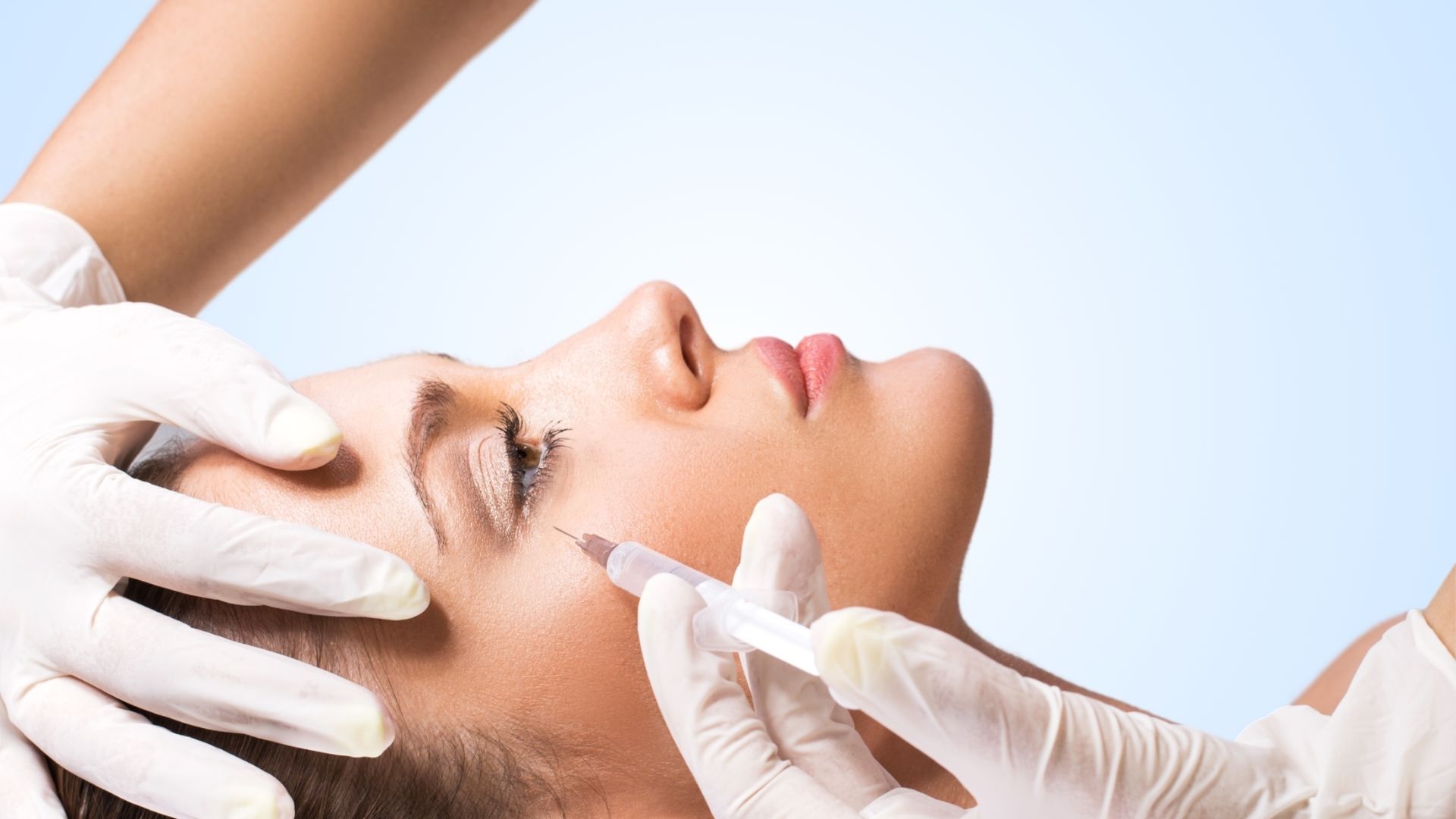
A filler injection in the mid-face. Filler is placed with a needle or a blunt cannula, and the result is visible straight away rather than over weeks.
Side by side
Juvederm
A brand, with seven or more products
Seven products, each with its own trials and its own duration figures. A number from one product does not belong to another.
Dermal Fillers
A category, four different materials
Hyaluronic acid, calcium hydroxylapatite, poly-L-lactic acid and polymethylmethacrylate.
Juvederm
Hyaluronic acid gel, always
Every Juvederm product sold in the US is a hyaluronic acid gel. Most also carry a small amount of lidocaine.
Dermal Fillers
Four materials that behave differently
Hyaluronic acid gels fill on the day. Sculptra builds collagen over months instead of filling. Radiesse is a mineral in a gel carrier. Bellafill is permanent acrylic microspheres.
Juvederm
Yes
Hyaluronidase is the enzyme used to dissolve filler. It breaks down hyaluronic acid, so it works on every Juvederm product.
Dermal Fillers
Only the hyaluronic acid ones
Hyaluronidase does nothing to Radiesse, Sculptra or Bellafill. There is no approved reversal agent for any of the three. For Radiesse and Sculptra the real options are time, steroids and rarely surgery. For Bellafill it is surgery.
Juvederm
A different figure for each product
Each figure is the end of that trial, not the end of the filler. Voluma XC in the cheeks: 67% of people were still responding at 24 months. Ultra XC in the lips: 56% at 12 months. Vollure XC in nasolabial folds: 59% at 18 months.
Dermal Fillers
No fair way to line the numbers up
Restylane Kysse reported 60% still responding at week 48. Bellafill is permanent by design. None of these figures can be set against each other. Different products, different trials, different scales built by the makers themselves.
Juvederm
No published price from the makers
The makers do not publish what a patient pays.
Dermal Fillers
One dated society figure
The American Society of Plastic Surgeons last published averages for 2023. They were $715 for hyaluronic acid fillers and $901 for other fillers. Those are surgeon fees only. They pool many products and many parts of the face. The group stopped publishing them after 2023.
Juvederm
Dermal Fillers
Juvederm
The best-designed comparison put Restylane Contour against Juvederm Voluma XC in the cheeks. It was built to show that one product was not meaningfully worse than the other, and that is what it showed. That is not a win, and the other comparative trials ended the same way.
Juvederm
Juvederm is Allergan Aesthetics' family of hyaluronic acid gels, crosslinked with BDDE. The "XC" products contain 0.3% lidocaine; Juvederm Ultra and Ultra Plus without the "XC" do not. Concentration varies within the family: Volbella XC is 15 mg/ml and Volux XC is 25 mg/ml. Restylane Lyft, Contour, Kysse, Refyne, Defyne and Eyelight are all 20 mg/ml.
Other hyaluronic acid families are Restylane (Galderma), RHA (Teoxane, sold in the US by Revance), Belotero (Merz), Revanesse Versa (Prollenium) and Evolysse (Evolus and Symatese). Radiesse (Merz) is calcium hydroxylapatite, Sculptra is poly-L-lactic acid and Bellafill is polymethylmethacrylate. Products sold without lidocaine include Restylane, Belotero Balance and Revanesse Versa; the RHA "Mepi" line uses mepivacaine instead.
Approvals are given product by product and area by area. Lips: Juvederm Ultra XC and Volbella XC. Cheeks, chin and temples: Voluma XC. Nasolabial folds and facial wrinkles: Ultra XC, Ultra Plus XC and Vollure XC. Jawline definition: Volux XC. Cheek smoothness and, since June 2026, neck lines: Skinvive. Under-eye hollowing: Volbella XC, one of four approved options there. Restylane Lyft with Lidocaine holds the only hyaluronic acid approval for the backs of the hands. Sculptra is approved for nasolabial folds and other facial wrinkles, and for fine lines and wrinkles in the cheek region. Radiesse is approved for nasolabial folds and, in later supplements, for the backs of the hands and the jawline. Bellafill was approved in 2006, and that approval requires a skin test for bovine collagen sensitivity before injection.
Comparative trial detail: the Restylane Contour versus Juvederm Voluma XC study had 210 people in the comparative arm and met its non-inferiority margin. The Juvederm Volbella XC lip trial used Restylane-L as comparator, with 168 people on Volbella and 56 on the comparator, and response rates of 80.3% and 70.8% at the main timepoint; the approval documents do not present that as a superiority finding. The Restylane Refyne and Defyne trials met their non-inferiority margins against a comparator that was numerically higher at every timepoint.

A small amount of hyaluronic acid placed deep in the tear trough is the only thing that genuinely fills a hollow, and when the shadow is the problem the difference can be striking. It lasts months to a couple of years and then needs repeating, and it does nothing for brown pigment. It is one of the most technically demanding places on the face to inject, so who does it matters more than what they use.

Filler placed under a shallow rolling or boxcar scar lifts the floor of it straight away, which makes it the only option here with a same-day result. It is temporary, lasting months to a couple of years depending on the product. It works best as a top-up alongside collagen-building treatment, not instead of it.

Hyaluronic acid gel that replaces volume that has been lost, so it suits folds and hollows — the lines from the nose to the mouth, flattened cheeks, under-eye hollowing. It is the wrong tool for surface lines. Results last roughly six to eighteen months, and the gel can be dissolved if the result is not right.
Strong evidence, different job. Relaxes the muscles that create movement lines. It adds no volume, and filler softens no frown lines, which is why the two are used together far more often than one is chosen over the other.
Common questions
Less differs between brands than the marketing suggests. Hyaluronic acid concentration barely varies across brands, and it does not track with strength. Six Restylane products share one concentration and behave very differently. The real variables are crosslinking and gel structure, and no company publishes those.
Platform names are trademarks, not categories. Vycross, Hylacross, NASHA, XpresHAn, CPM and Resilient HA are company names for company processes. None of them appears in the FDA documents, which describe these products in the same generic chemical terms. They do not support comparisons across brands.
Treat any chart that ranks brands by firmness with caution. The standard reference on how these gels behave found the measurements lined up only within one manufacturing technology at one concentration. Rankings across brands are not supportable.
Sculptra does not fill. It works by prompting the body to lay down collagen over weeks to months. Nothing looks different on the day.
Bellafill is permanent. Its microspheres are, in the FDA's own words, "not absorbed by the body." The collagen carrier it comes in breaks down over roughly one to three months. The microspheres stay.
None of the non-hyaluronic acid fillers can be dissolved. Every filler carries the same serious risk, which is filler entering an artery. If being able to reverse the result matters to you, that is the most important line in the category. It is invisible if you think of "dermal filler" as one thing.