Cryotherapy (Liquid Nitrogen)
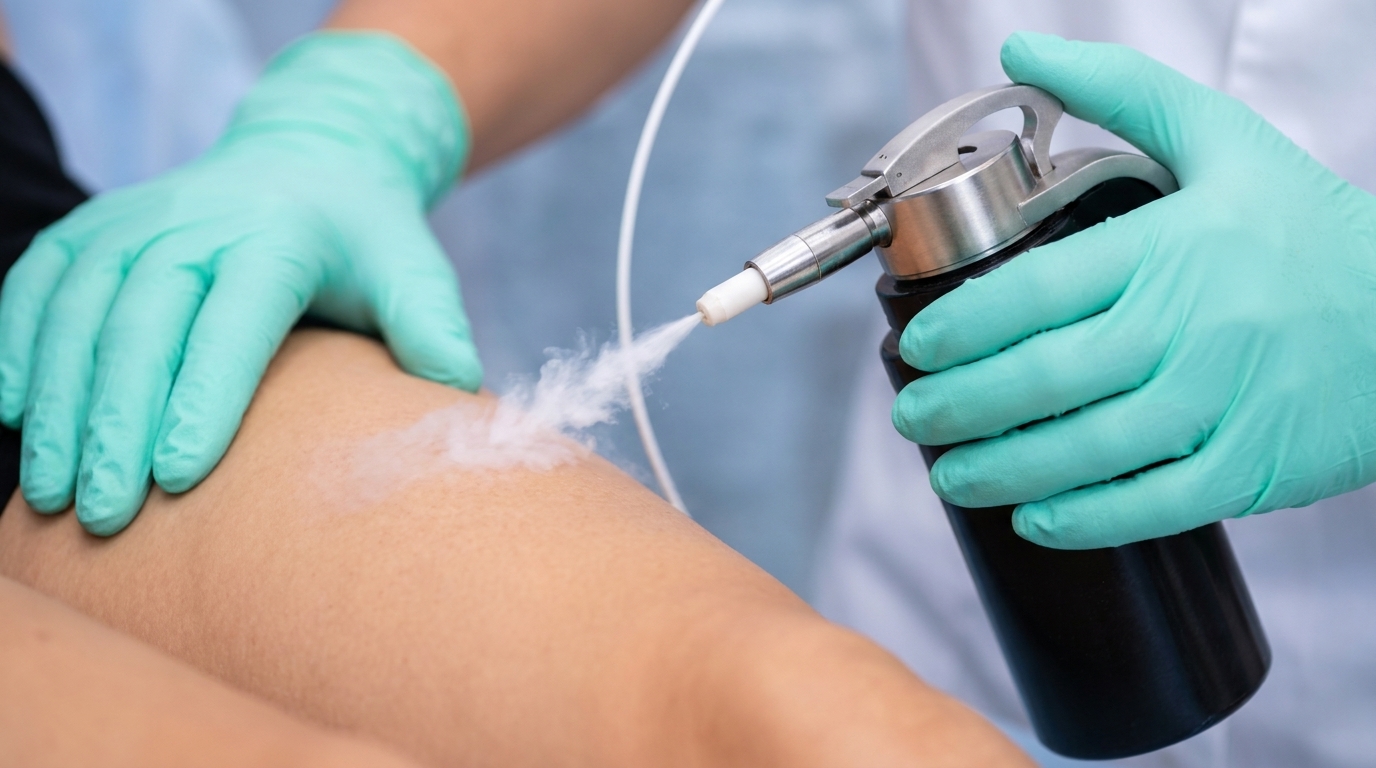
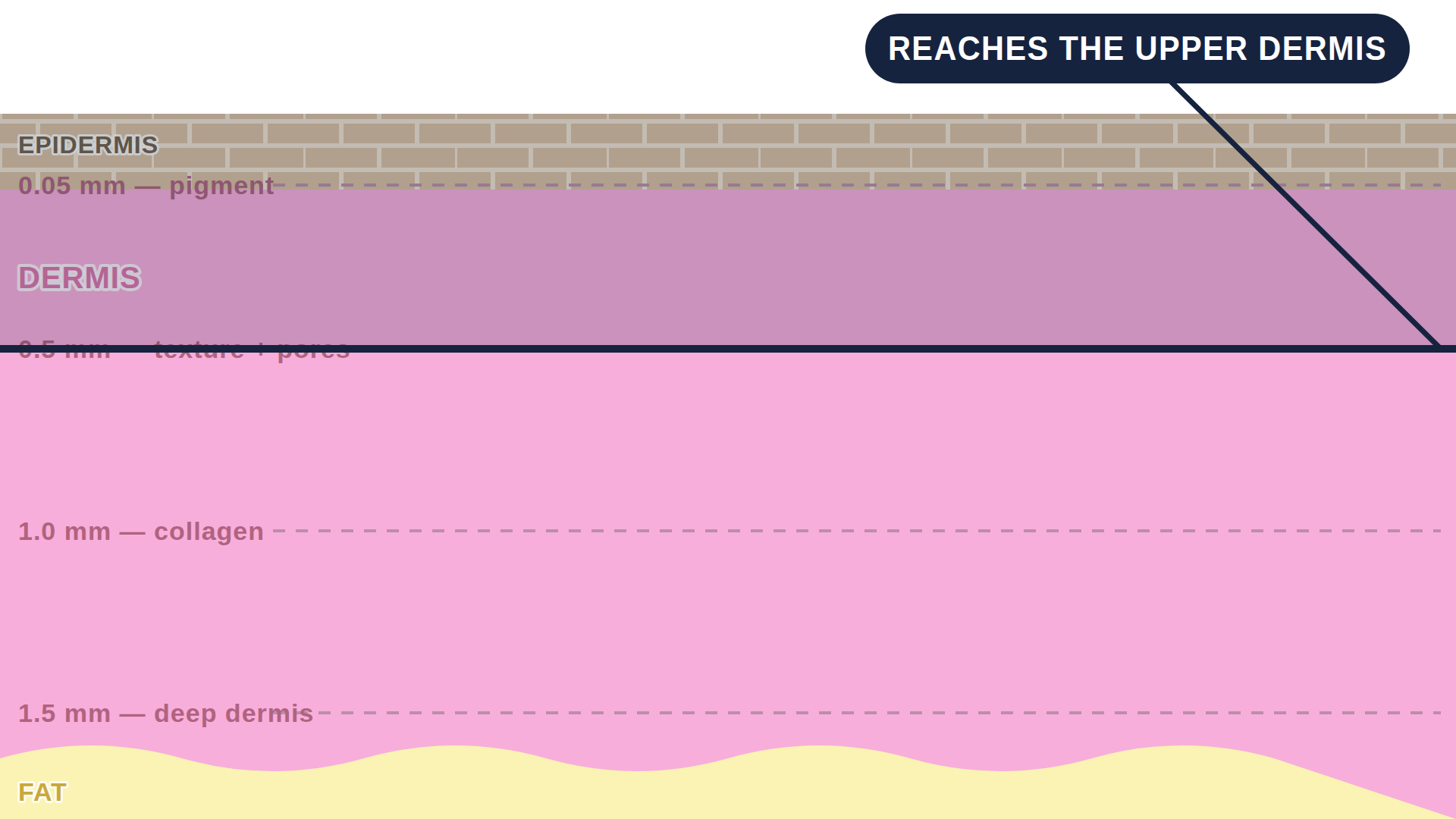
Liquid nitrogen sprayed straight onto the skin. The white plume is the freeze itself — it lasts seconds, and the spot blisters over the following days.
Cryotherapy is not a fat treatment. It is two to three minutes in a chamber of very cold air, sold for recovery and soreness. CoolSculpting thins one pinchable pocket of fat. It holds a single bulge inside a cooled cup for 35 to 60 minutes. Neither one is a weight-loss treatment.
| The difference | Cryotherapy (Liquid Nitrogen) | CoolSculpting |
|---|---|---|
| Cost | Sold as memberships, with no set end | Paid per cycle, not per session |
Liquid nitrogen sprayed straight onto the skin. The white plume is the freeze itself — it lasts seconds, and the spot blisters over the following days.

The applicator draws a fold of skin and fat up into the cup and holds it there while it chills. That suction is why the area feels tugged for the first few minutes.
Side by side
Cryotherapy (Liquid Nitrogen)
Two or three minutes in a cold booth
You stand in a booth of very cold air or nitrogen vapour. It is sold for recovery, soreness and wellness, and in many places for slimming.
CoolSculpting
A cooled cup held on one bulge
The tissue is drawn into a cup and held at a set temperature for 35 to 60 minutes. One area, one bulge, one timed cycle.

A few seconds of liquid nitrogen on each spot, done in the room, no anesthetic needed. The spot darkens, crusts and lifts off over one to two weeks. It suits a small number of spots rather than a whole hand, and its known cost is a permanent pale mark where too many pigment cells were destroyed, which is a bigger risk on medium and deeper skin tones.
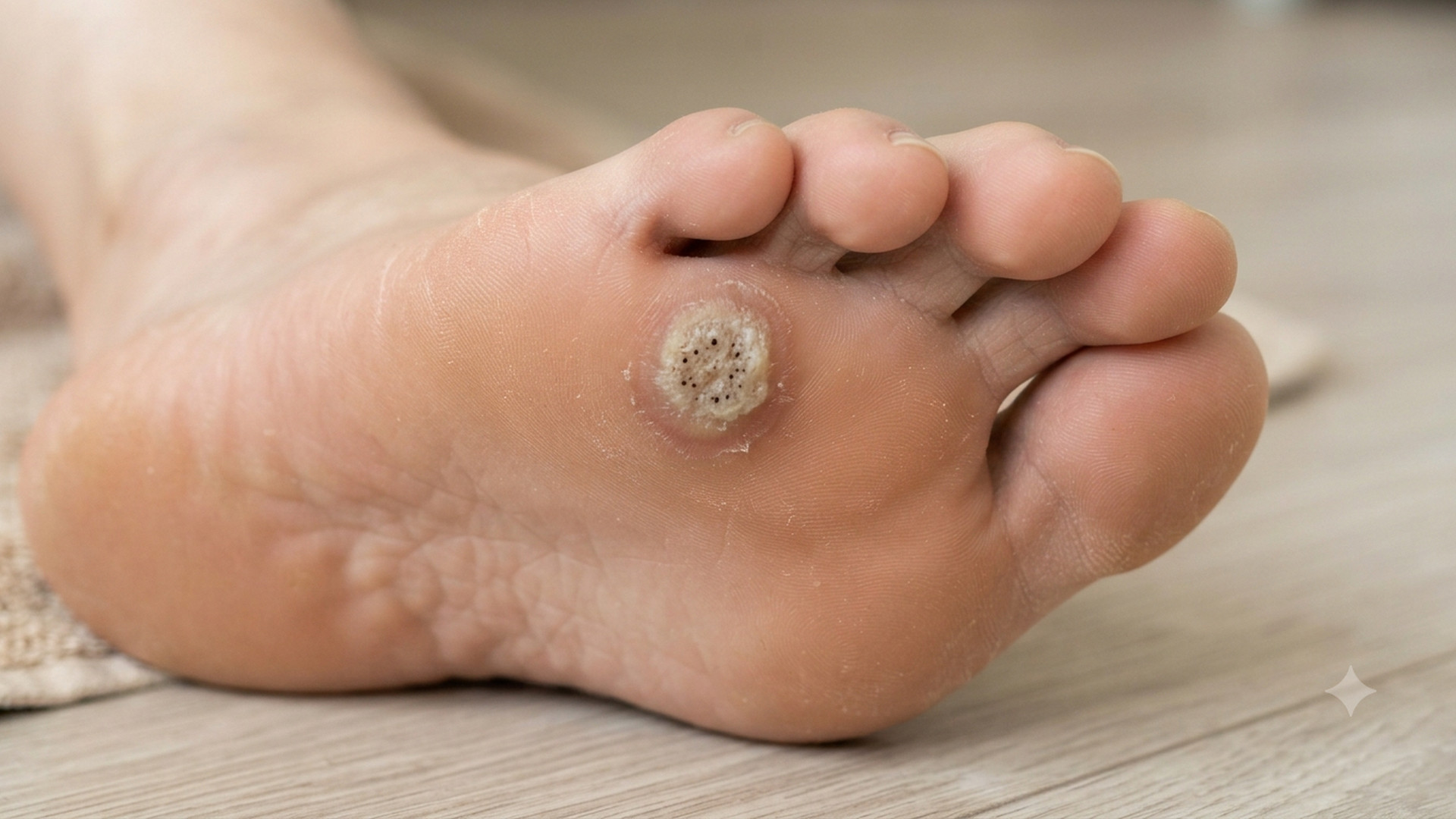
Freezing in clinic, repeated every two to three weeks. Over several months the results are broadly similar to salicylic acid used properly, so it is one reasonable option rather than the top of a ladder. On the sole it is more painful than elsewhere, walking is sore for a day or two, and it works far better if the callus is pared first.
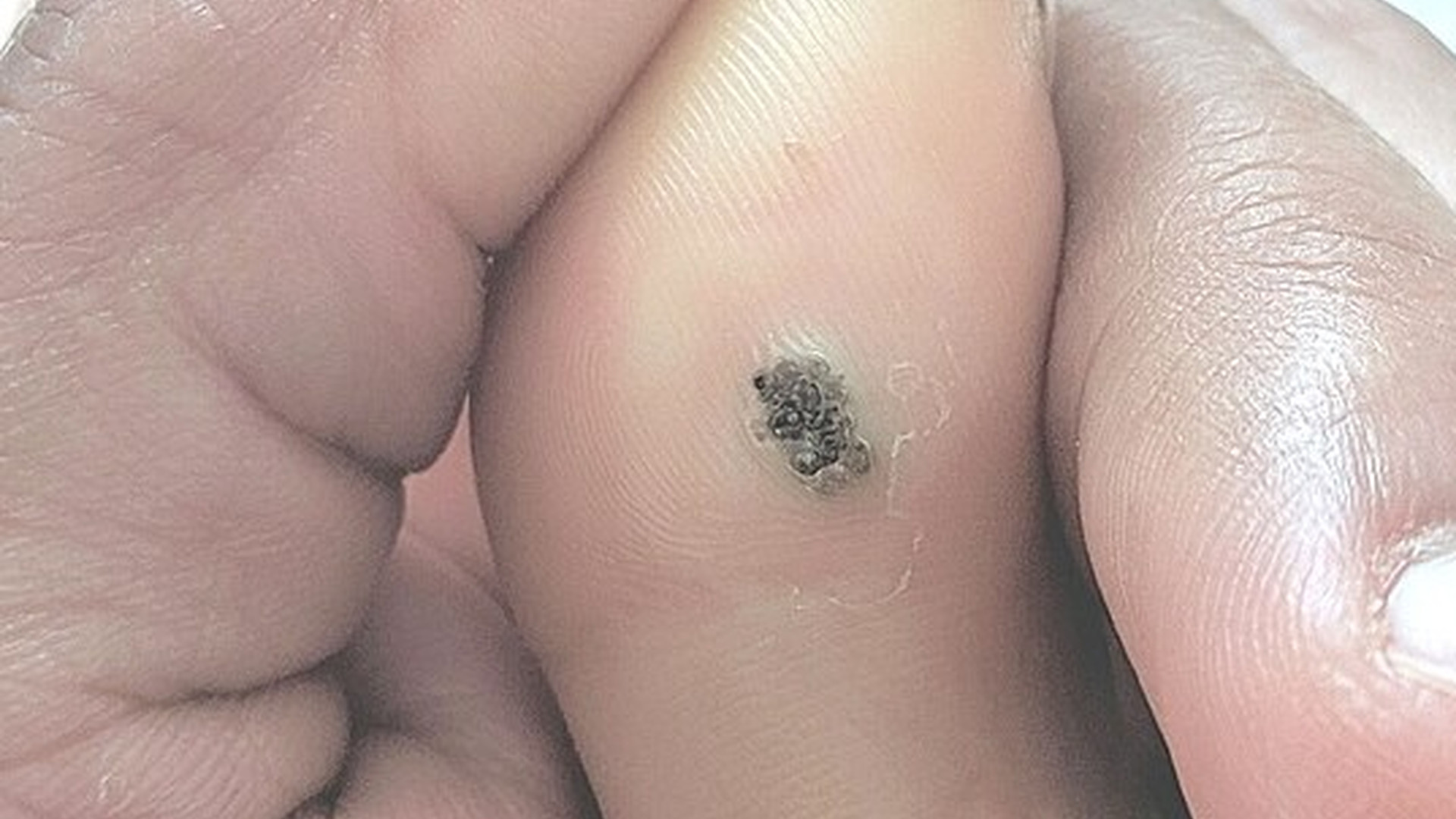
Liquid nitrogen freezes the infected skin and the injury also draws immune attention to the spot. It needs repeating every two to four weeks, usually three or four times, and a wart regrowing from the edge between sessions is normal rather than failure. Over several months its results are broadly similar to salicylic acid used properly. It stings, it blisters, and on deeper skin tones it can leave a lasting pale or dark mark.
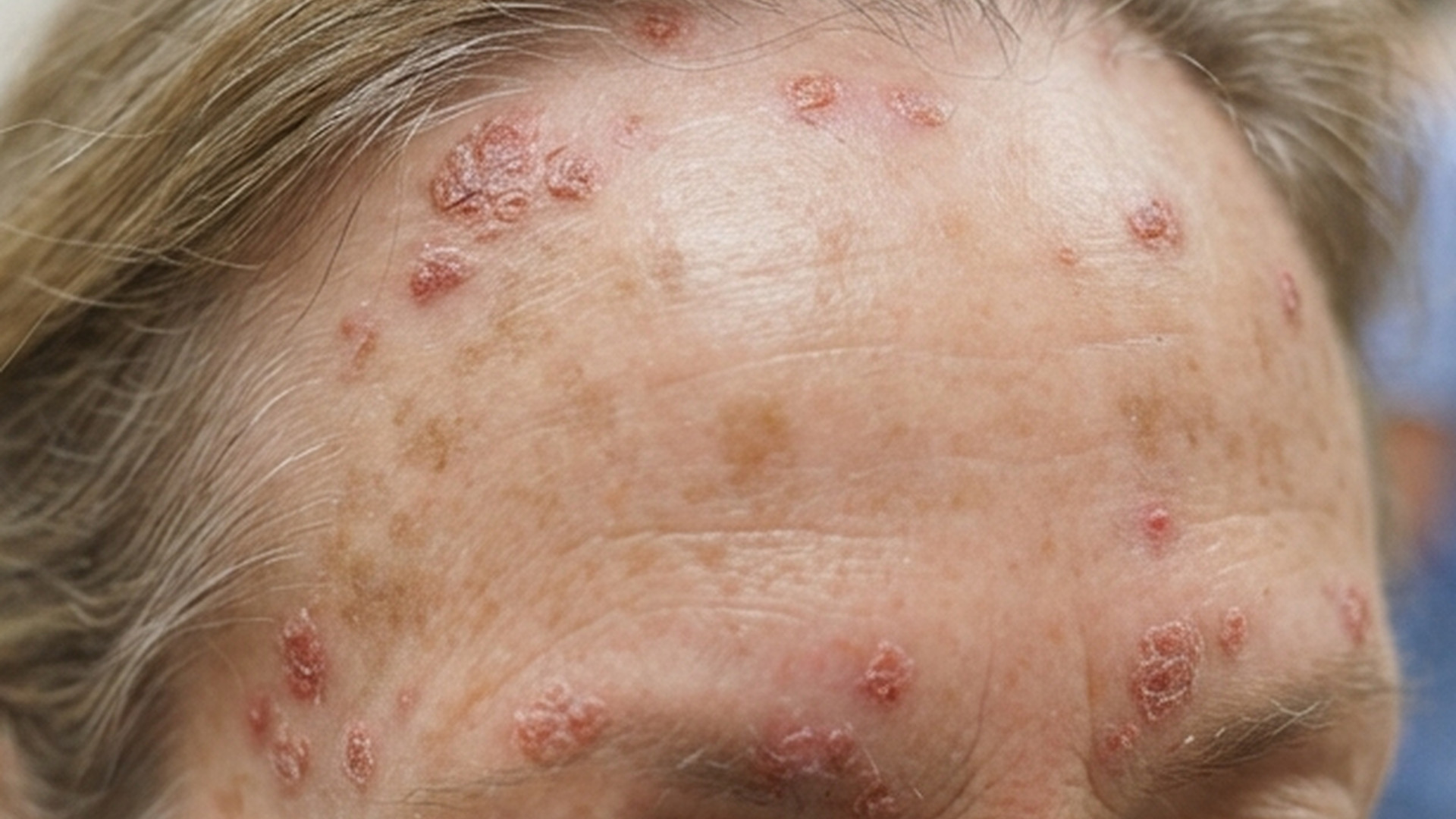
Freezing with liquid nitrogen is the quickest option for a handful of separate patches, done in a few seconds each with no prescription. It stings sharply, then blisters or crusts and heals over one to three weeks. Its limit is that it only treats what can be seen, so new patches keep arriving from the damaged skin around them. It often leaves a permanently pale mark, which is more noticeable on deeper skin tones — worth asking about before you start.
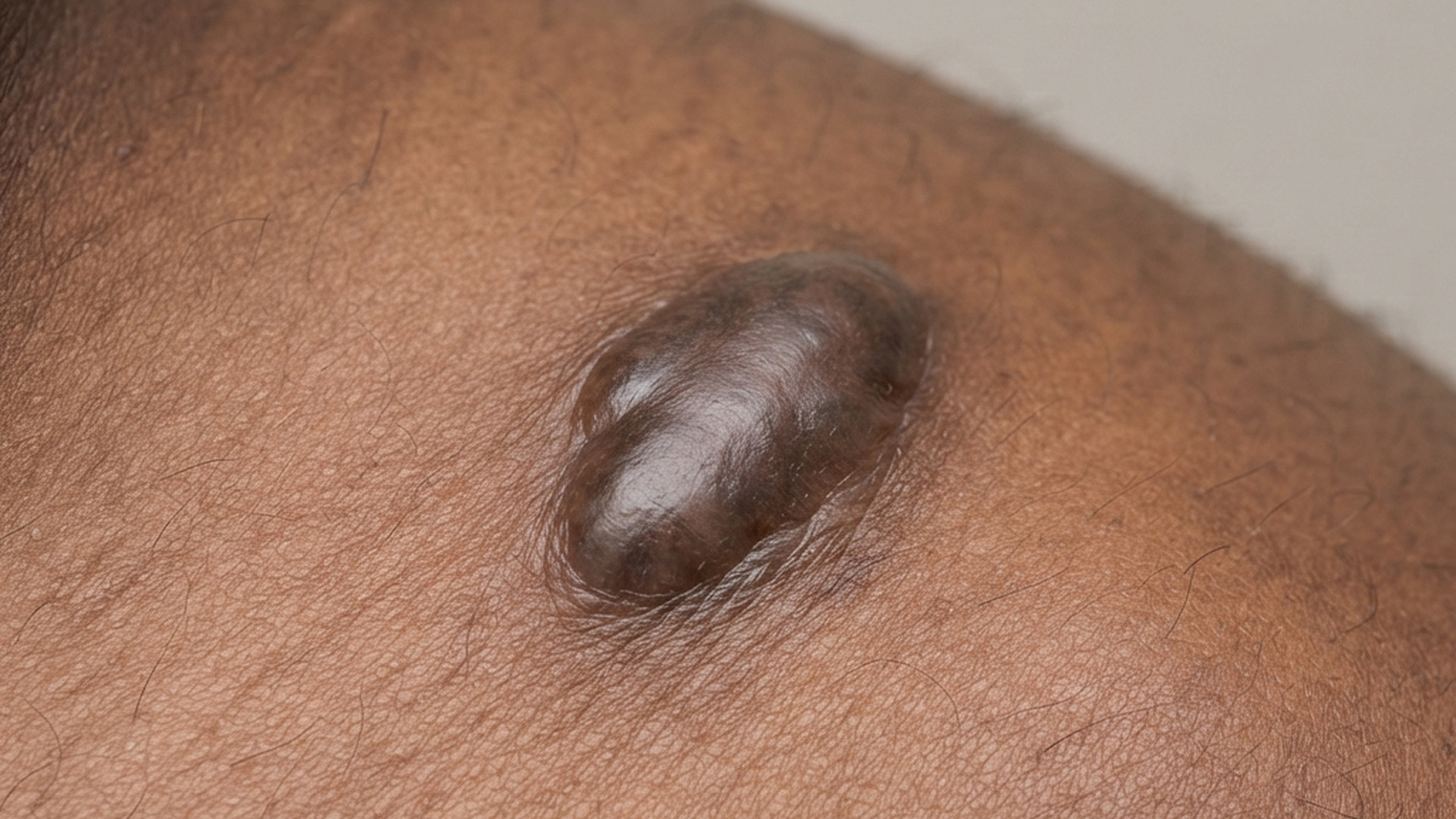
Freezing can soften and flatten smaller keloids, and is sometimes used just before an injection to make the scar easier to inject. The problem is that freezing destroys pigment cells and often leaves a permanent white patch. On deeper skin tones, where most keloids occur, many dermatologists use it cautiously or not at all.
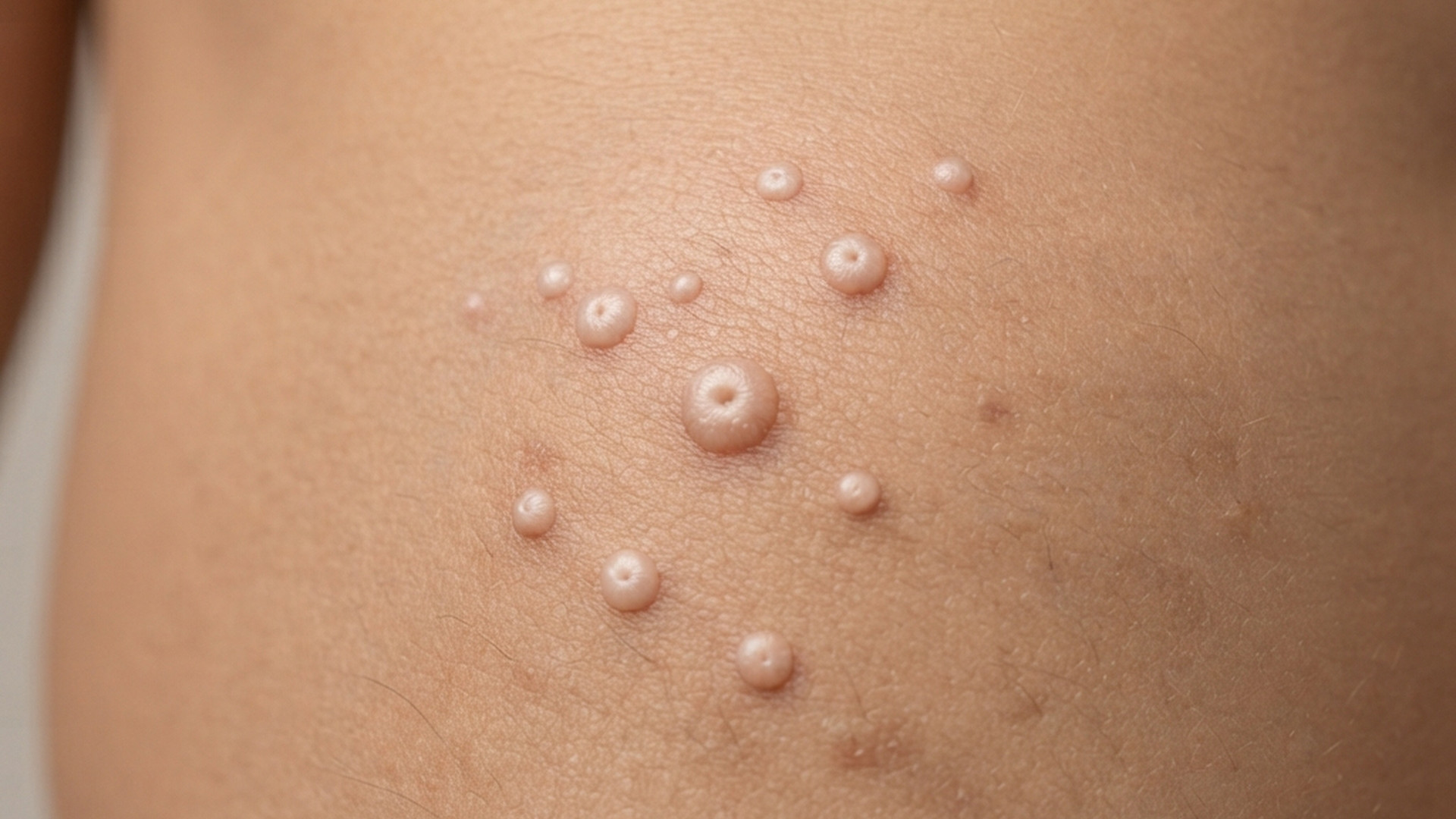
Each bump is frozen for a few seconds, and it usually takes several visits a few weeks apart. It works, and it is quick. It also stings sharply at the time, which most young children will not sit through twice, and it leaves dark or pale marks more readily than the other options — a real consideration on deeper skin tones, where those marks can last longer than the infection would have.

A few seconds of liquid nitrogen freezes the tag so it drops off over a week or so, and it is quick when there are many. It is less predictable with pigment, because the pigment-producing cells are sensitive to cold, so it is used more cautiously on deeper skin tones and near the eyes. It destroys the tag, so nothing can be examined afterward.
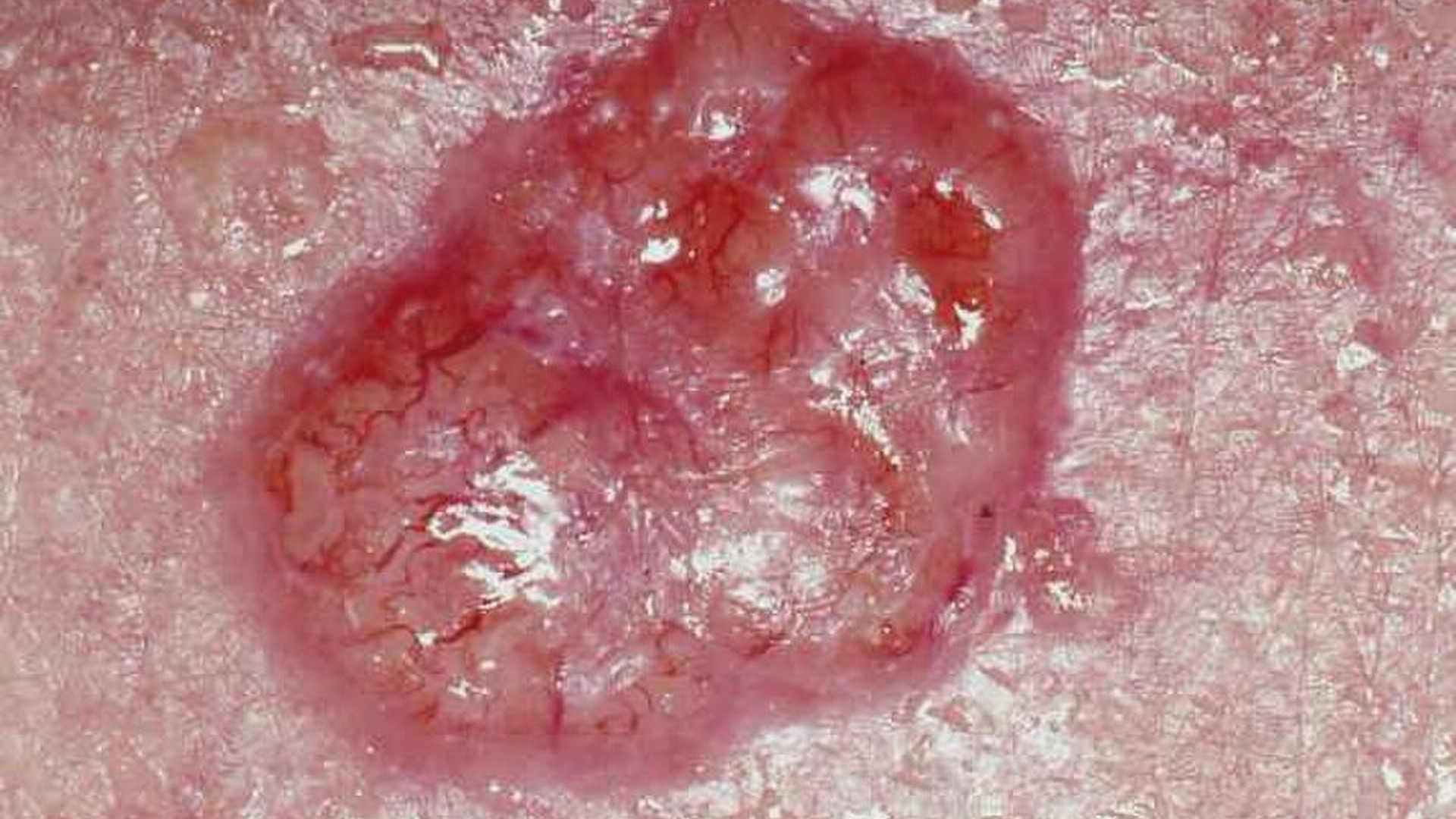
Freezing is quick and occasionally used for small superficial tumors when other options do not suit. Nothing is checked under a microscope, so an incompletely treated tumor can carry on growing under a healed surface. It also leaves a permanent pale patch, which is much more noticeable on deeper skin tones.
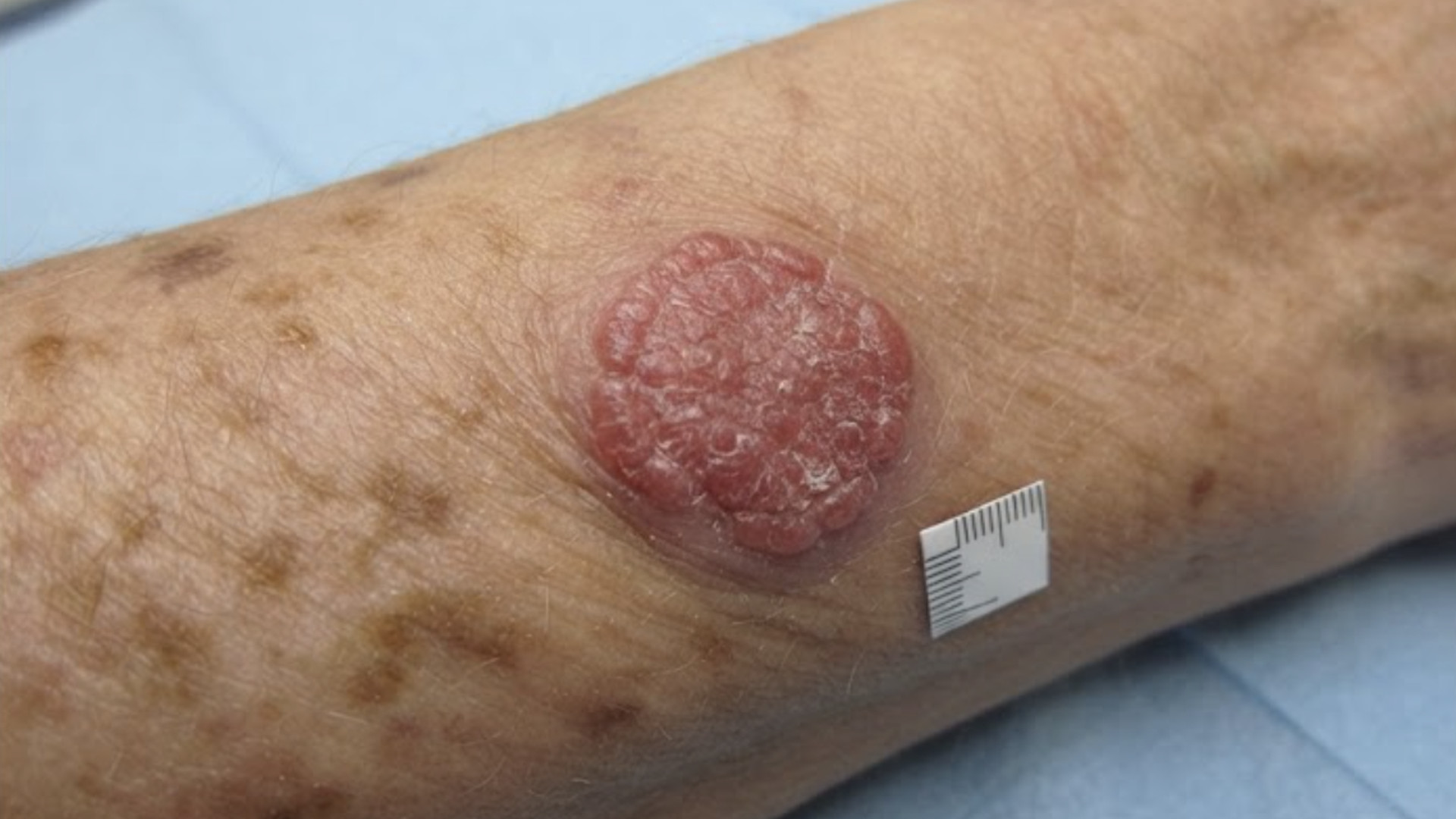
A quick freeze in clinic, used for actinic keratoses and occasionally for a small patch of carcinoma in situ. It is a treatment for the step before this cancer, not for the cancer itself. Freezing an invasive tumor leaves cells behind at depth and hides what is happening under a healing crust.
Cryotherapy (Liquid Nitrogen)
Fast surface cooling, then rewarming
The cold sets off a whole-body response. Blood vessels narrow, then widen. It is not built to cool the fat under your skin enough to kill fat cells.
CoolSculpting
Steady cooling that injures fat cells
Fat crystallises and inflames at temperatures the nearby skin, nerve and muscle can take. The cells die over days. The body clears them over months.
Cryotherapy (Liquid Nitrogen)
Feeling better afterwards
The published work sits in sports recovery, joint disease and inflammation. Studies touching obesity measured markers in the blood, not fat thickness.
CoolSculpting
A thinner fat layer at one spot
FDA pooled 4,792 cryolipolysis treatments. On ultrasound, the fat layer dropped 20.6% on average, or 3.9 mm.
Cryotherapy (Liquid Nitrogen)
It will not slim you
No study has ever reported a thinner fat layer after whole-body cryotherapy.
CoolSculpting
It will not change your overall size
Not loose skin, not cellulite, not overall size. It thins one defined, pinchable pocket.
Cryotherapy (Liquid Nitrogen)
However you feel walking out
Whatever that is worth, it is not a contouring result.
CoolSculpting
About three months
The fat cells die over days and the body clears them over months. The change arrives slowly.
Cryotherapy (Liquid Nitrogen)
Named hazards, and they hit at once
FDA lists asphyxiation, above all where liquid nitrogen is used for cooling. It also lists low blood oxygen, loss of consciousness, frostbite, burns and eye injury.
CoolSculpting
Numb, firm and often sore for days
A review of 554 procedures found that pain starting a few days later was not uncommon, lasting 3 to 11 days. Numbness can run past 12 weeks. Months later, a firm lump can appear.
Cryotherapy (Liquid Nitrogen)
Sold as memberships, with no set end
It is repeated indefinitely rather than bought as a course, so the spending has no natural end point.
CoolSculpting
Paid per cycle, not per session
One practice reviewed 18,203 cycles. The median was 4 cycles per patient. Budget for the cycles, not the appointment.
Cryotherapy (Liquid Nitrogen)
Cold plunges and cold showers
An ice bath is the same kind of thing as the booth: a short, general cold exposure, with nothing aimed at a fat layer.
CoolSculpting
Fat-freezing belts and gel wraps
A wrap cannot hold tissue at a set temperature the way the clinic device does, and nothing shuts it off if the skin gets too cold.
Cryotherapy (Liquid Nitrogen)
CoolSculpting
Cryotherapy (Liquid Nitrogen)
A cryotherapy chamber does the opposite. The exposure is brief. It is to air, not to a cooled surface. It is spread over the whole body. And it ends before deep tissue has cooled much. No trial has compared the two, and no study has ever found a thinner fat layer after whole-body cryotherapy.
CoolSculpting
This risk belongs to CoolSculpting, not to the chamber. Paradoxical adipose hyperplasia is a firm, clearly edged, usually painless swelling of a treated area. The fat ends up bigger than it started. It shows up two to six months after treatment, and it does not clear up on its own.
Cryotherapy (Liquid Nitrogen)
For a cryotherapy chamber, ask what is used for cooling and whether you are ever left alone in the room. FDA's named hazards start with asphyxiation, above all where liquid nitrogen is the coolant.
CoolSculpting
For CoolSculpting, three blood conditions rule it out. They are cryoglobulinaemia, cold agglutinin disease and paroxysmal cold haemoglobinuria. In all three, cold destroys red blood cells.
Cryotherapy (Liquid Nitrogen)
No whole-body cryotherapy device has been cleared or approved. In a 2016 Consumer Update, FDA stated that "not a single WBC device has been cleared or approved by the agency in support of these claims",. It also said it had found very little evidence on safety or effectiveness. The claims it named ran beyond slimming, including asthma, chronic pain and insomnia. This is about the legal status of the devices, not a ruling that cold does nothing.
CoolSculpting
CoolSculpting's claim is narrow, named and cleared. The device category was created by a De Novo authorisation, DEN090002, decided 24 August 2010. Each body area since has been added by a separate 510(k) — a finding that a device is much the same as one already on sale, not a finding that it works. CoolSculpting Elite is K212707, cleared 5 November 2021.
Common questions
Neither of these is a weight-loss treatment. FDA says non-invasive body contouring "will not result in weight loss".