BBL (Broadband Light)

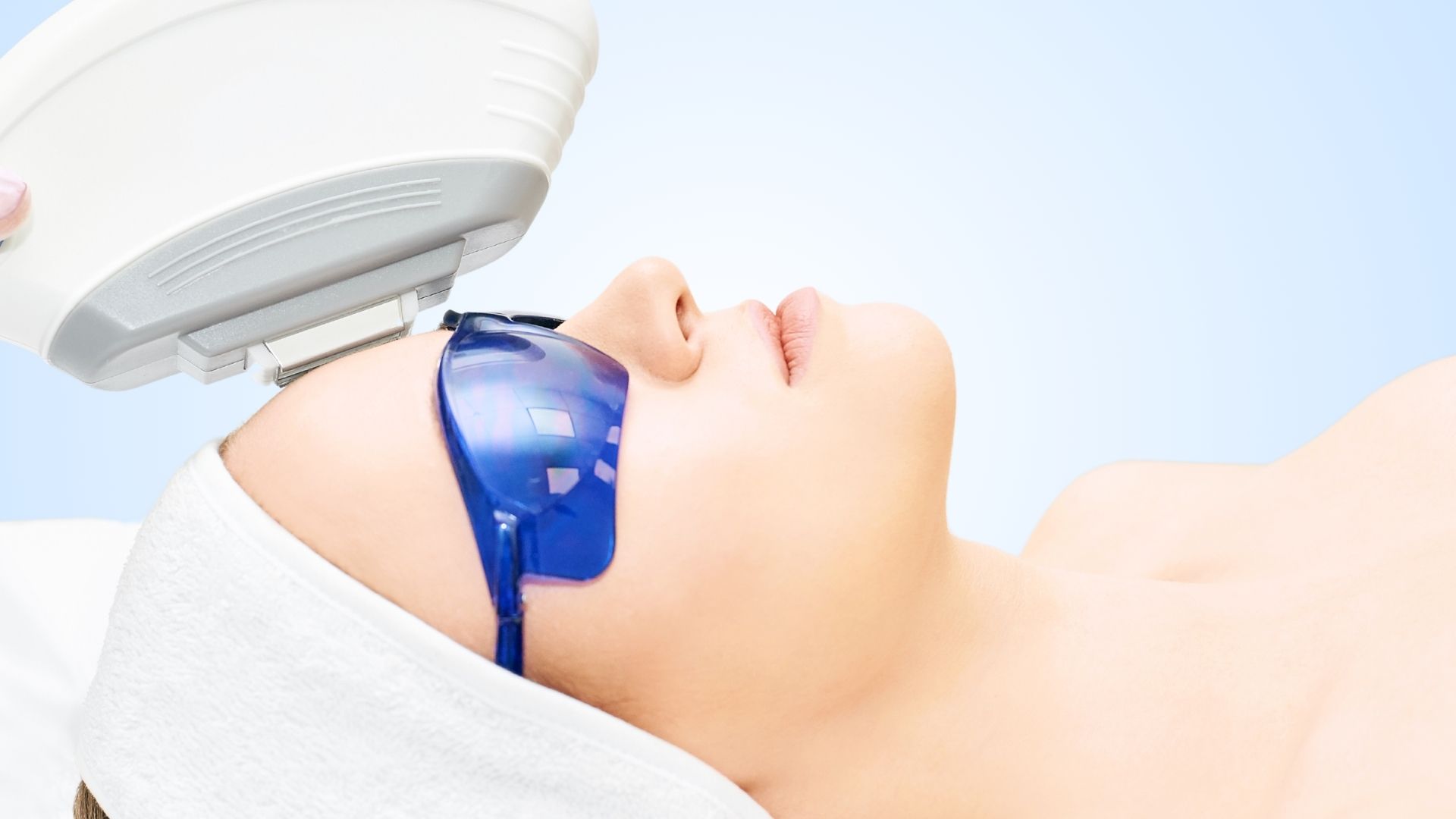
A BBL handpiece resting flat on the cheek. The flat glass window is what tells you this is a light treatment rather than a laser — it treats a wide patch at once instead of a narrow beam.
BBL and microneedling solve different problems. BBL is a bright light that treats colour: brown spots and redness. It also carries real risk in darker skin. Microneedling is a pen of fine needles that treats texture, acne scars and fine lines, and it is safe across skin tones.
| The difference | BBL (Broadband Light) | Microneedling |
|---|---|---|
| What it is | A bright light, not a laser | Fine needles, no light and no heat |
| What it is best at | Brown spots and redness | Acne scars, texture and fine lines |
| Downtime | No reliable published figure | Redness like a moderate sunburn |
A BBL handpiece resting flat on the cheek. The flat glass window is what tells you this is a light treatment rather than a laser — it treats a wide patch at once instead of a narrow beam.

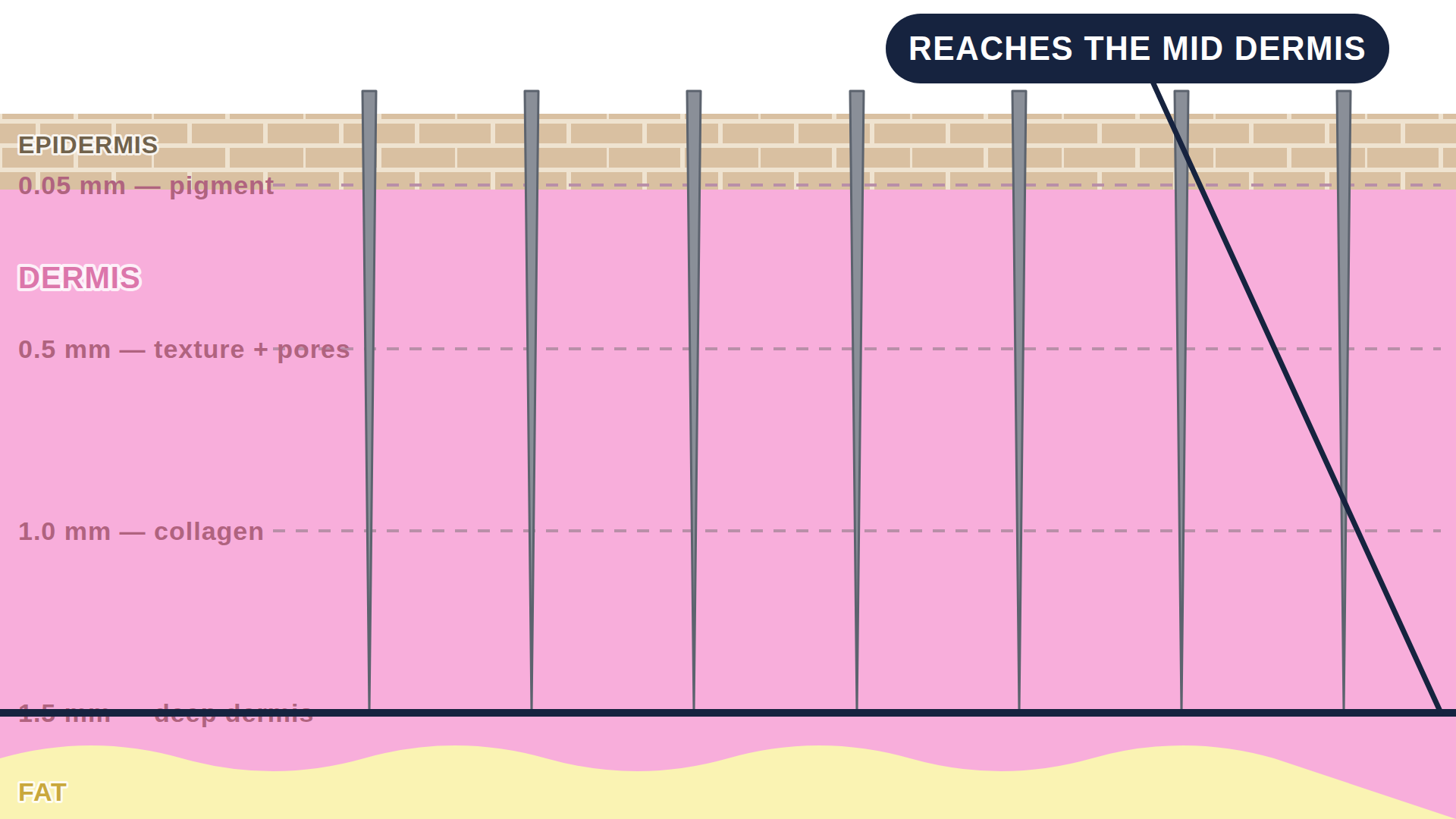
The microneedling pen is held upright and stamped across the skin in rows. The needles go straight in and out, and the depth is set on the pen.
Side by side
BBL (Broadband Light)
A bright light, not a laser
A laser sends out one colour of light. This device sends out a broad band of light instead, and filters it before it reaches the skin.
Microneedling
Fine needles, no light and no heat
A motorised pen holds a cartridge of fine needles. There is no energy source at all.
BBL (Broadband Light)
Light soaked up by colour in the skin
The targets are melanin, the brown pigment in skin, and haemoglobin, the red pigment in blood. Heat damages the coloured target, and the body clears it away.
Microneedling
Injury and healing, with no energy
The needles make thousands of tiny channels through the top layer of skin. That controlled injury starts normal healing, which lays down new collagen and elastin.
BBL (Broadband Light)
Not set in millimetres
The device is aimed at a colour, not at a depth.
Microneedling
A depth you select in millimetres
Your provider sets the needle depth in millimetres before the session starts.
BBL (Broadband Light)
Brown spots and redness
Problems of colour, including sun damage and facial redness.
Microneedling
Acne scars, texture and fine lines
Problems of surface and collagen.
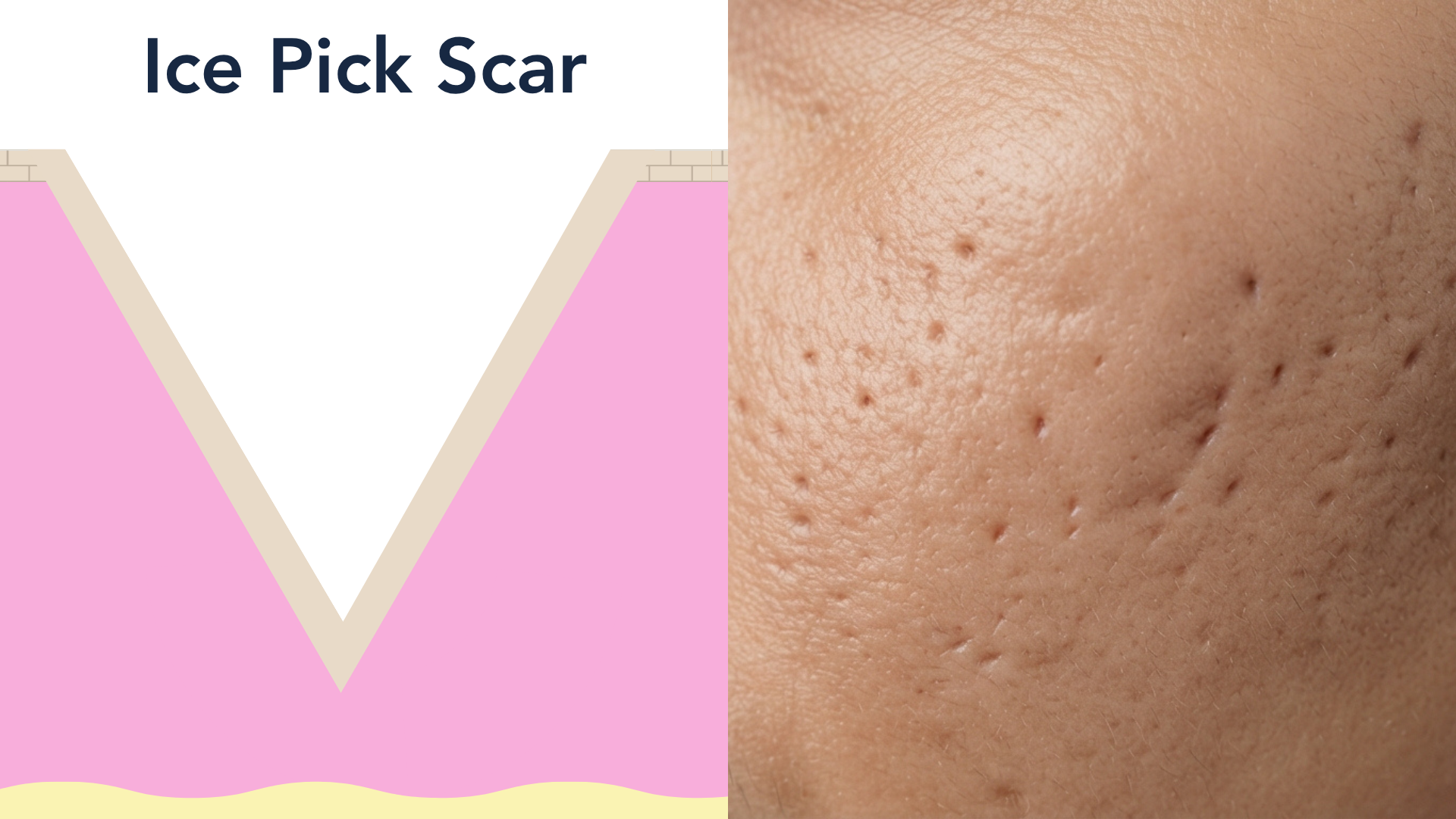
Narrow and deep, like a puncture. A needle passing over the surface cannot reach the bottom of the tract. These need TCA CROSS, punch excision, or a laser.

Fine needles make controlled micro-injuries that prompt new collagen in the scarred layer. Improvement is modest and needs a course of sessions, but it carries a lower risk of leaving dark marks than lasers do, which makes it the more sensible first device on deeper skin tones. It works on both red and white marks.

Fine needles injure the skin just enough to trigger new collagen. It does most for rolling and shallow boxcar scars, and very little for icepick ones. It is the gentlest of the resurfacing options, which also makes it the slowest — expect four to six sessions and judge it at a year, not at a month.

Fine needles rolled or stamped into the scalp, used alongside minoxidil rather than instead of it. The small trials that exist favor the combination over minoxidil alone. Sessions are spaced weeks apart, and doing it too often or too deeply irritates the scalp without adding anything.

Fine needles make controlled injuries that prompt the skin to lay down collagen. Improvement in fine lines and texture is modest and builds over three to six sessions. Its advantage here is a lower risk of pigment problems on deeper skin tones than lasers or deep peels carry, which makes it a common first choice.

Fine needles make controlled channels that help topical treatments penetrate and encourage the skin to remodel. It is mainly a scarring treatment, and its effect on pigment alone is small. It is a reasonable choice when true scars and dark marks sit together, but it can inflame reactive skin, so conservative depths are used on deeper skin tones.

Fine needles make temporary channels that help tranexamic acid or other treatments reach deeper, and that combination is where the evidence sits — not needling on its own. It has to be done gently. Aggressive needling inflames the skin, and inflamed skin with active pigment cells makes more pigment, not less.

Thickens the skin slightly over a course of sessions, which can make the vessels underneath a little less visible. The evidence around the eye is thin and the change is subtle. It will not fill a hollow, and on deeper skin tones it carries its own risk of leaving marks, so it is not a first choice here.


BBL (Broadband Light)
No reliable published figure
There is no dependable published downtime figure for BBL. Ask your provider what to expect.
Microneedling
Redness like a moderate sunburn
Roughly 24 to 72 hours. Mild swelling and pinpoint bleeding on the day are usual.
BBL (Broadband Light)
Home wands are far weaker
Home light devices are sold mostly for hair removal. They put a small fraction of a clinic device's energy into the skin, and they do not reach the same depth or settings. On deeper skin the same pigment risk applies, with no provider choosing the setting.
Microneedling
Rollers and home pens
A roller drags sideways instead of going straight in and out, so it tears more than it punctures. The needles are shorter, and they blunt quickly. A blunt needle does more damage than a sharp one. This is not a cheaper version of the same treatment.
BBL (Broadband Light)
Microneedling
Microneedling
Microneedling has no colour target, so its pigment risk is lower. The needles work the same way whatever the skin tone.
Strong evidence, and the most effective single option for indented acne scars. In exchange it brings a week of real downtime, higher cost, and a genuine risk of lasting pigment change, especially on deeper skin tones.

Moderate evidence. Adds heat at depth, which does more for laxity and can do more for scars, at the cost of more discomfort, more downtime, and a higher price. Still safer on deeper skin tones than ablative lasers.
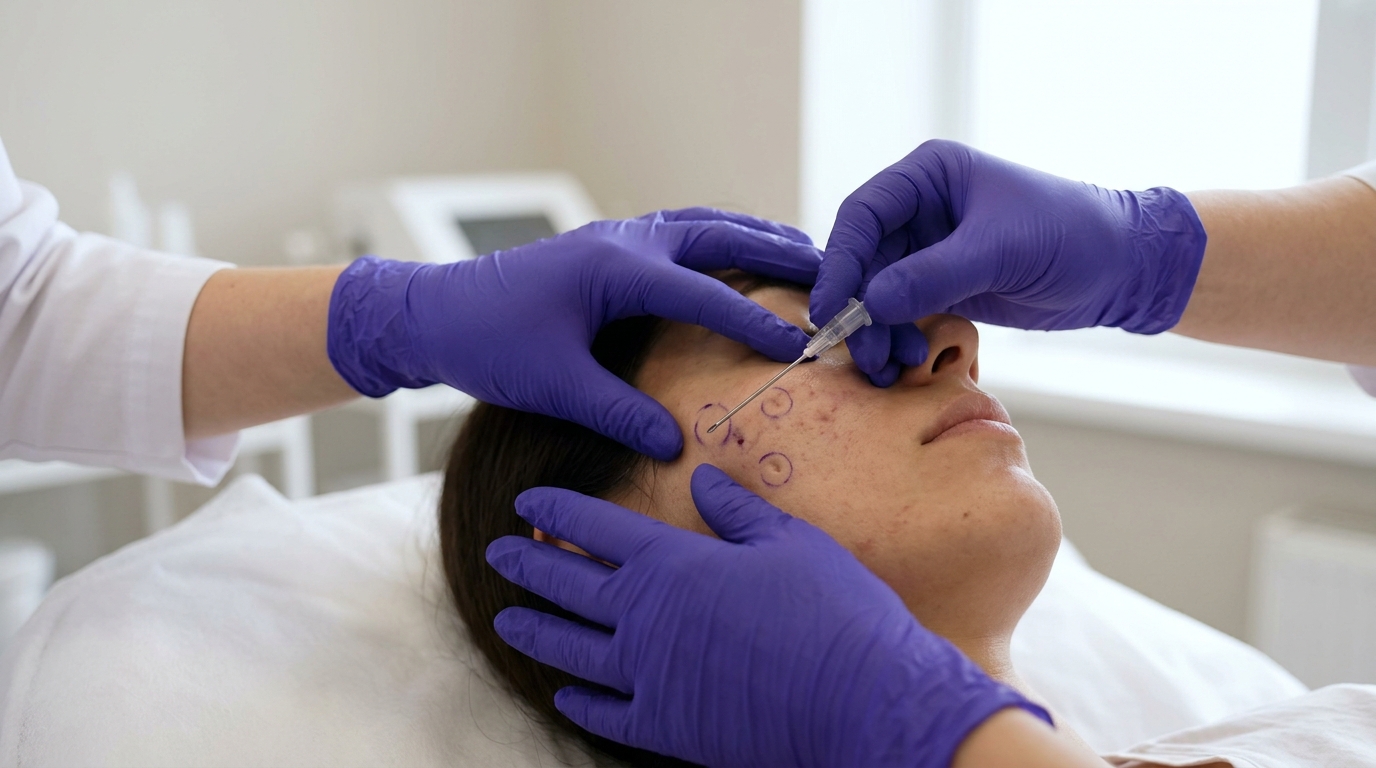
Strong evidence for one specific job. It cuts the fibrous bands tethering rolling scars downward, which needling cannot reach. Often done alongside microneedling rather than instead of it.

Strong evidence for pores and brown marks, none for indented scars. Superficial peels work on the surface and cannot lift a scar floor.
Microneedling
Microneedling leaves the skin briefly open, so what is put on it then gets in deeper than usual. BBL does not break the skin, so it does not carry this risk.
Common questions