RF Microneedling

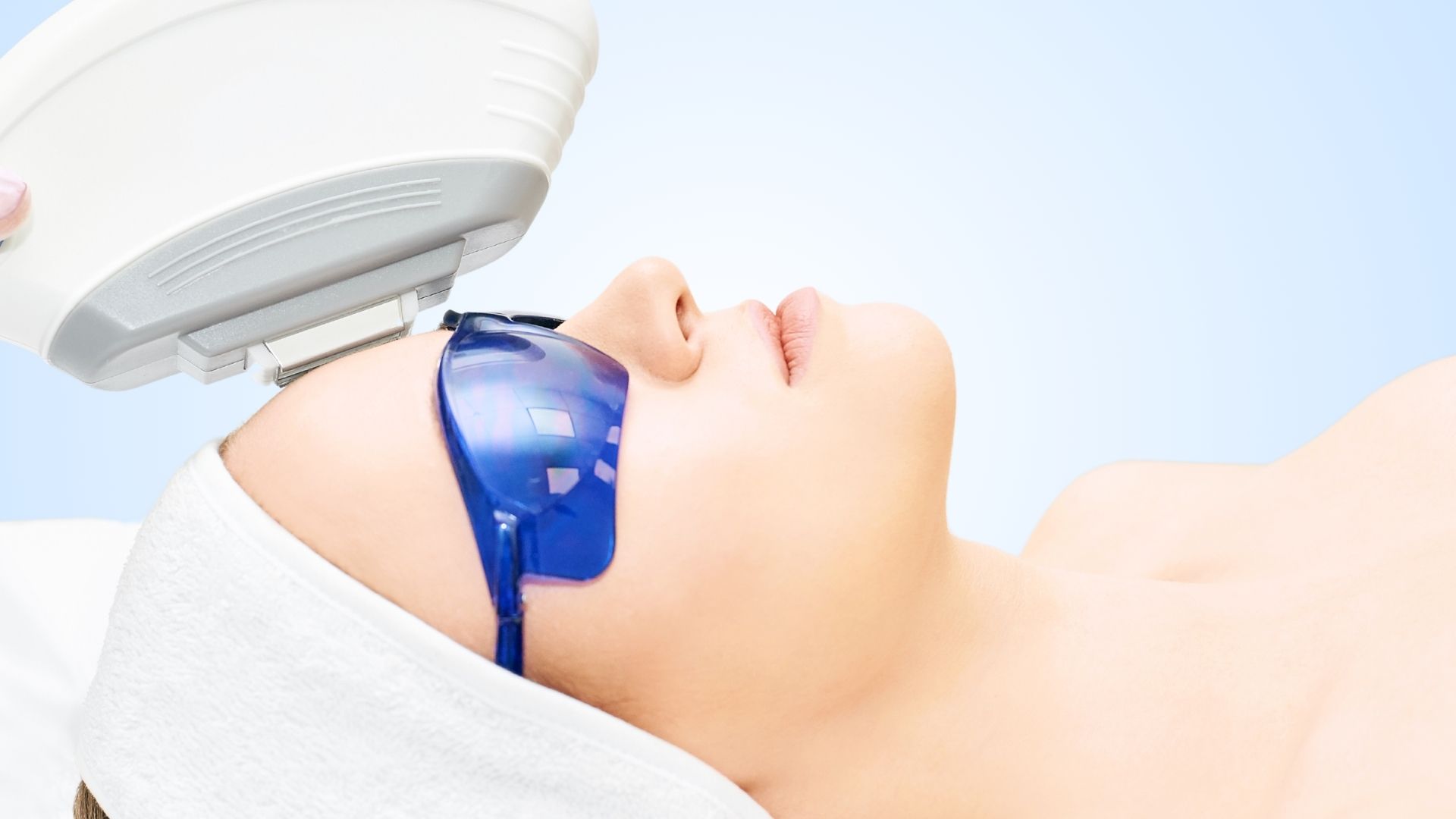
An RF microneedling handpiece on the cheekbone. The needles carry heat to a set depth, and that depth is chosen on the console before each pass.
Radiofrequency microneedling is the better choice for laxity and for anything that needs depth. It makes tiny channels in the skin, then releases heat several millimetres down. SkinPen is better value for texture, fine lines and acne scars. It makes the same channels and stops there — and no trial has ever compared the two.
| The difference | RF Microneedling | SkinPen |
|---|---|---|
| What it is | Needles that carry heat into the dermis | A motorised pen of fine needles, no energy |
| What it is best at | Laxity and texture, plus acne scars | Acne scars, texture and fine lines |
| Downtime | Redness in almost everyone, 3 to 4 days | Redness like sunburn, 1 to 3 days |
| Cost | Well above a mechanical session | Much lower per session |
An RF microneedling handpiece on the cheekbone. The needles carry heat to a set depth, and that depth is chosen on the console before each pass.

The SkinPen up close. The disposable cartridge on the front holds the needles, and it is changed for every patient.
Side by side
RF Microneedling
Needles that carry heat into the dermis
The needles may be insulated, so energy comes out only at the tip. Or they may be bare, so energy travels the whole shaft.
SkinPen
A motorised pen of fine needles, no energy
The effect comes from the wound alone, and how the skin heals it.
RF Microneedling
Wound plus controlled heat
The channel is made first. Then radiofrequency heats a small column of tissue around each needle. Heat contracts collagen straight away, and the skin remodels over months. Radiofrequency does not target pigment, so it is largely colour-blind. That is one reason it is used across skin tones where ablative lasers carry more pigment risk.
SkinPen
Wound only
Thousands of tiny channels set off the skin's repair work. New collagen follows. Nothing is heated.
RF Microneedling
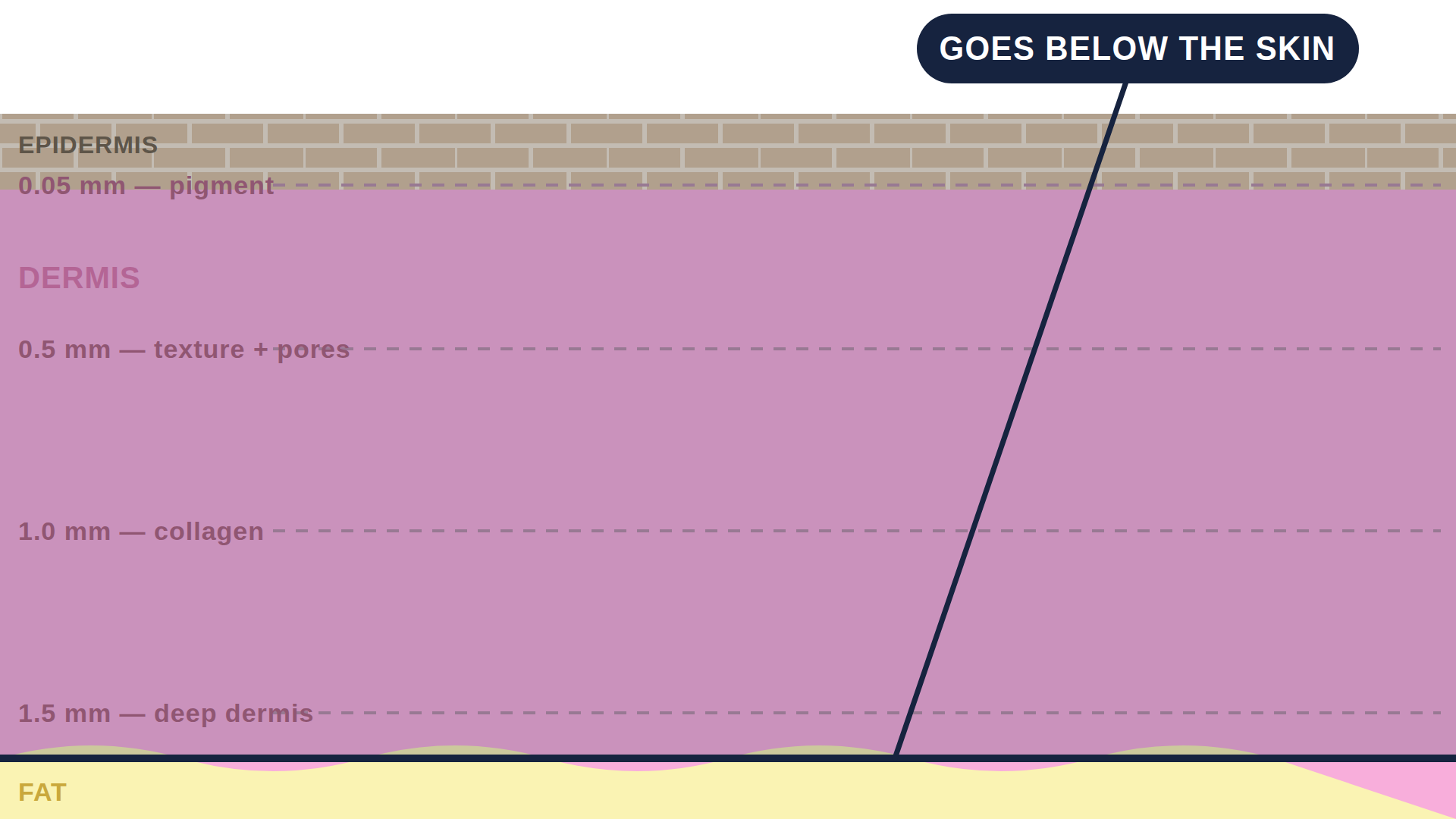
Roughly 0.3 mm to 7 mm, by device and tip
The range depends on the machine and the tip fitted to it.
SkinPen
0 to 2.5 mm
Its main study used needles no longer than 2.5 mm.
RF Microneedling
Laxity and texture, plus acne scars
The best data is for acne scars. In a split-face trial, radiofrequency microneedling matched a fractional CO2 laser, with less redness and fewer pigment changes.
SkinPen
Acne scars, texture and fine lines
It also treats neck wrinkles. It does not tighten lax tissue, and it has no effect on fat or contour.

Needles carry heat below the surface, so it builds more collagen than needling alone while doing less to the top layer. That lower surface injury is why it is often the first choice for boxcar and rolling scars on deeper skin tones. Usually three or four sessions about a month apart, with the result still building for a year.

Microneedling with radiofrequency heat delivered at the needle tips, which reaches deeper into the scarred layer. Reported results are modest improvements in texture and firmness over a course of sessions. Because the energy is not aimed at pigment, it is another option worth discussing on deeper skin tones.

Microneedling with radiofrequency heat delivered at the needle tips, aimed at the deeper dermis. It does more for early laxity along the jaw and lower face than plain microneedling does, over three or so sessions. The heat is not carried by pigment, so it is comparatively safe on deeper skin tones, and the result is well short of surgery.
RF Microneedling
Redness in almost everyone, 3 to 4 days
One study of 44 patients found redness in 100% and swelling in 30%. Radiofrequency also leaves a visible grid of entry points, because the needles sit in a fixed array. Nobody has measured how long it takes to fade.
SkinPen
Redness like sunburn, 1 to 3 days
Mild swelling comes with it. That is the usual clinical description.
RF Microneedling
The heat is felt; deeper settings hurt more
Topical numbing is standard.
SkinPen
More tolerable, being mechanical only
Topical numbing is standard here too.
RF Microneedling
Commonly three, 3 to 8 weeks apart
That is practice habit, not a trial result.
SkinPen
Typically three to six, 4 weeks apart
This is common practice too.
RF Microneedling
Well above a mechanical session
The single-use tips are expensive, and they are thrown away after each treatment. That cost is the main reason the price sits so much higher.
SkinPen
Much lower per session
The usual course is three to six sessions. Budget for the course, not one visit.
RF Microneedling
There is no home version
Home radiofrequency wands press against the surface of the skin. They put in a fraction of the power, and have no needles to carry it into the dermis. That is the only place the treatment does anything.
SkinPen
Rollers and home pens
A roller drags sideways across the skin instead of going straight in and out, so it tears more than it punctures. Home needles are shorter and blunt quickly, and a blunt needle does more damage than a sharp one.
RF Microneedling
SkinPen
Strong evidence, and still the most effective option for indented acne scars. Better results, a week of real downtime, higher cost, and a substantially higher risk of lasting pigment change on deeper skin tones.
SkinPen
SkinPen holds a real cosmetic authorisation. It was the first microneedling device authorised in the US. Its grant (DEN160029, 1 March 2018) created the category, 21 CFR 878.4430, product code QAI. It covers facial acne scars in adults aged 22 and over. Neck wrinkles were added by K202243 in April 2021.
RF Microneedling
RF microneedling can cause serious injury. The FDA has received reports of burns, scarring, loss of fat, nerve damage and disfigurement. Some injuries have needed surgery or other medical treatment. A few days of expected redness is not the full risk picture.
Common questions
Burns and fat loss are the two problems mechanical microneedling cannot cause. Both need heat. An analysis of FDA adverse-event reports for radiofrequency microneedling, from 2013 to 2025, found 114 reports covering 224 events.
Those numbers are not your own odds. Reporting is voluntary, and nobody knows how many people were treated.
The fat-loss evidence is mixed. One study measured the fat layer under the chin in 30 people after treatment. It found no significant change.
Choose a licensed medical professional trained on the device. Discuss the risks and other treatment options before deciding. RF microneedling should not be done at home.