Milia
A tiny cyst full of keratin Keratin is the protein that makes up the surface of your skin. A small amount gets sealed into a closed pocket under the skin, with no opening for it to come out of.
Milia are tiny keratin cysts trapped just under the surface of the skin. They are smooth, white and firm, they do not itch, and you cannot catch them from anyone. Warts are a virus growing in the top layer of skin. They are rough on top, often flecked with tiny dark dots, and they are contagious. Run a fingertip over it: smooth points to milia, rough points to a wart.
| The difference | Milia | Warts |
|---|---|---|
| What it is | A tiny cyst full of keratin | An HPV infection in the skin |
| What it looks like | A smooth white or yellow dot | A rough grey-brown lump |
| Does it itch or hurt | No | Sometimes |
| What it does over time | Often clears on its own | Usually clears, but it can take years |
| Treatment | A pinpoint nick and gentle pressure | Salicylic acid, then freezing |
A tiny cyst full of keratin Keratin is the protein that makes up the surface of your skin. A small amount gets sealed into a closed pocket under the skin, with no opening for it to come out of.
Side by side
Milia
A tiny cyst full of keratin
Keratin is the protein that makes up the surface of your skin. A small amount gets sealed into a closed pocket under the skin, with no opening for it to come out of.
Warts
An HPV infection in the skin
A human papillomavirus, usually type 2 or 4, gets into the outer layer of skin through a small break. It makes the skin cells there grow faster, and the growth is what you see.

The outer layer sheds and replaces itself steadily. Small nicks and scrapes close over before anything can get in.

HPV needs a way through - a cut, a hangnail, a shaving nick, or skin softened by water. It reaches the dividing cells at the bottom of the outer layer and settles there.

The virus makes those cells divide faster than they should. They pile up into the rough, raised bump, with tiny clotted vessels showing as black dots.

HPV hides in the outer layer, where there is little blood supply and few immune cells patrolling. That is why warts last months or years, and why they eventually clear on their own once the immune system finds them.
Milia
A smooth white or yellow dot
Round, dome-shaped and even in colour, with no opening on top. It looks like a grain of sand sitting under the skin.
Warts
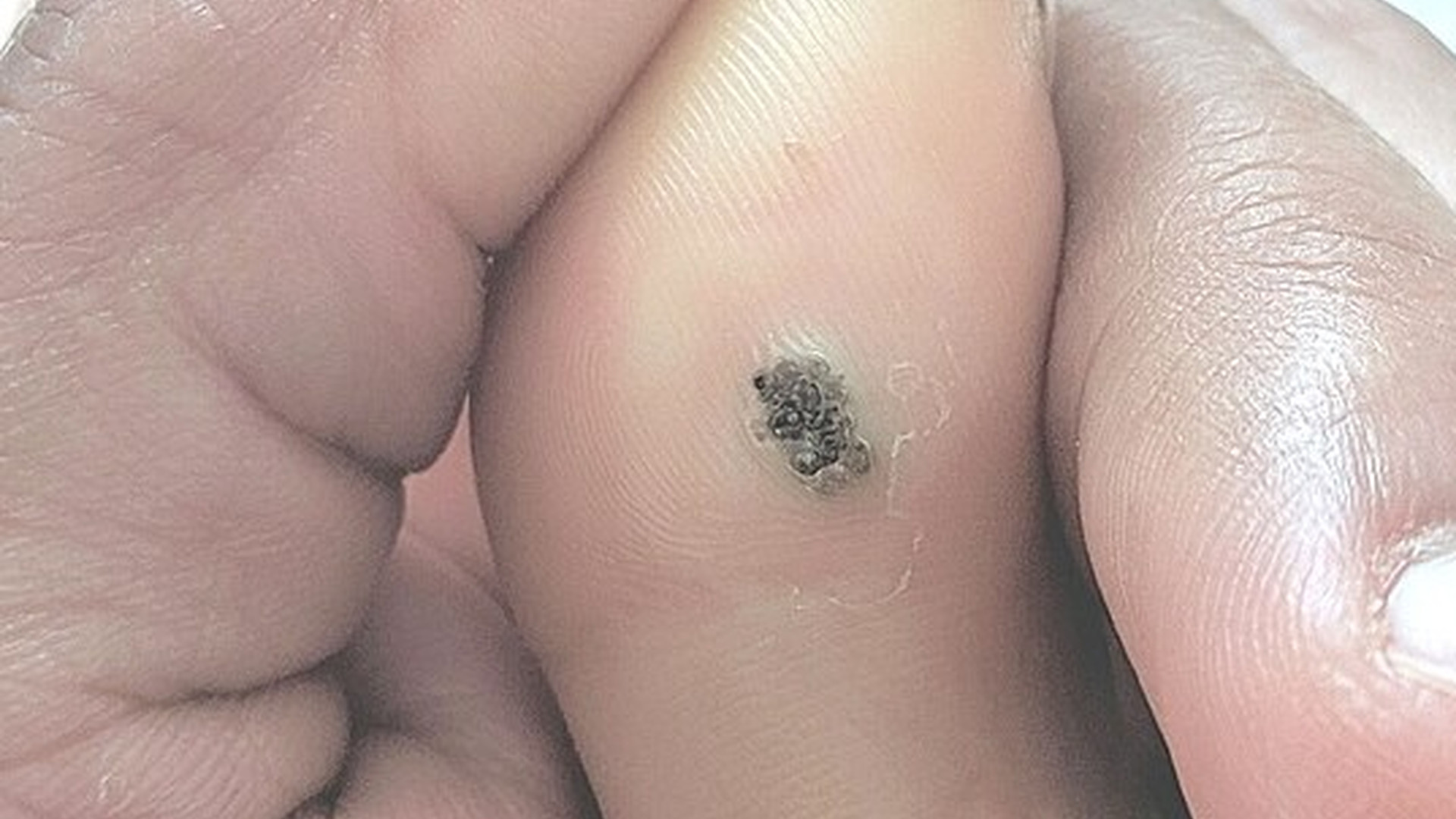
A rough grey-brown lump
Cauliflower-like on top, with thickened skin around it. Most have tiny black or dark red dots inside, which are small blood vessels feeding the wart.

On light skin a wart usually shows a pink or reddish tinge and a thin red ring around the base, and the tiny black dots inside it stand out clearly against pale, thickened skin. That contrast is why warts are often recognized early here. Freezing leaves a pale mark less often than on deeper tones, though it still blisters and stings.

On medium skin a wart is usually the same color as the skin around it or slightly gray, and the ring of redness is fainter. The reliable clue is texture rather than color: a firm, rough, thickened bump with the fine skin lines stopping at its edge instead of running across it. Freezing here can leave a mark, so a small test spot first is reasonable.

On brown skin a wart often reads as gray or brown rather than pink, so it is more often taken for a callus, a corn or a mole and treatment tends to start later than it should. Run a finger over it: a wart is firm and rough, and the fine skin lines stop at its edge. Because injured skin here commonly heals a different color, slower options like daily salicylic acid, filing and paring in clinic are usually the better first move.

On deep skin tones the redness dermatologists look for is effectively invisible, so warts are recognized late and are the most likely to be dismissed as hard skin. The trade-off around treatment also shifts: freezing and anything that blisters can leave a pale ring or a dark mark that outlasts the wart by a year. Test one small wart before treating a group, keep freezing shorter, and add a daily sunscreen on any treated area of the face, hands or arms.
Milia
One to two millimetres
About the size of a pinhead, and it stays that size.
Warts
A pinhead to a pea
It starts small and thickens over weeks. Several can join into one larger patch.
Milia
No
Milia are painless. People notice them by sight, not by feel.
Warts
Sometimes
Warts on the hands are usually painless. A wart on the sole of the foot takes your body weight and can feel like standing on a stone.
Milia
Around the eyes
Eyelids and under the eyes most of all, then the nose, cheeks and forehead. Newborns get them across the nose and chin.
Warts
Hands, fingers and feet
Backs of the hands, around the fingernails, knees and the soles of the feet. Warts also turn up on the face, where they look flatter.
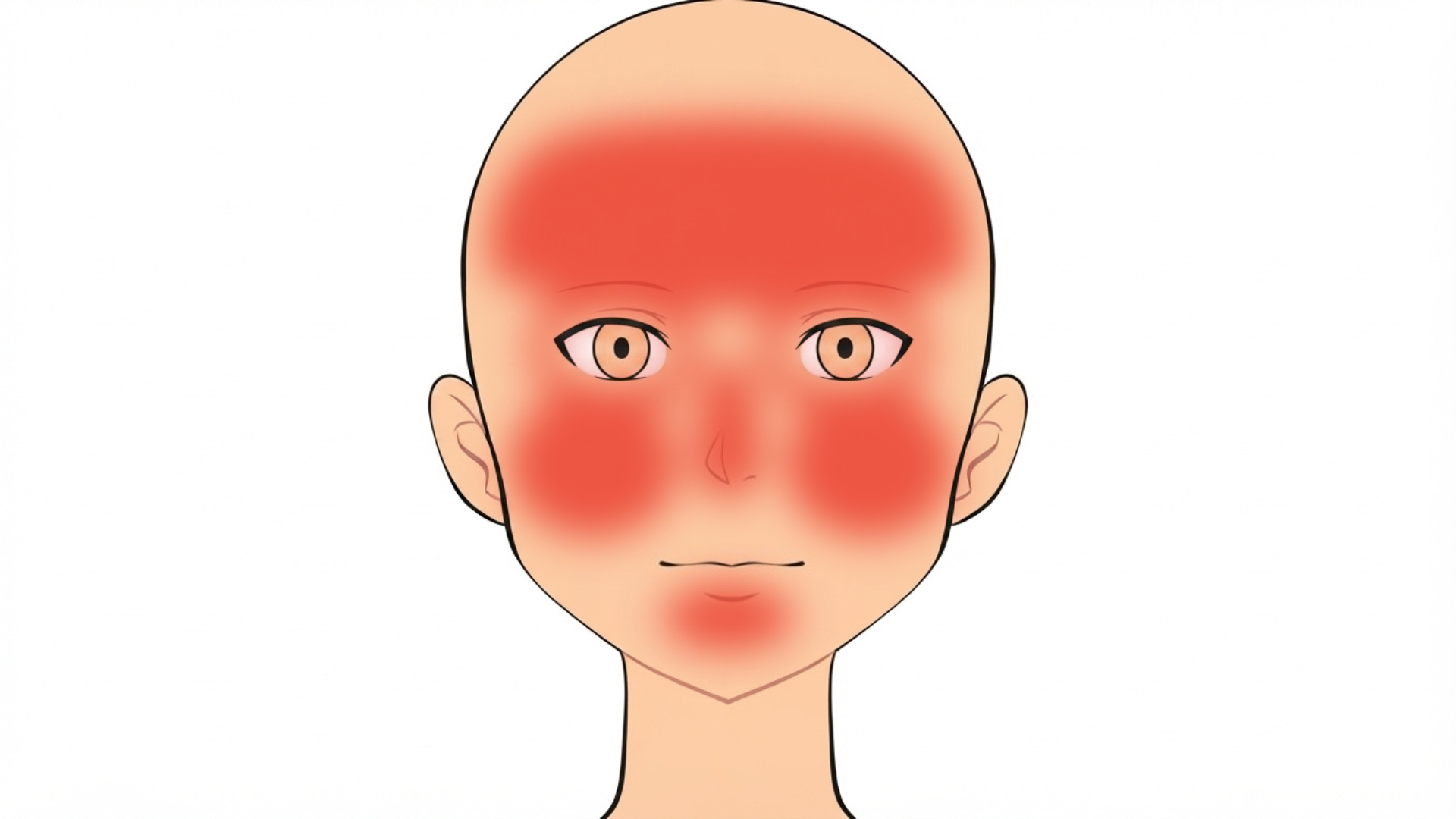
Milia turn up most often on the eyelids, under the eyes, and on the cheeks, nose and forehead. In newborns they sit across the nose, chin and cheeks, and sometimes on the gums or the roof of the mouth. They are firm and white, and they do not come to a head.
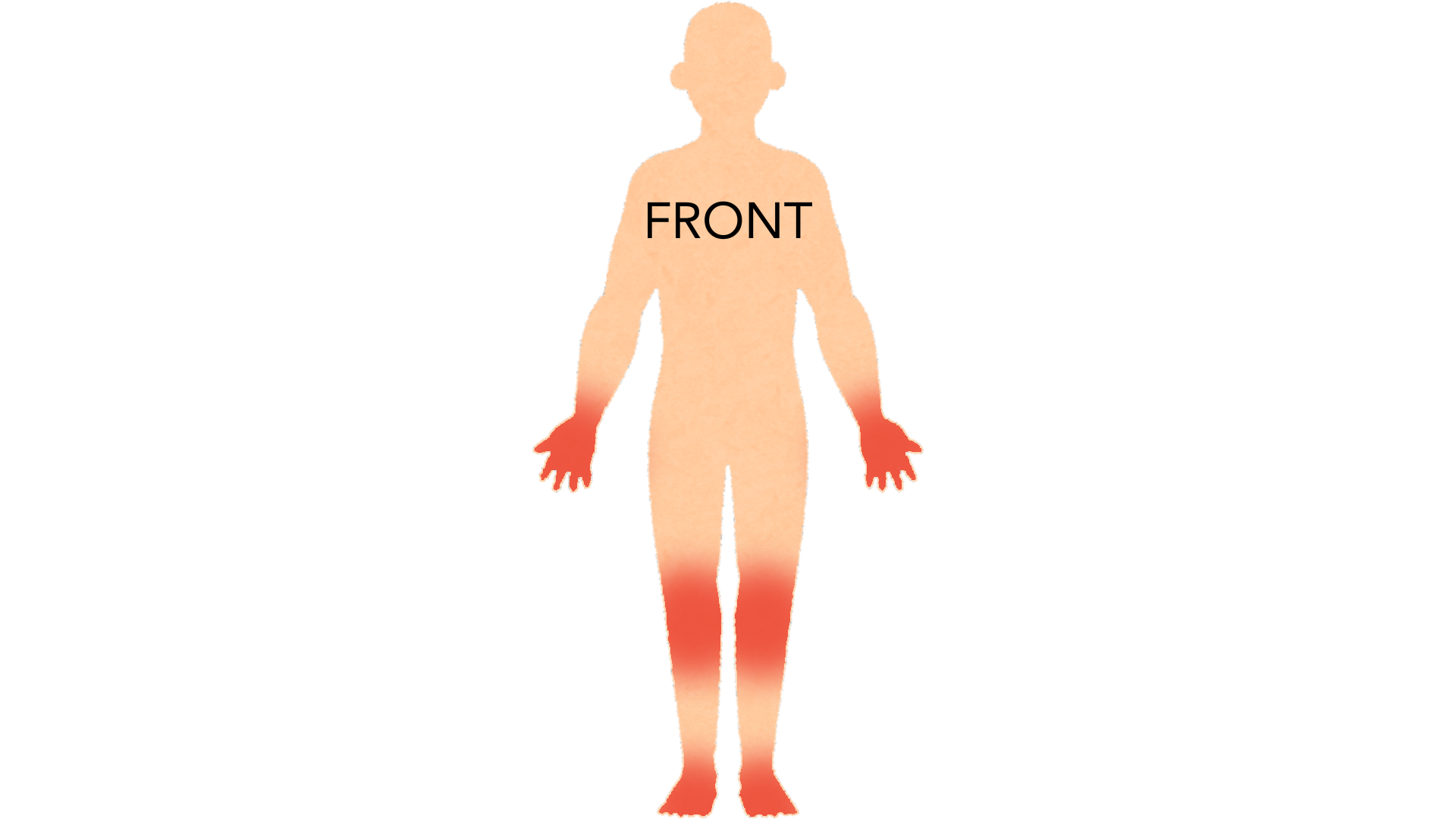
Warts land where skin gets knocked, wet or broken: the fingers, the backs of the hands, around and under the nails, the knees, and the soles and edges of the feet. Biting nails or picking skin spreads them along the finger.
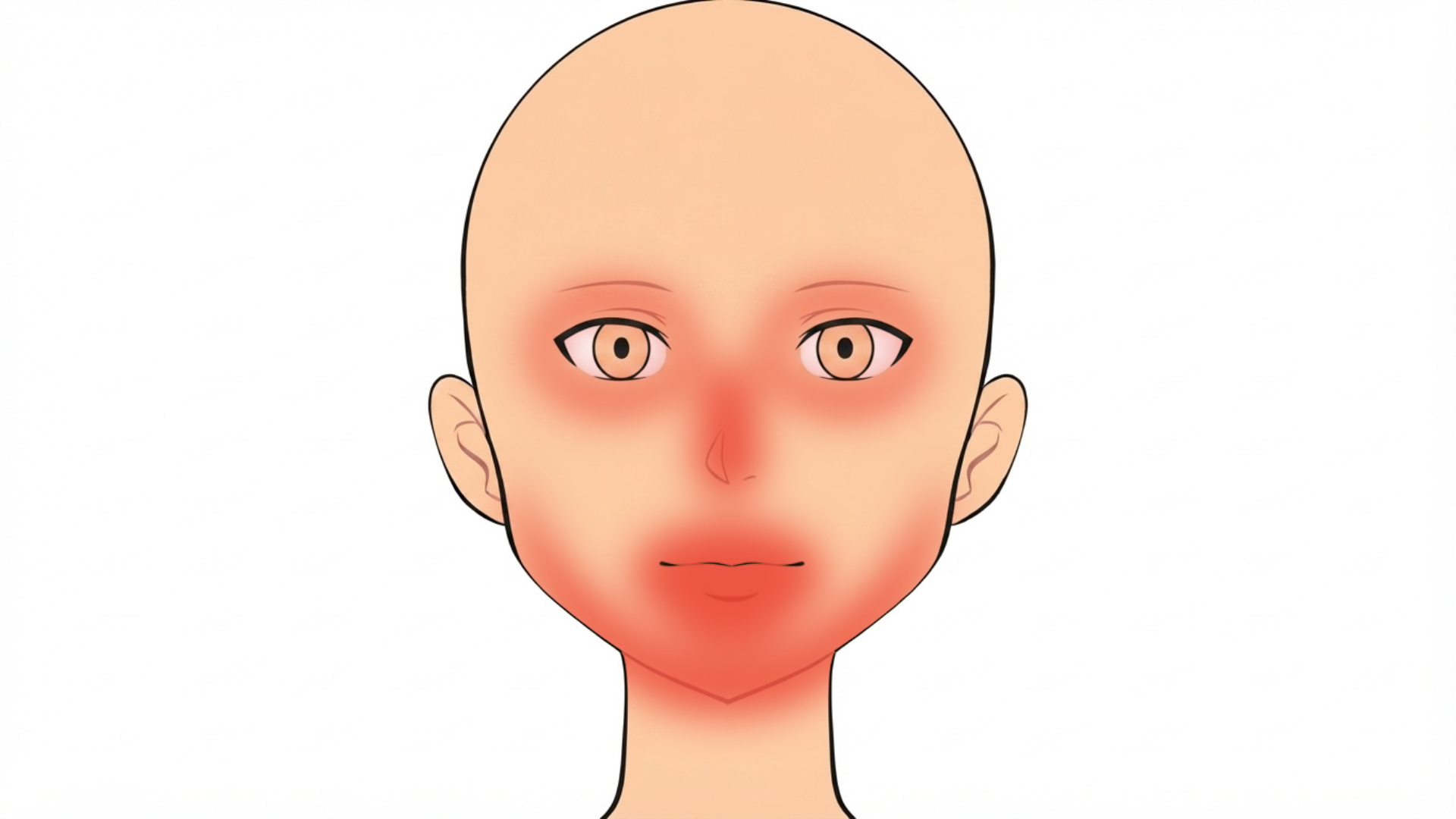
Flat warts turn up in groups on the face, often spread in a line along a shaving path. The long, thread-like kind grow around the eyes, the nose and the mouth. They are the same virus, spread by the razor.
Milia
No
You did not catch milia, and you cannot pass them on. Sharing towels and pillows is fine.
Warts
Yes
The virus spreads by skin contact and by damp shared surfaces such as pool decks and changing room floors. It also spreads on your own body, so picking or shaving over a wart moves it.
Milia
Often clears on its own
Milia in babies clear within a few weeks. In adults they often sit quietly for months, and some stay for years.
Warts
Usually clears, but it can take years
The immune system eventually recognises the virus and the wart disappears. In children that often takes months to two years. Adults tend to take longer.
Milia
A pinpoint nick and gentle pressure
A clinician opens the surface with a sterile needle and lifts the keratin out. It takes seconds per bump, usually needs no anaesthetic, and the skin heals over within about a week. A retinoid cream can clear a crop slowly instead.
Warts
Salicylic acid, then freezing
Daily salicylic acid with filing between applications is the usual first step, and it takes weeks to months. Liquid nitrogen freezing in a clinic is the common next step, over several visits.
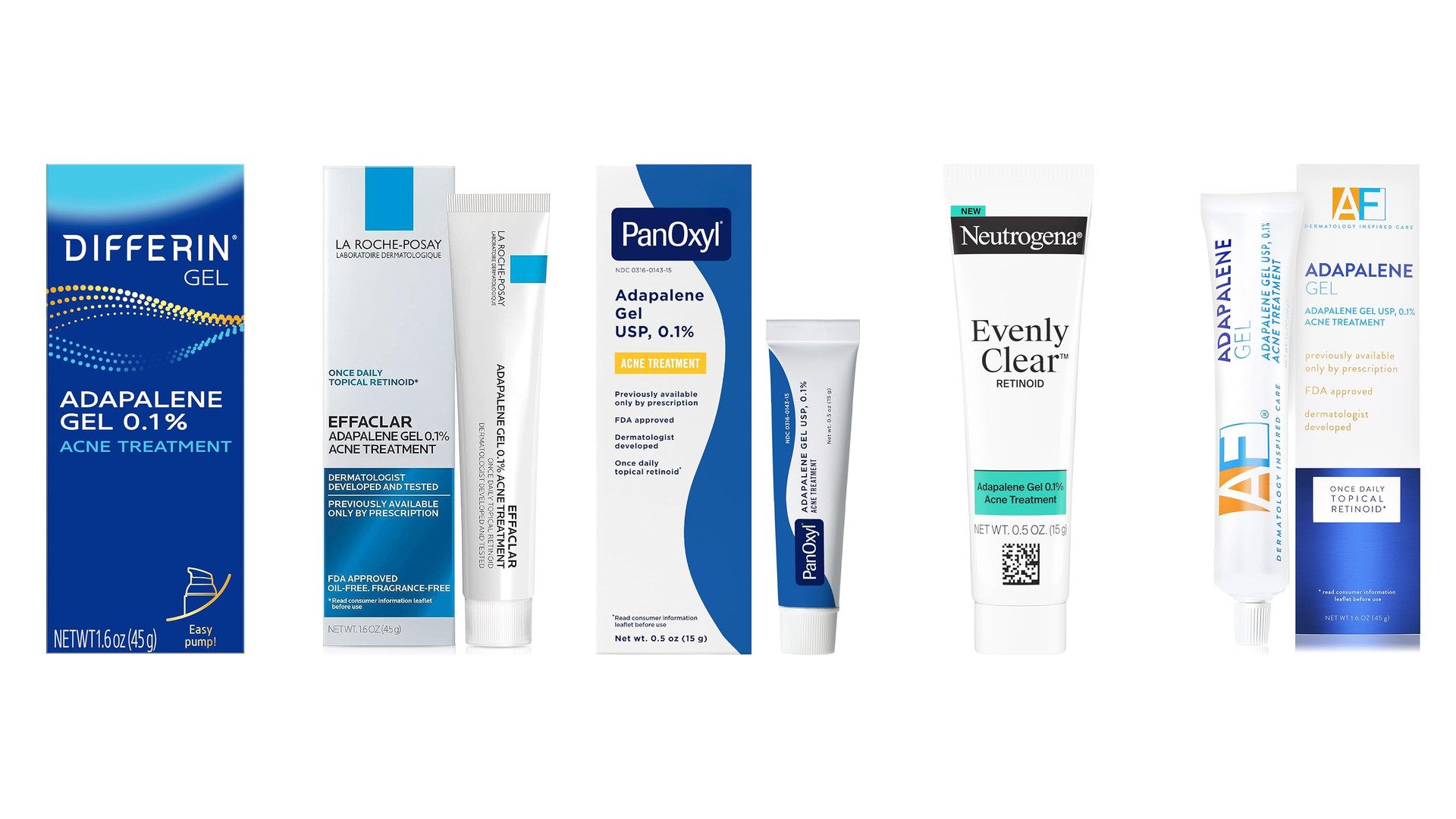
The over-the-counter retinoid, used at night. It speeds up how the duct lining sheds, which over two to three months lowers how many new milia form. It will not open or empty the ones you already have, because nothing applied to intact skin can reach a sealed sac. Start a few nights a week, and keep it off the eyelids themselves. Ask your doctor about it if you are pregnant or trying to become pregnant.

A gentle leave-on exfoliant that helps keep small ducts clear, which is prevention rather than treatment. It does nothing to a milium that has already sealed over. Low strength, a few times a week, and not on eyelid skin, which is thin and irritates easily.
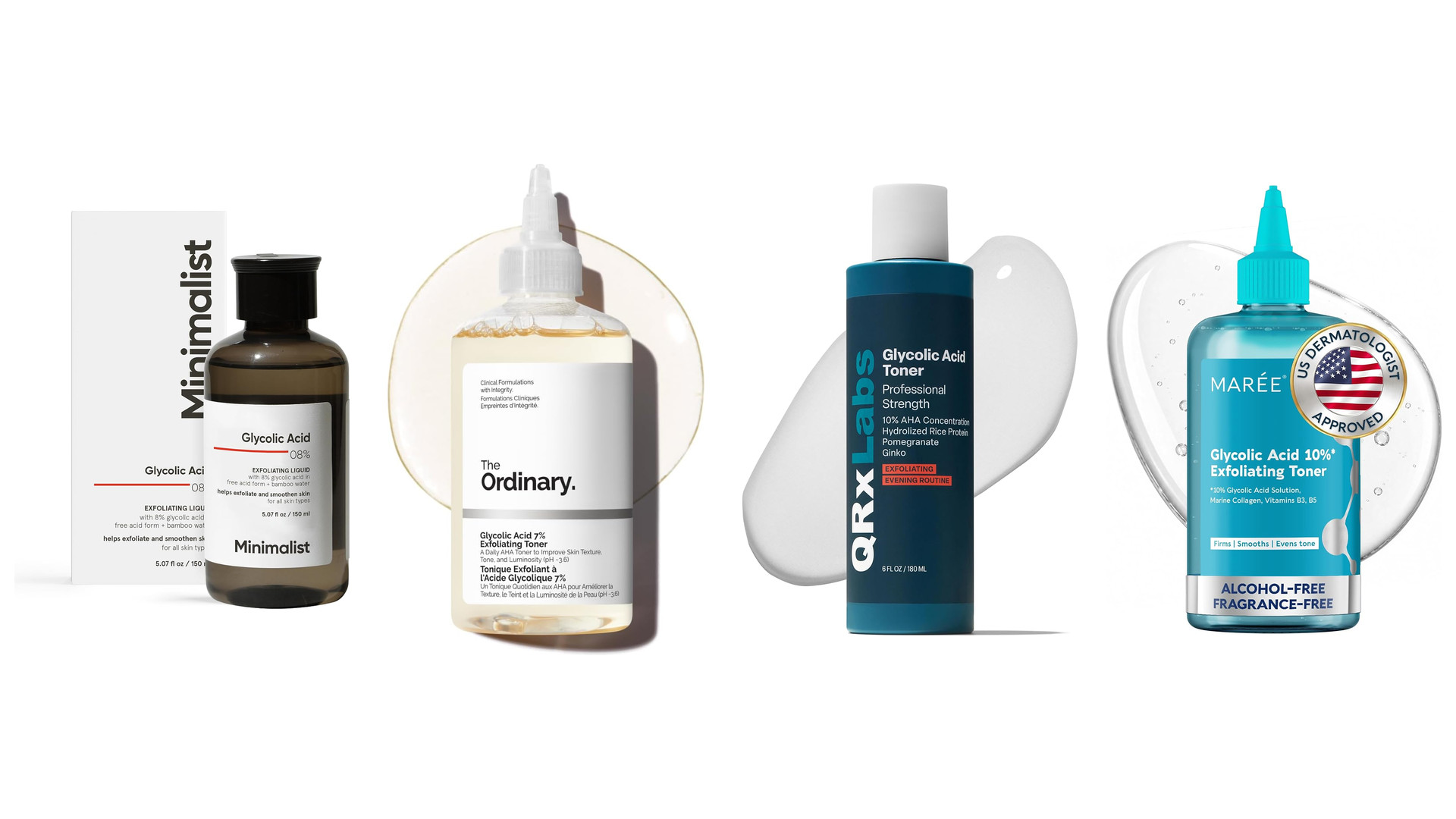
Keeps the surface layer shedding evenly, on the same prevention logic as salicylic acid. Low strength only. Strong glycolic peels are the opposite of helpful here — deep peeling is one of the recognized causes of milia in the first place.
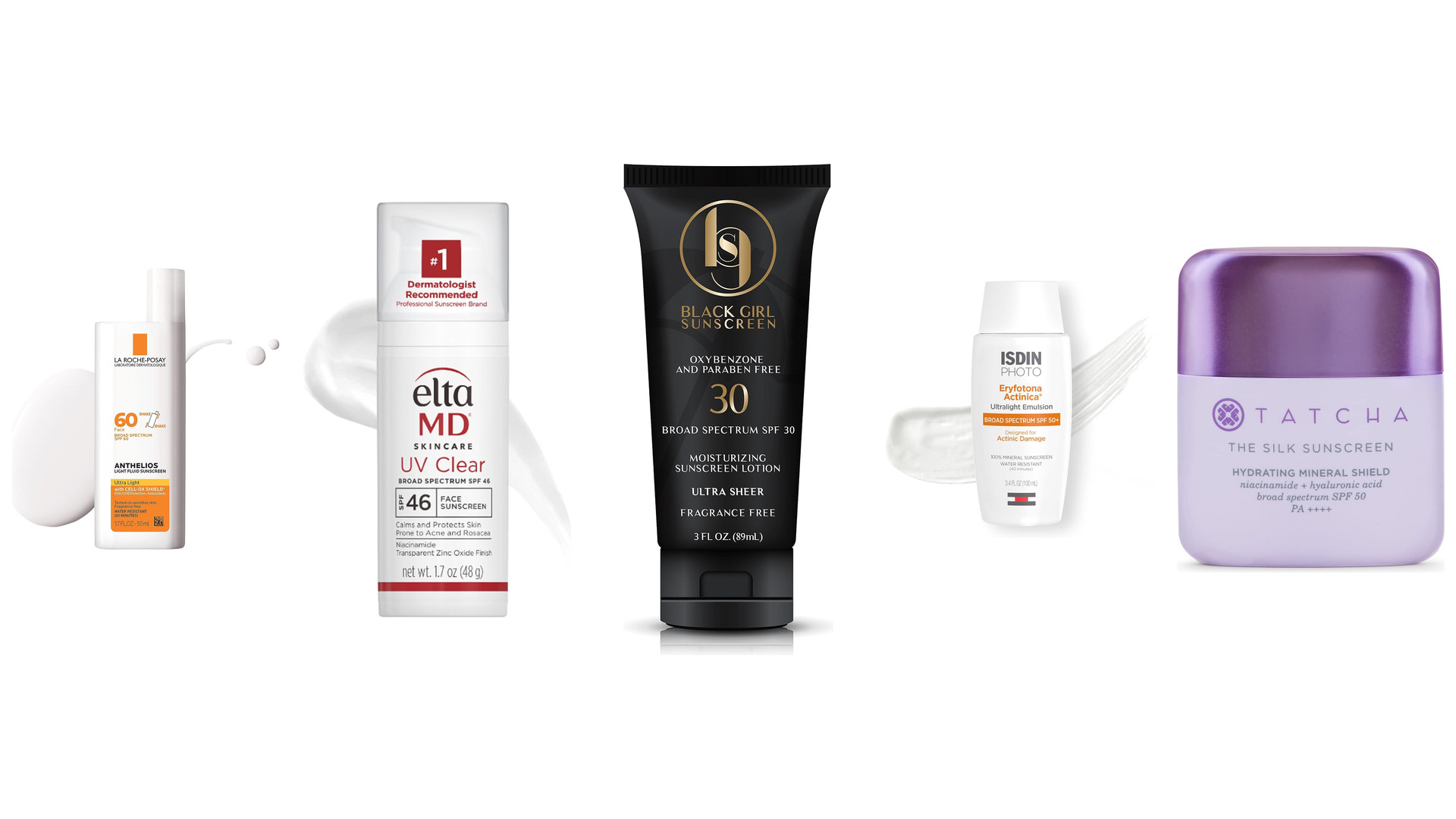
Not a milia treatment, and it will not stop new ones forming. It is here for what is left behind: a mark from an extraction or from picking darkens and lasts longer with sun on it, and that matters more on deeper skin tones. The useful window is the few weeks after a bump has been removed.

Thick eye creams and balms get blamed for milia constantly. The evidence is weak and plenty of people get milia while using nothing at all, so this is not a reliable fix and it will not clear the bumps already there. If you keep getting them in the exact spot where a heavy product sits, switching to something lighter costs nothing and is worth trying.
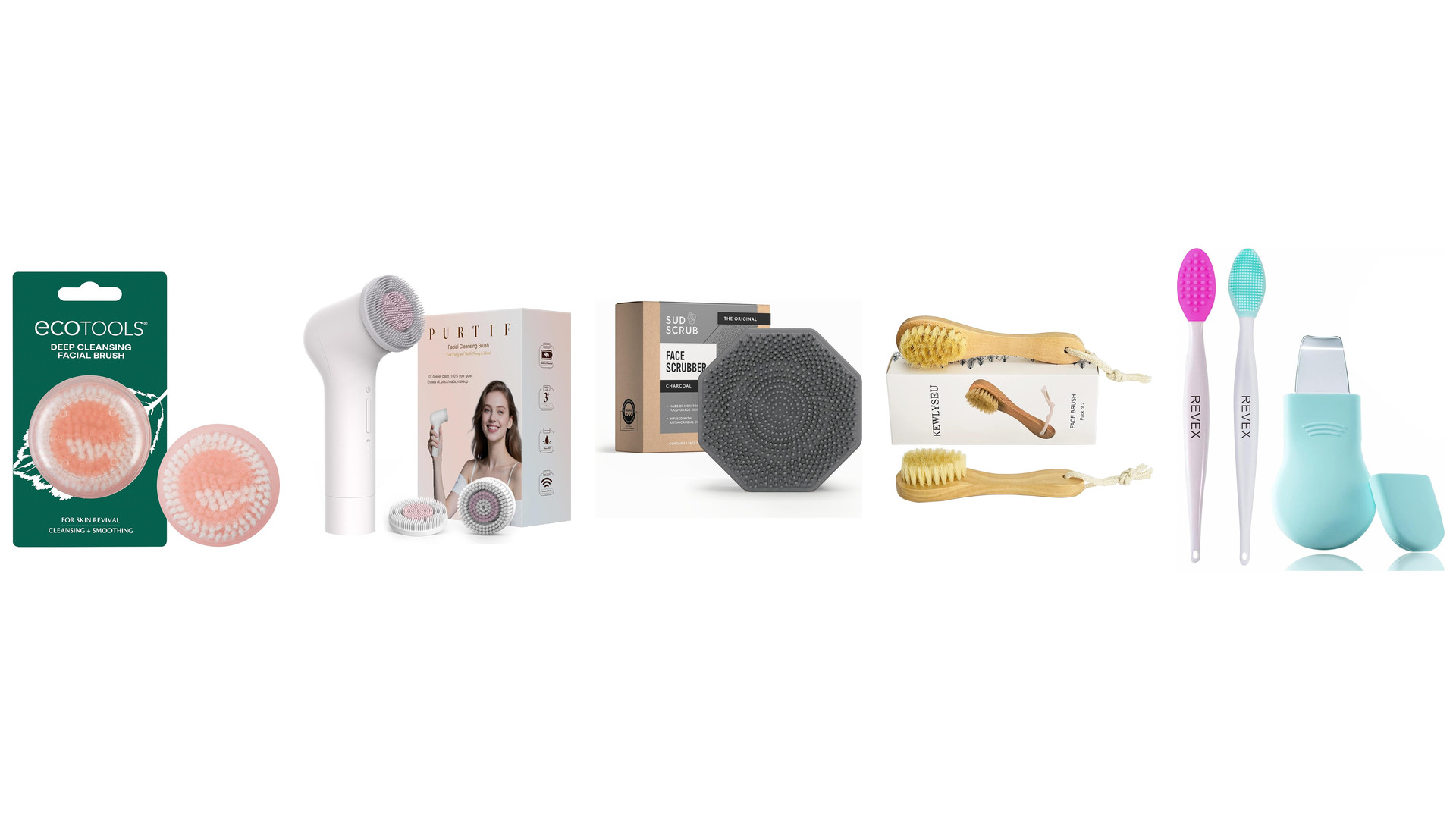
These are what most people try first, and they cannot work. A scrub abrades the surface, and the sac sits under an intact surface. A pore strip needs an opening to grip, and a milium has none. What scrubbing does achieve is irritation, which is not neutral here, because repeated injury to one area can seal off new ducts.
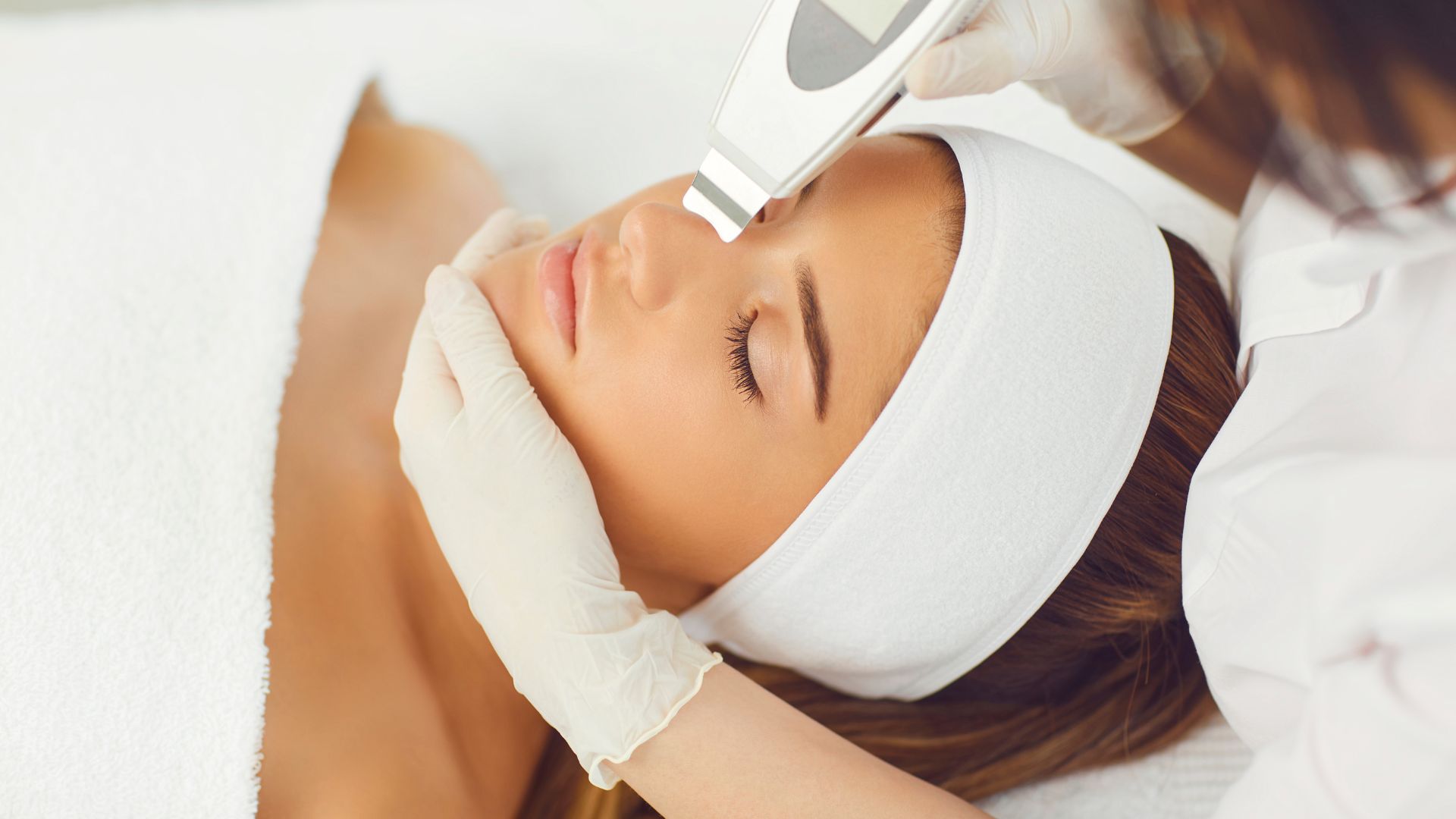
The definitive treatment, and the only thing that actually empties a milium. The roof is nicked with a sterile blade or needle and light pressure lifts the keratin pearl out whole, in about ten seconds a bump. The one that is removed does not come back in that spot. Done once, properly, it heals in a few days; repeated digging at the same place is what leaves marks.
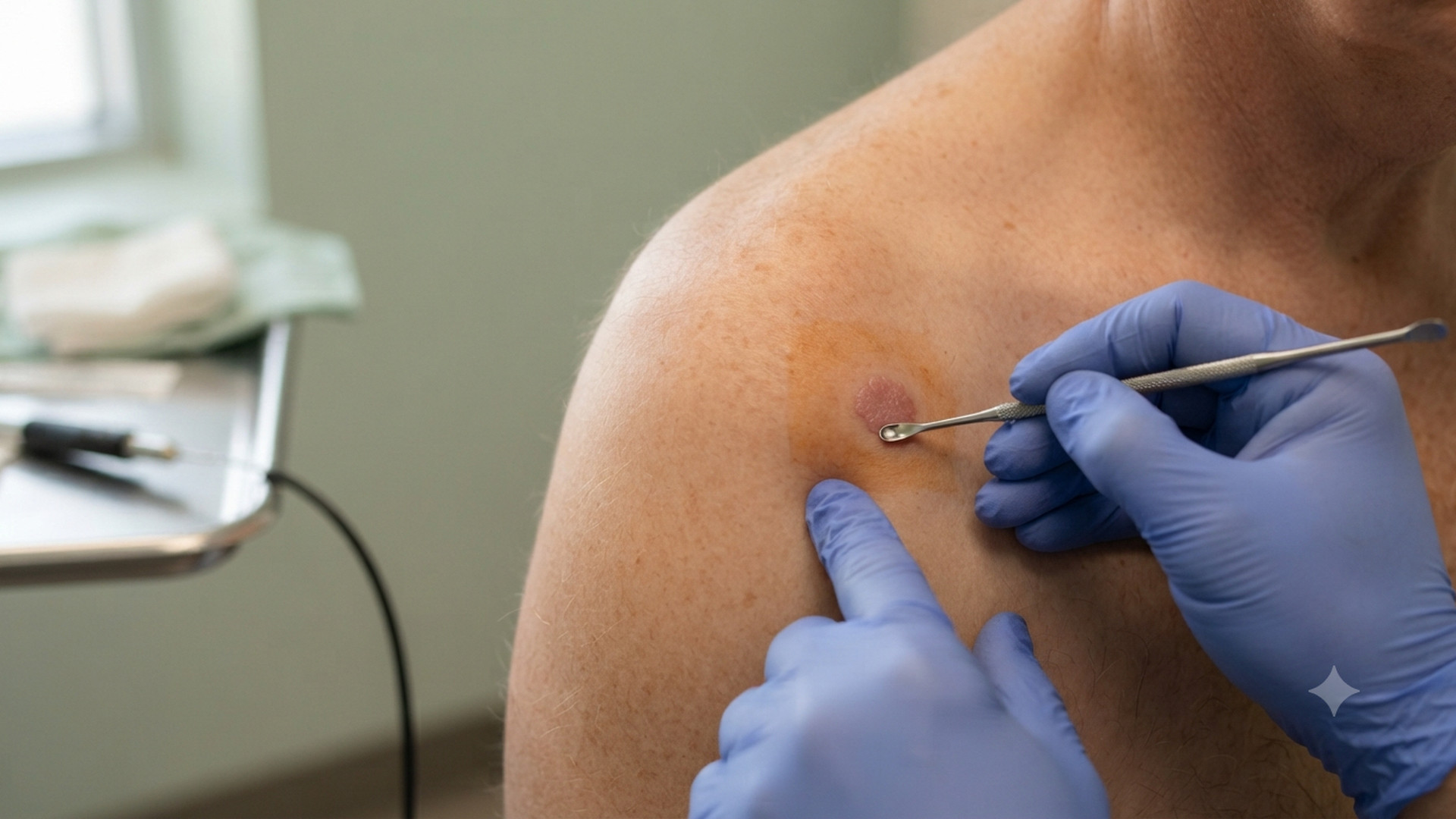
A fine heated needle used to destroy the sac, usually kept for milia that are numerous, very small, or sitting somewhere awkward for a blade. It works. It is also more likely than a simple nick to leave a small mark, so it is not the first choice for one or two bumps on an eyelid.
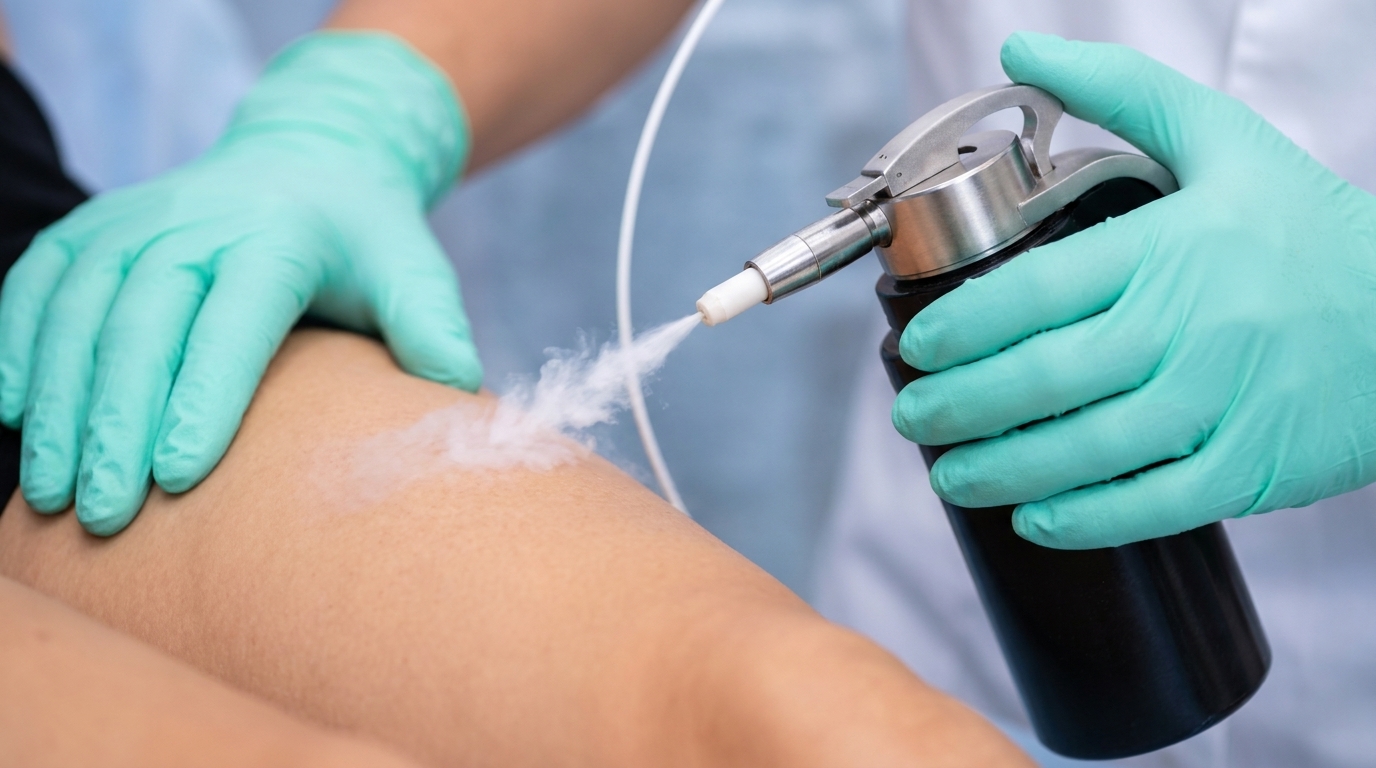
Freezing is sometimes offered for milia. It is less precise than extraction, more uncomfortable, and on deeper skin tones it carries a real risk of leaving a pale or dark mark where the bump was. There is little reason to choose it over opening the sac and lifting the contents out.
The prescription-strength version of the same idea as adapalene, used at night when there are many milia or they keep coming back. Over two to three months it reduces how many new ones form. It does not clear the existing bumps, and it is used carefully near the eyes. Ask your doctor about it if you are pregnant or trying to become pregnant.
The first treatment for almost every ordinary hand or foot wart, and the one with the best evidence outside the clinic. It dissolves the infected thickened skin a layer at a time, so it only works if it goes on every single day. Soak the wart for five minutes, file the dead surface off, apply, and cover it. Twelve weeks is a fair trial; ten days is not.
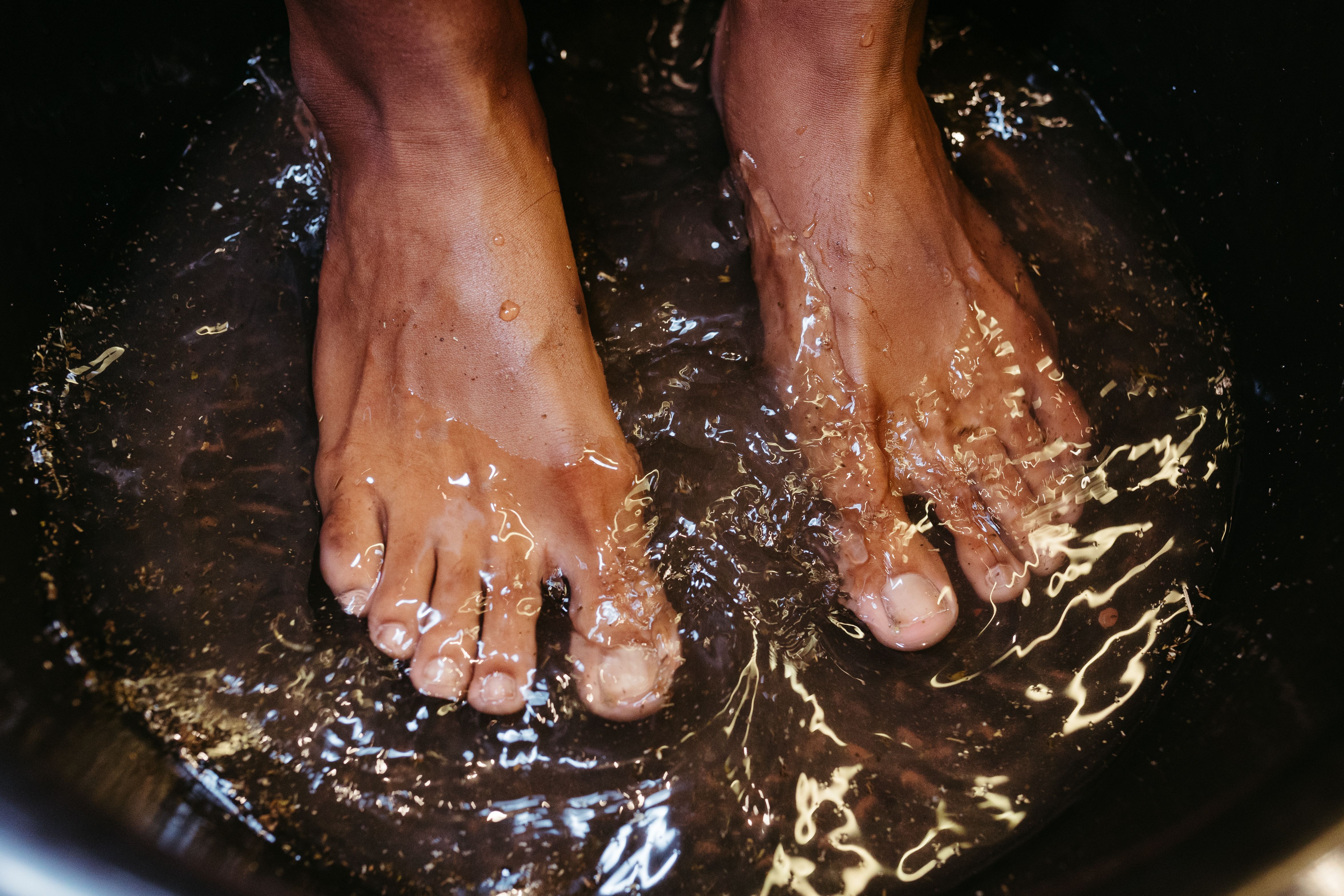
Not a treatment on its own, but the thing that makes salicylic acid work. Filing the dead crust off between doses lets the next dose reach live infected skin instead of sitting on top of it. Use a file or pumice kept only for that wart and thrown away afterwards, because one file used on several warts spreads them between your own sites.

The pharmacy sprays get nowhere near as cold as clinic liquid nitrogen, so they work best on small, new, thin warts on the hands and poorly on thick foot warts. They sting and can blister. On deeper skin tones they carry the same risk of leaving a pale or dark mark as clinic freezing does.
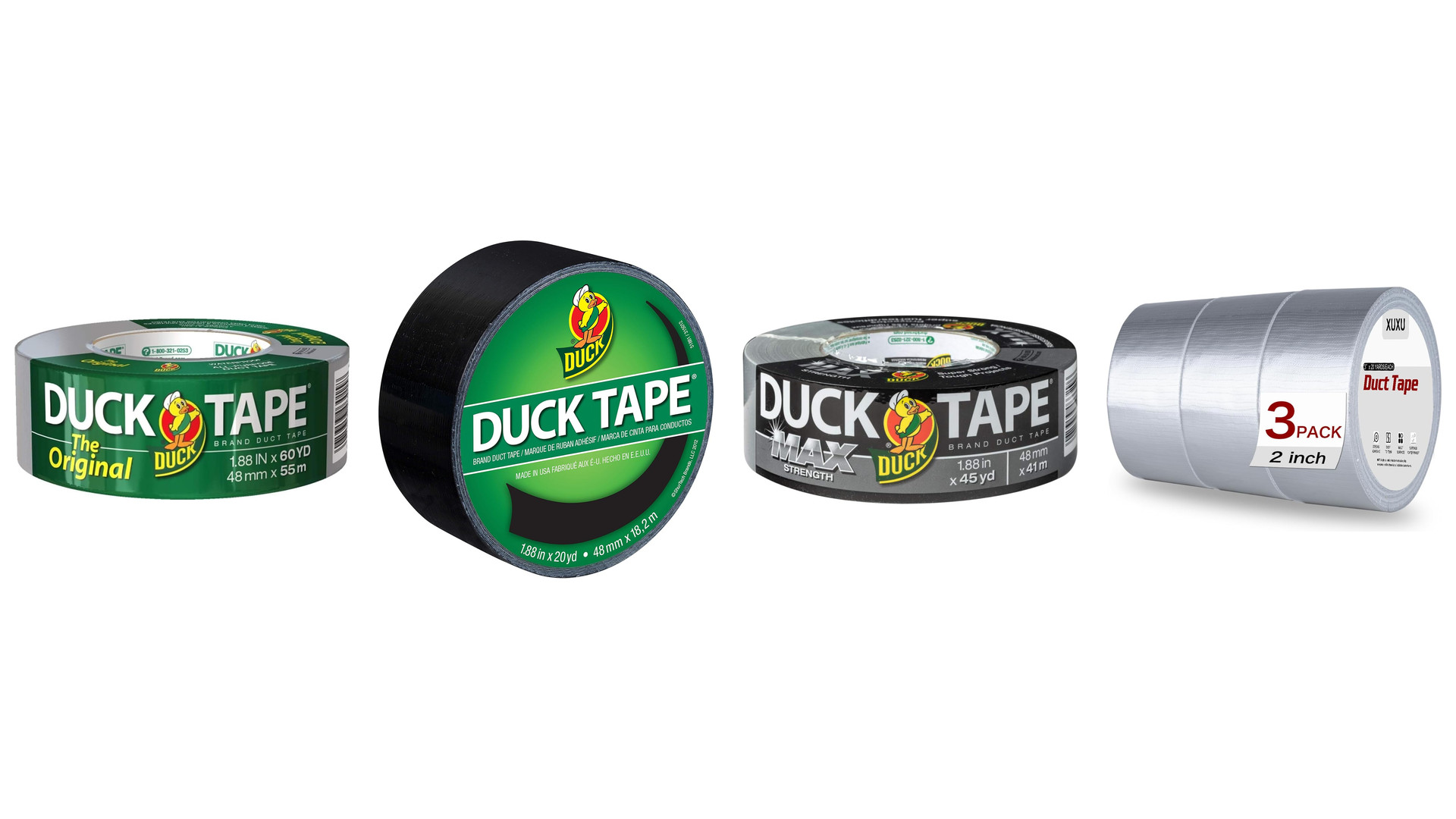
Covering a wart with tape for a few days at a time, then filing it, is cheap and harmless, and the trials are genuinely mixed on whether the tape itself adds anything. Any benefit is probably from the covering and the filing. It is reasonable alongside salicylic acid and a poor substitute for it.
Liquid nitrogen freezes the infected skin and the injury also draws immune attention to the spot. It needs repeating every two to four weeks, usually three or four times, and a wart regrowing from the edge between sessions is normal rather than failure. Over several months its results are broadly similar to salicylic acid used properly. It stings, it blisters, and on deeper skin tones it can leave a lasting pale or dark mark.

A blistering liquid painted on in clinic and washed off a few hours later. It is painless going on, which is why it is a common first choice for children and for warts on the face. The blister that follows lifts the infected skin away over the next few days and can be sore. It usually takes more than one visit.
The wart is numbed, burned with an electric current and scraped away in one visit. It is kept for a single stubborn wart that has failed everything gentler, because it leaves a scar, and a scar on the sole of a foot can hurt more than the wart did. Warts can still regrow at the edge of the scar.
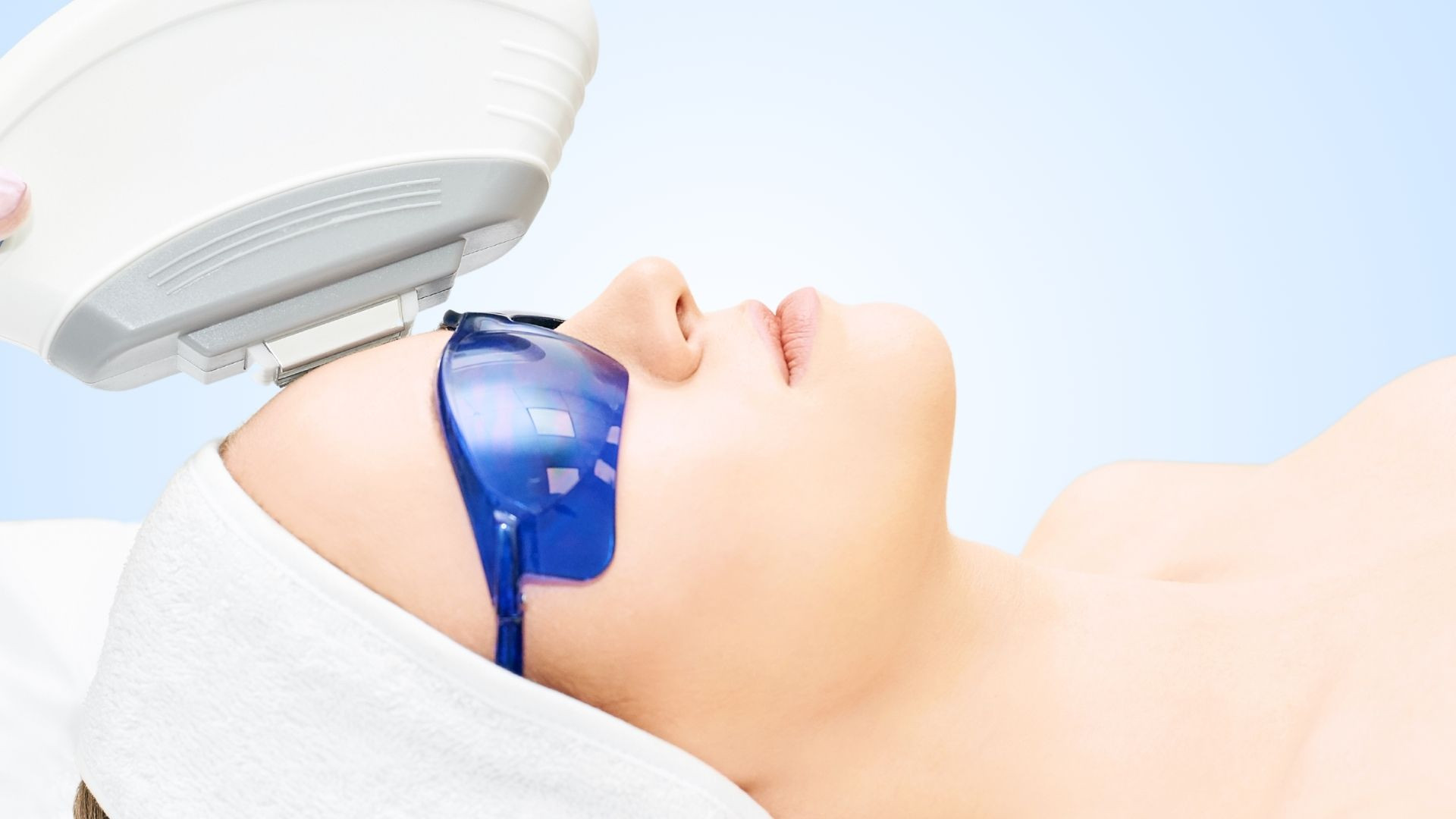
The laser targets the small blood vessels feeding the wart rather than the virus itself. It is an option for stubborn warts on the hands and around the nails when freezing has not worked, and it spares the skin around it, which matters on the face. Several sessions are needed, results are inconsistent, and it is not usually covered by insurance.
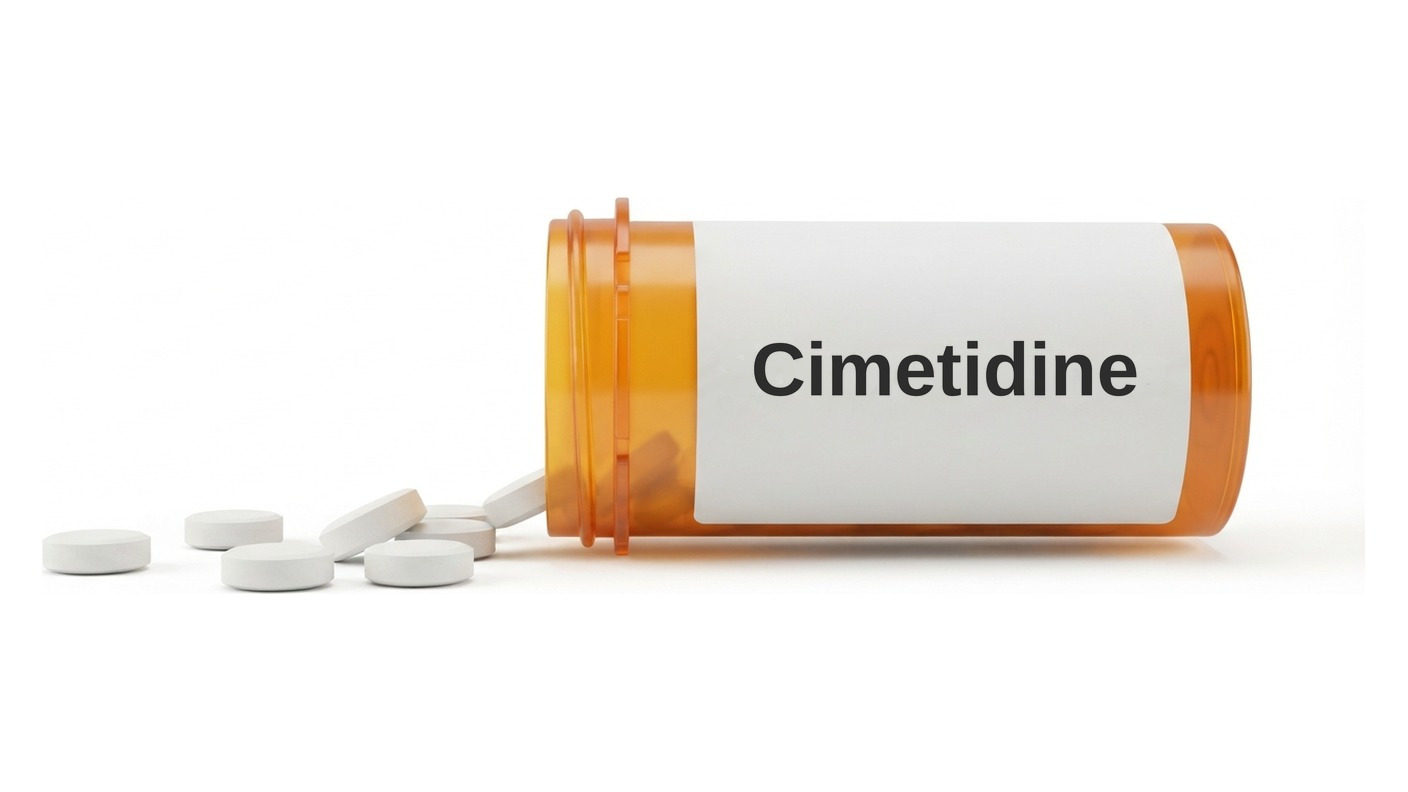
An old stomach-acid tablet that people ask about for multiple stubborn warts, on the idea that it nudges the immune system. The better-controlled trials found it no more effective than a dummy tablet in adults. It is safe and cheap, so it is occasionally still tried in children, but it should not replace treatment that is known to work.
A cream that works on the last step of the problem: it makes the local immune system pay attention to the virus. It is used mainly for flat warts on the face and for warts that keep coming back, applied a few nights a week for weeks. It reddens and irritates the skin while it works, and it does poorly on thick foot warts.
A retinoid cream used for the flat warts that appear in groups of dozens on the face and the backs of the hands, where acid and freezing would be too harsh over so wide an area. It speeds up the turnover of the infected surface cells. It takes months, and it makes the skin dry and sun-sensitive while it runs.

A chemotherapy cream at a low strength, applied to the wart itself, often under tape. It is used for flat warts and for warts that have not shifted with acid, and it is a common choice in children because it does not hurt going on. It reddens and can crust the treated skin, and it is not used in pregnancy.
Milia
Low, priced per visit
A short cosmetic appointment. Several milia are usually done in one sitting.
Warts
Low to start
Salicylic acid is an inexpensive drugstore purchase. Repeat freezing visits add up, and warts are often treated as a medical problem rather than a cosmetic one.
Milia
Milia are smooth. Draw a fingertip across one and the surface feels like normal skin with a small firm bead underneath. The colour is even white or pale yellow all the way across.
Warts
Warts are rough. The surface feels dry and grainy, like fine sandpaper, and the edge is a thickened rim. The dark dots people call seeds are not seeds. They are tiny blood vessels, and they are the single most useful sign that a bump is a wart.
Milia
Milia cannot pass to another person or to another part of your body. Nothing living is inside them. A crop of milia on the cheeks appeared for the same reason at the same time, not because one gave rise to the next.
Warts
Warts can pass to another person and to another part of your body. Picking a wart, biting the skin around it, or shaving over it moves the virus to new skin. Warts near the fingernails are common in people who bite their nails.
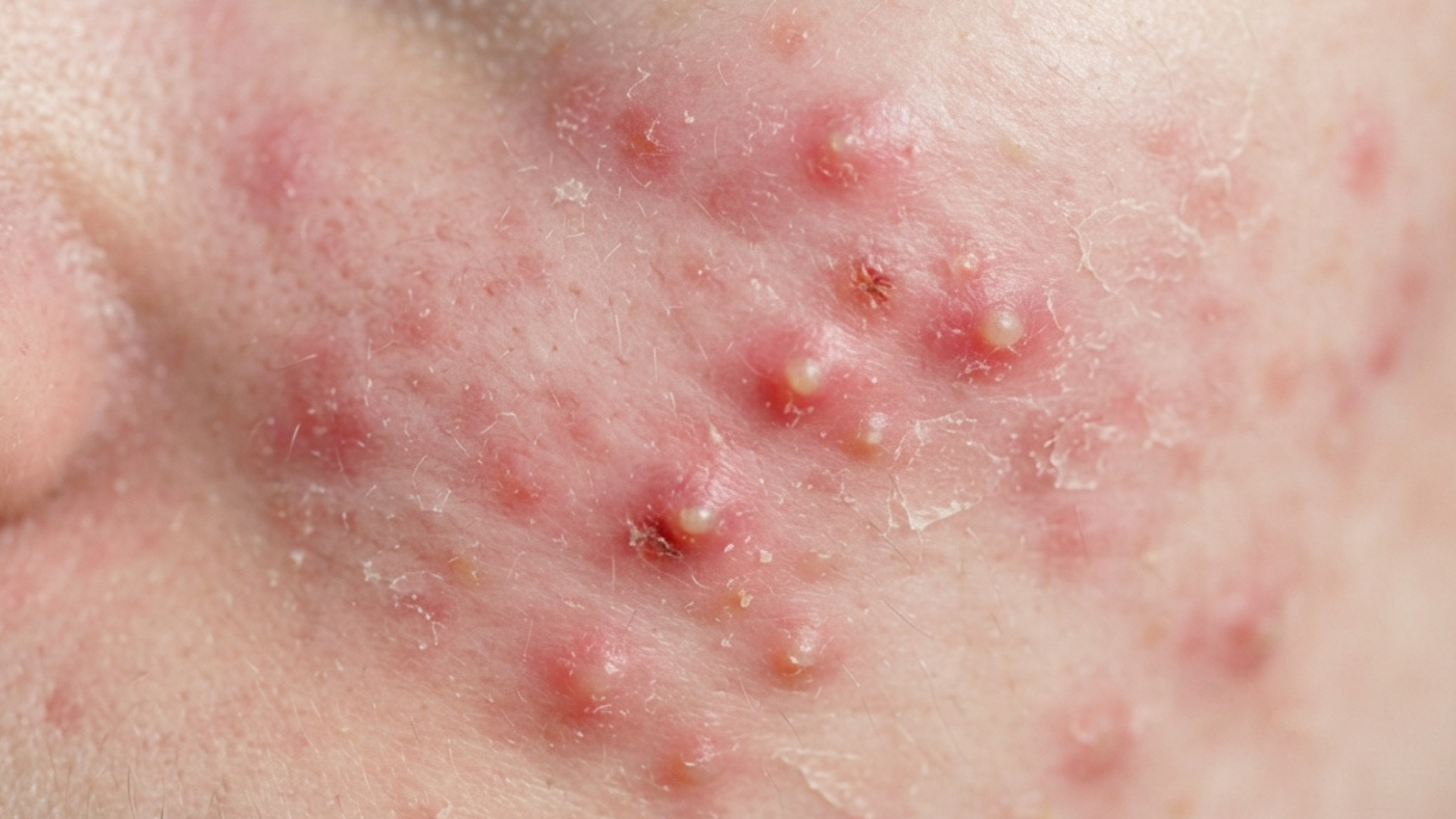
The closed comedone — a whitehead — is what milia get mistaken for most. Both are small pale bumps in the same places. A whitehead is a blocked pore, so it has an opening you can find, it holds oil and skin cells rather than a firm pearl, it can turn red and sore, and it comes and goes over days. A milium is sealed, has no opening, sits unchanged for months and never becomes inflamed. That is also why acne treatments do very little for milia.
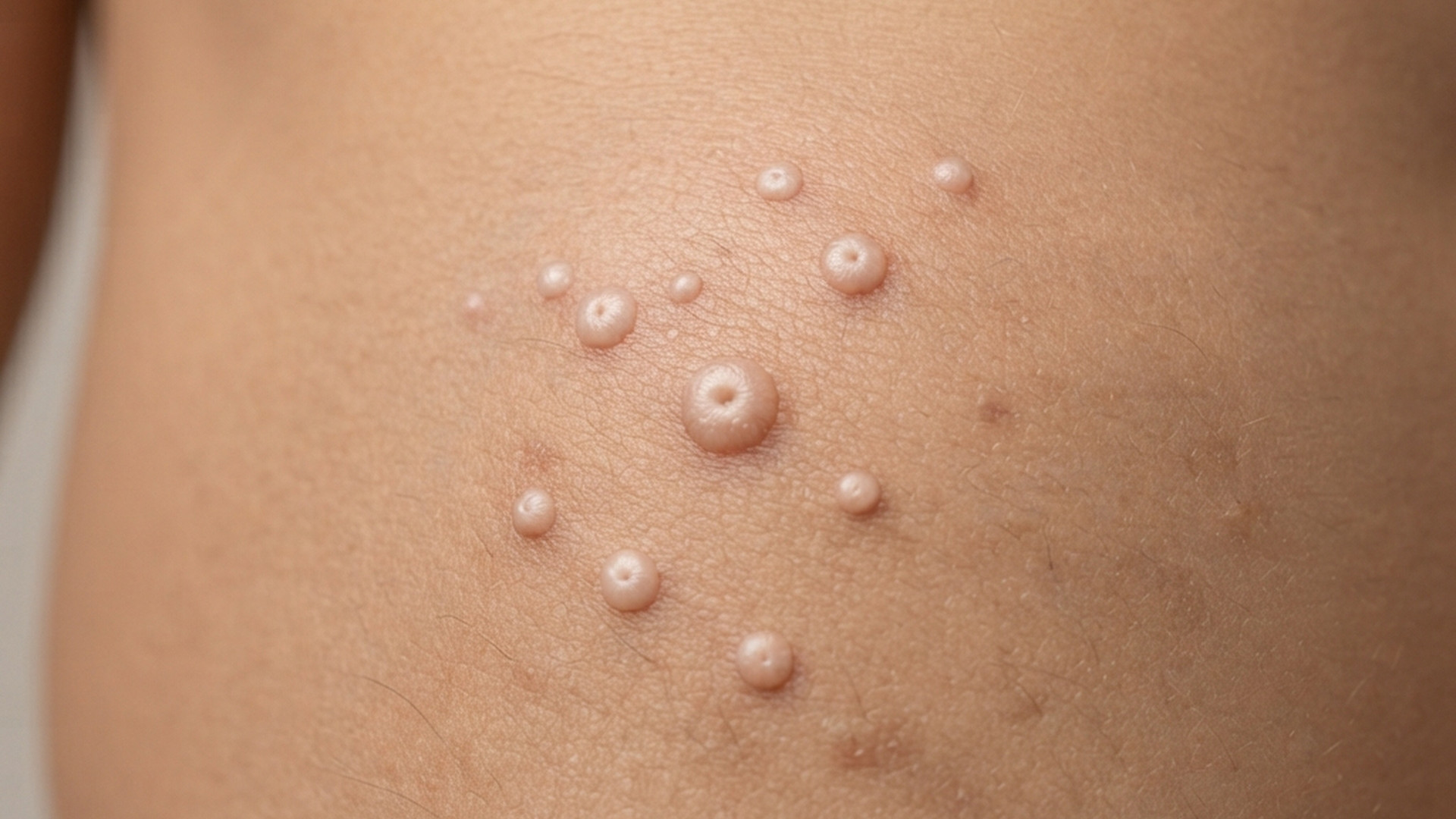
Both are small, firm, dome-shaped and pale. Molluscum bumps are usually a little larger, most have a tiny dimple in the middle, they turn up in clusters that spread over weeks, and they are common in children and in skin folds. Milia do not spread, do not dimple and cannot be passed on. Molluscum is a virus and clears on its own eventually; a milium sits still until someone removes it.
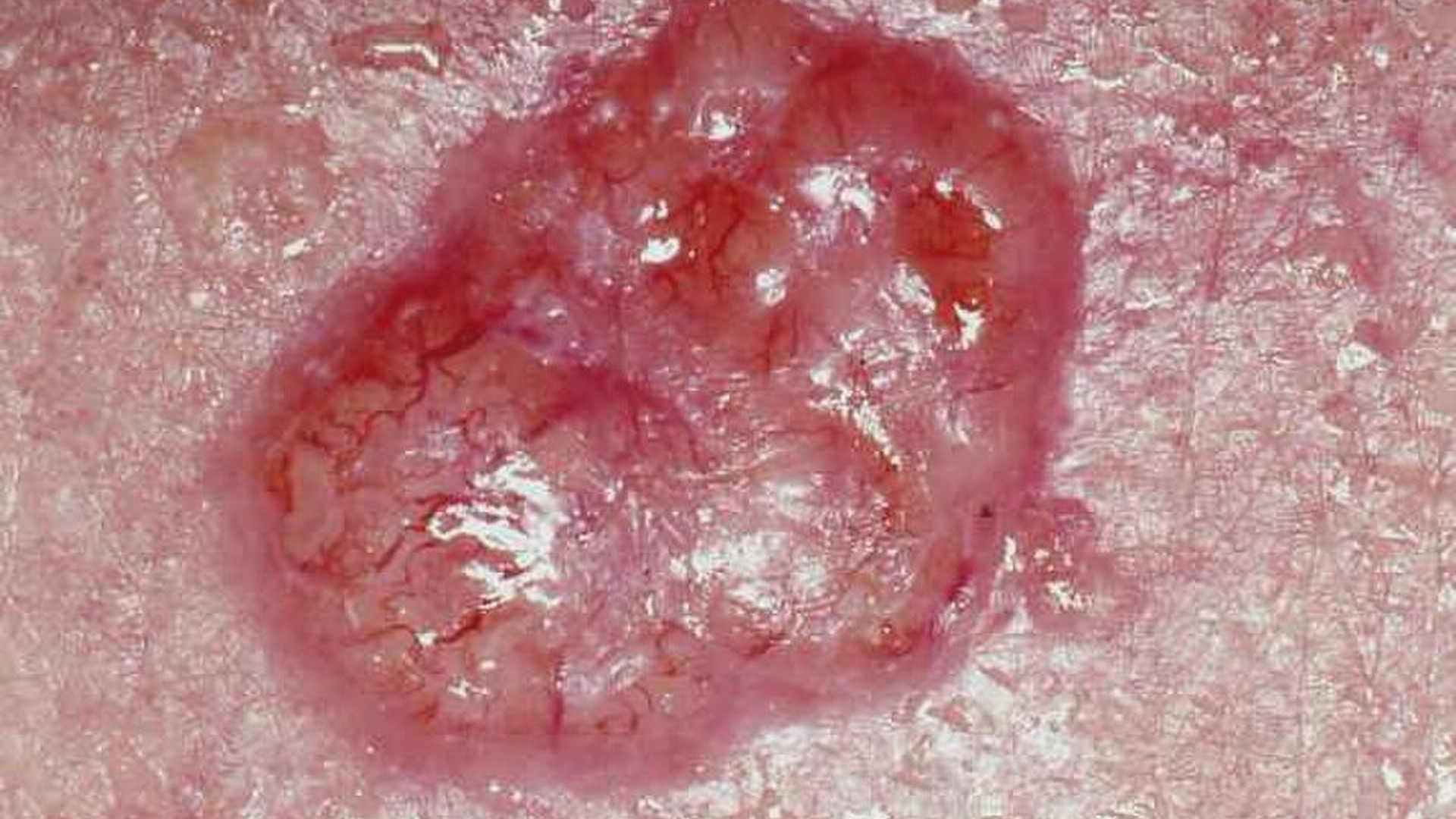
Worth knowing about, because an early basal cell skin cancer can look like a small pearly bump on the face, which is exactly what a milium looks like. The difference is behavior. A basal cell grows slowly month by month, often has fine blood vessels visible over its surface, and may crust, bleed or refuse to heal. A milium is one to two millimetres, stays that size and never bleeds. A single bump that is growing or bleeding should be looked at.
Warts that set up in the nail folds are the most stubborn of the group, because the nail shields the virus from creams and from freezing. Left long enough, a wart growing under the nail can lift it or leave a permanent ridge or split in the nail plate. Nail biting and picking at hangnails are how most of them start, and they are the ones most worth taking to a dermatologist early.
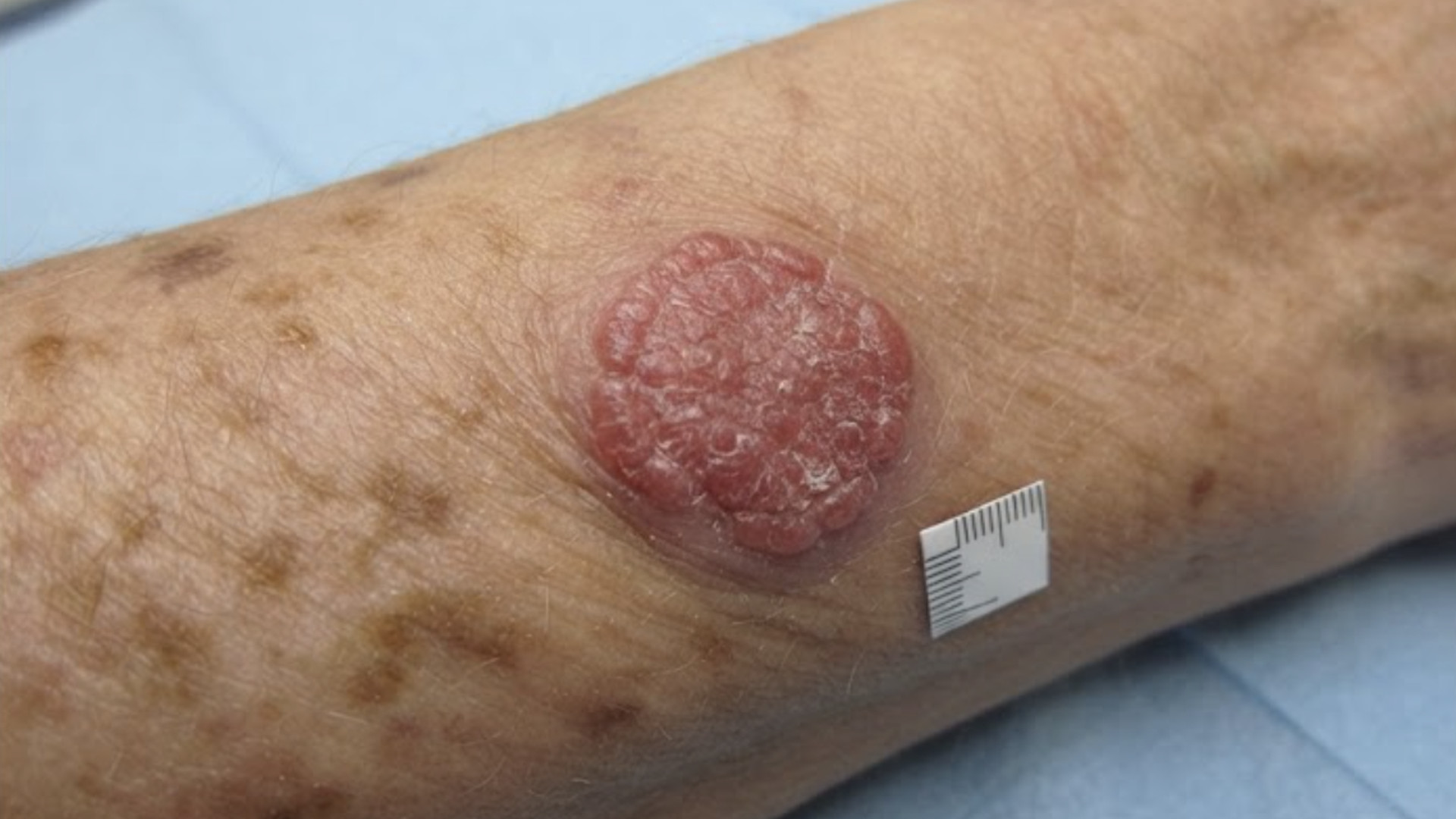
The reason a single stubborn growth in an adult should be looked at rather than treated blindly. This skin cancer can be rough and raised enough to pass for a wart. The differences are that it is usually one growth rather than several, it keeps growing rather than sitting still, it often bleeds or crusts and does not heal, and it turns up on sun-exposed skin in older adults. Warts are commoner in children and tend to come in groups.
Common questions