Melasma

Melasma shows up as brown or grey-brown patches, usually on the cheeks, forehead and upper lip.
Melasma is a brown or grey-brown patch of extra pigment. The skin feels completely normal. Rosacea is redness, flushing and sometimes bumps. The skin feels warm, and it often stings with ordinary skincare. Both sit on the middle of the face, which is why they get mixed up, and a person can have both at once.
| The difference | Melasma | Rosacea |
|---|---|---|
| What it is | Overactive pigment cells | Overreactive blood vessels |
| What it looks like | Larger patches with blurry edges | Redness across the middle of the face |
| How it feels | Like nothing | Warm, stinging, gritty eyes |
| What it does over time | Fades and returns | Persists and can worsen |
| Treatment | Sun protection first, then fading creams | Trigger control and prescription creams |
Melasma shows up as brown or grey-brown patches, usually on the cheeks, forehead and upper lip.
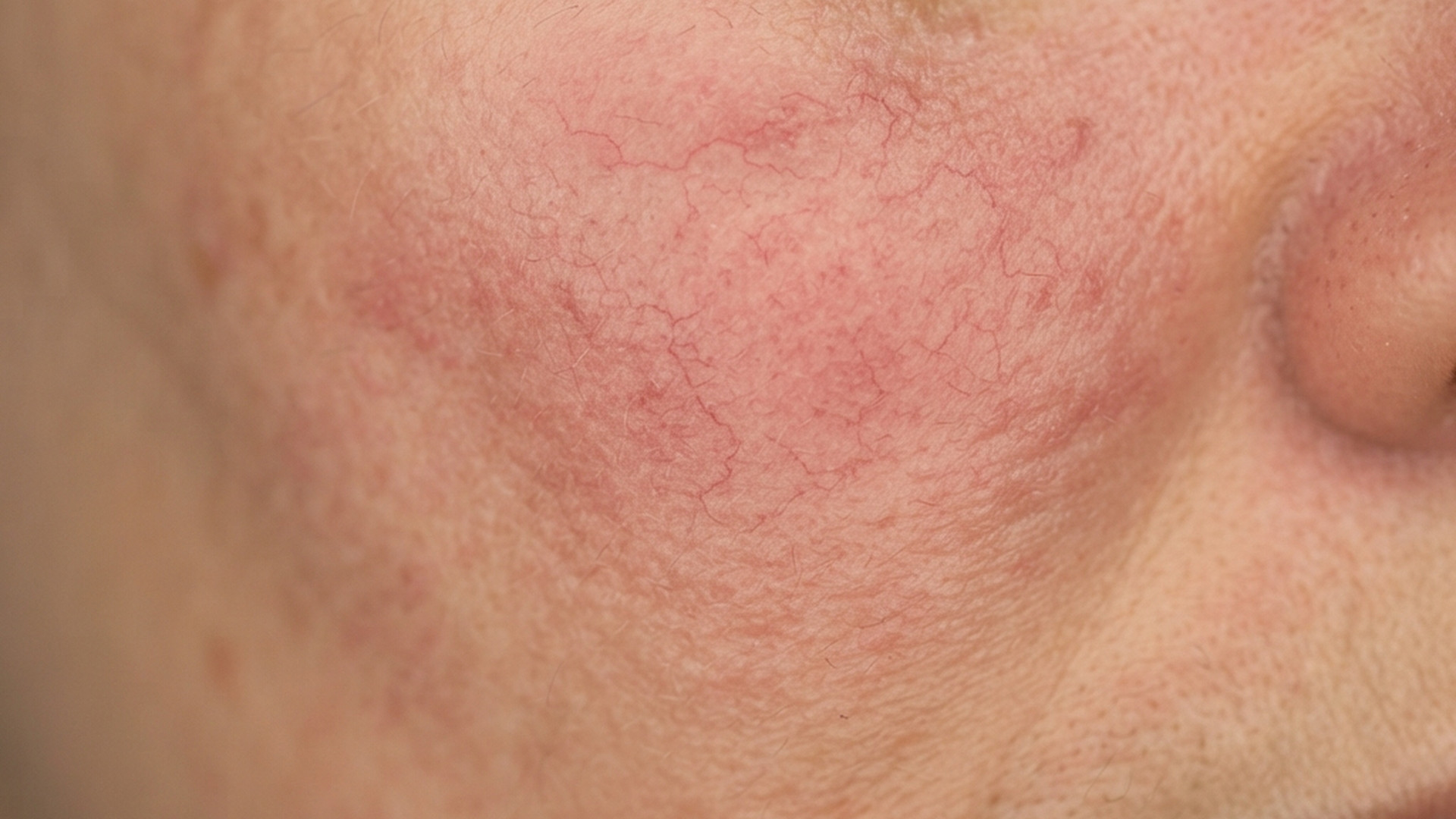
Rosacea causes lasting redness across the cheeks and nose, sometimes with visible vessels.
Side by side
Melasma
Overactive pigment cells
Pigment-making cells in the skin switch on too easily and lay down extra pigment. Sun, heat and hormonal changes all push them.
Rosacea
Overreactive blood vessels
Blood vessels in the central face widen too easily and stay widened. Inflammation follows, and in some people that adds bumps and pustules.

Pigment cells sit spaced out along the base of the top layer of skin, handing an even amount of pigment to the cells around them. Sunlight and heat reach normal skin too. These cells switch on briefly, then settle back down, so the color across a cheek stays even.

Sunlight, the visible light we can see, and plain heat all land on the skin. This is why a patch darkens on a cloudy day, over a hot stove or through a car window, and it is the step that sun protection is aimed at.

The pigment cells inside a melasma patch are unusually easy to switch on and slow to switch off, and hormones from pregnancy or the pill keep them primed. That is why the same short walk to the car darkens the patch and does nothing to the skin beside it.

The switched-on cells make extra melanin and hand it to the skin cells around them. Some of it drops through into the deeper layer of skin, where scavenger cells hold onto it, and that deeper pigment is the gray-brown part creams reach poorly.

The skin under a patch is not normal skin. Sun damage, extra blood vessels and the supporting layer beneath keep sending growth signals up to the pigment cells, so they stay primed even when the surface looks even. Almost everything on the lists below is pushing on this step.

The blood vessels in the middle of the face open when you are hot, embarrassed or eating something spicy. The immune system stays quiet, the vessels close again within minutes, and the color goes back to normal. Nothing stays visible.

Sun, heat, spicy food, alcohol and stress reach skin that is already wired to overreact. Fair skin and a family history make that wiring more likely. The same warm room that does nothing to someone else starts the whole chain here.

The skin pours out too much of an alarm protein called cathelicidin, and breaks it down the wrong way. That switches inflammation on and keeps it on. This is the step most prescription creams are aimed at.

Inflammation makes the vessels open wider, and over years the skin grows more of them. That is the flushing, the redness that stops fading between flushes, and the fine visible threads across the cheeks and nose.

The redness stops going away, the skin burns and stings with products other people tolerate, and some people get red bumps and pus-filled spots on top of it. Almost everything on the lists below is pushing on one of these four steps.
Melasma
Larger patches with blurry edges
Usually symmetrical across both cheeks, the forehead or the upper lip. Only the colour changes — the surface looks normal.
Rosacea
Redness across the middle of the face
Flushing that comes and goes at first, then a lasting pink or red. Fine visible blood vessels often appear inside it.
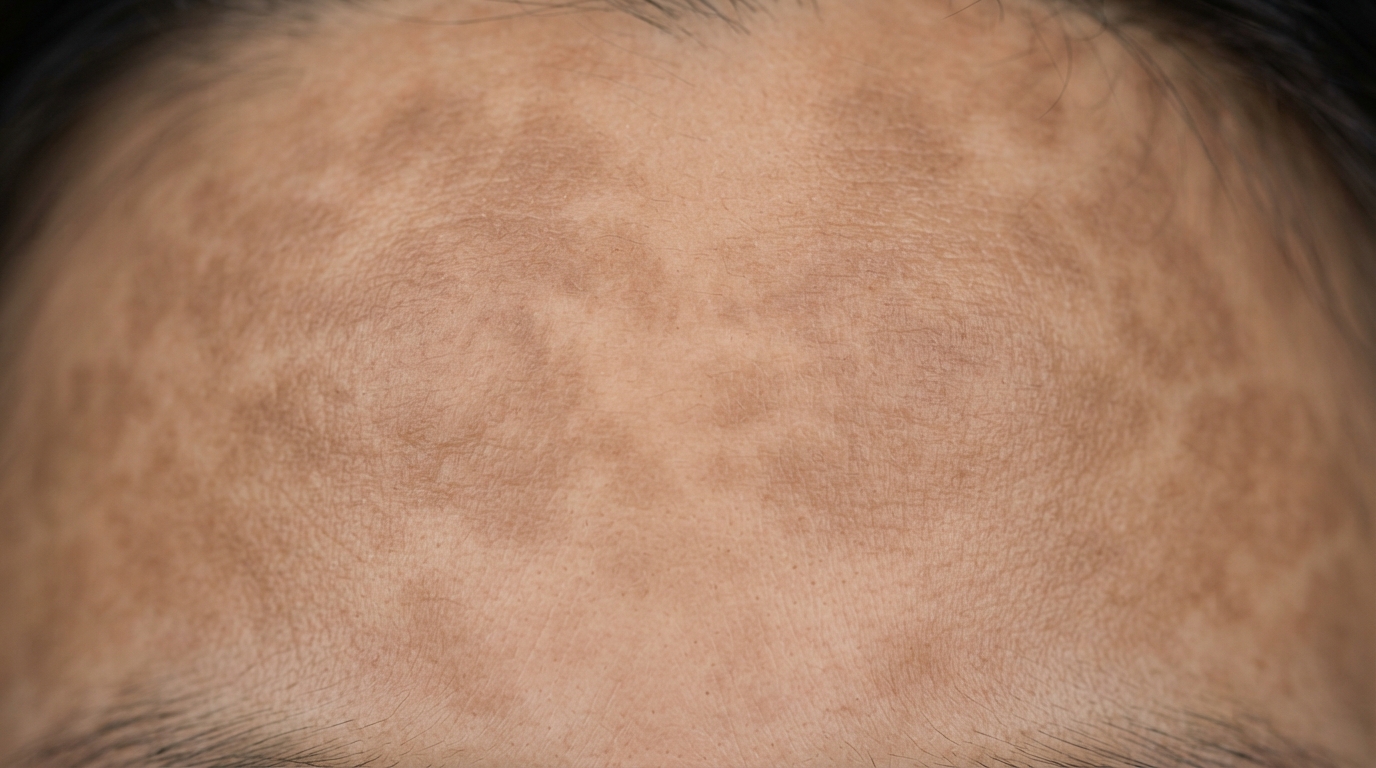
Symmetrical brown or gray-brown patches across the forehead, nose, upper lip and chin, with soft, blurred edges. It darkens with sun, heat and hormonal change. Daily sun protection does more for it than any single product.
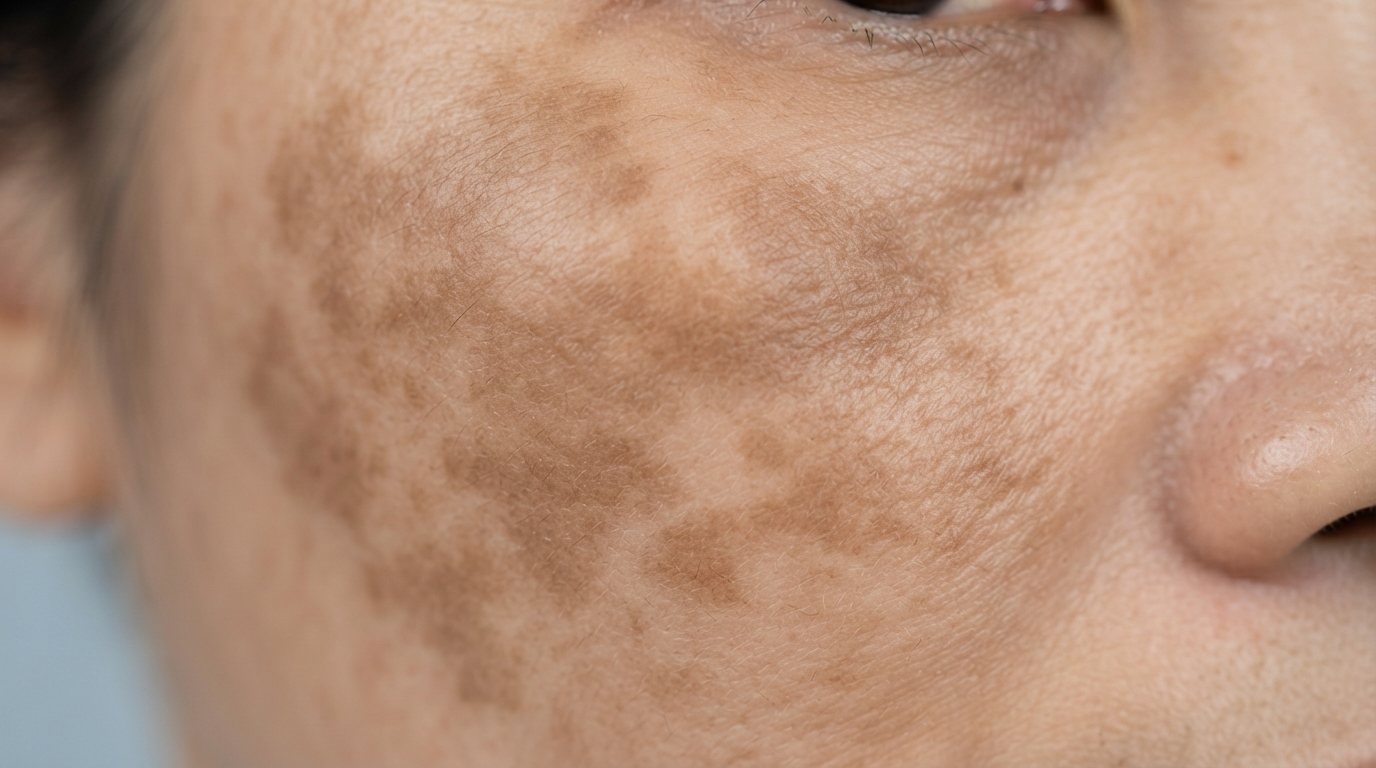
Patches sitting mainly over the cheekbones on both sides, often in a mirror-image pattern. It is common in pregnancy and with hormonal contraception. It can fade slowly after the hormonal trigger changes, but not always.
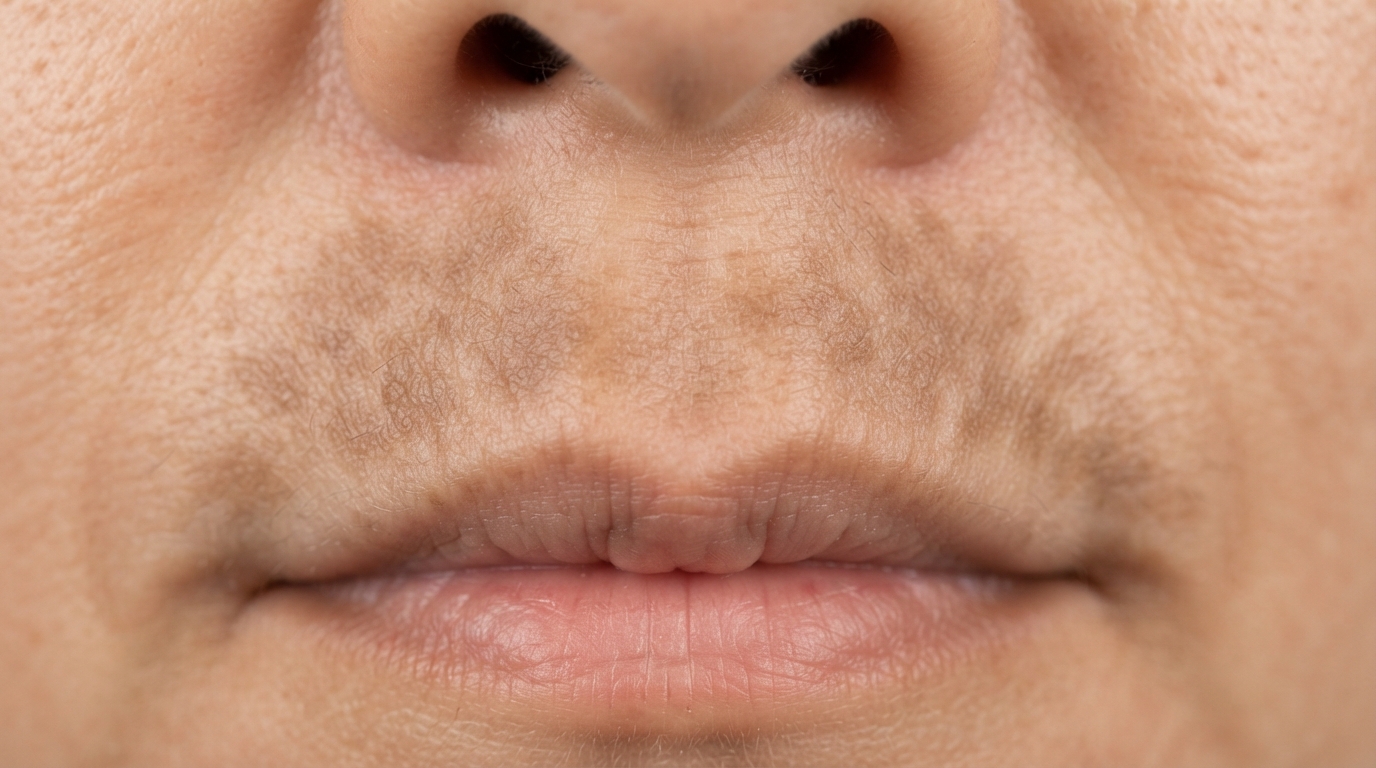
Patches along the jawline and sides of the face, which tend to appear later in life. This pattern is often more stubborn than the others. Heat and visible light, not only ultraviolet, keep it going.
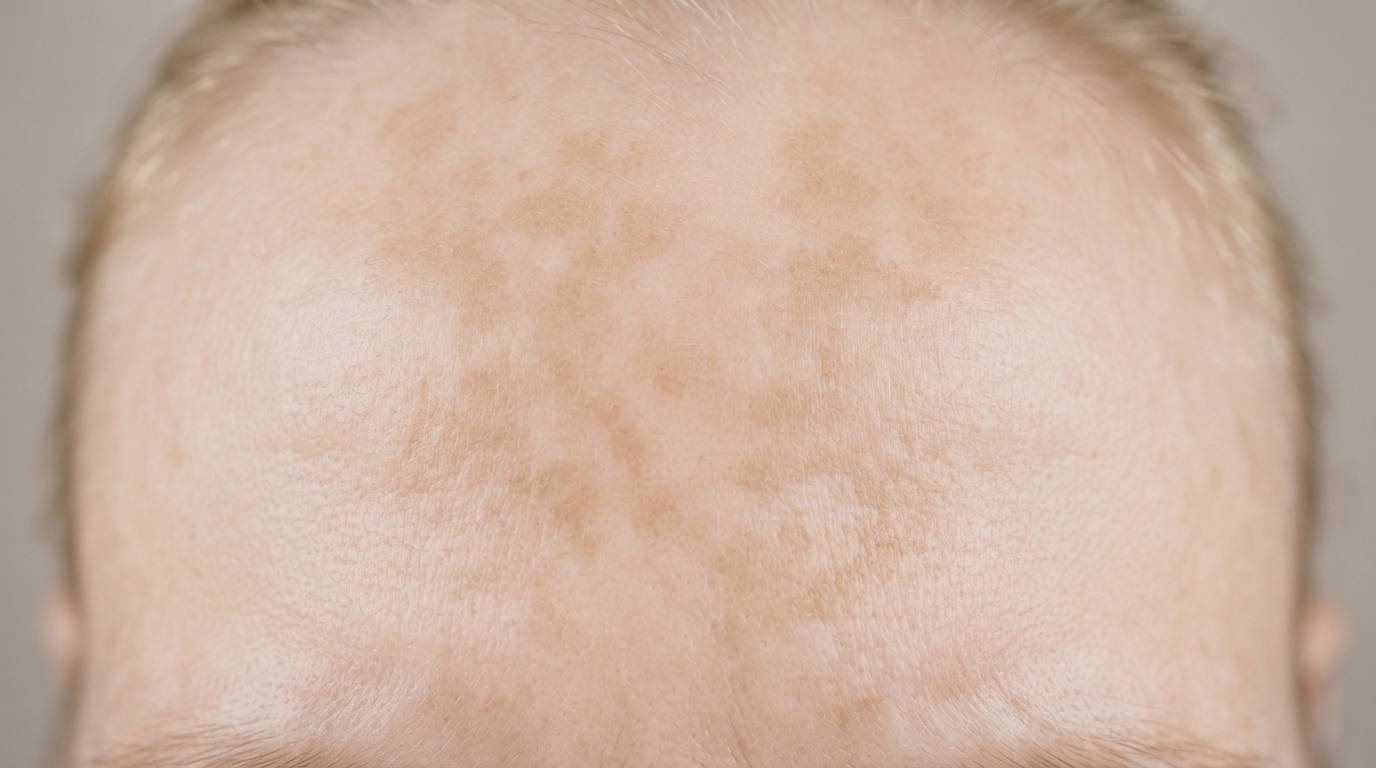
On light skin melasma shows as flat tan or light brown patches with soft, blurred edges, usually across the forehead, the cheeks and the upper lip, and usually matching on both sides of the face. It is completely flat. If you can feel it, it is something else. The common mistake here is reading it as freckles or ordinary sun damage and reaching for a scrub, when sunlight, heat and hormone change are what keep it going.
Melasma is much more common from medium skin tones onward, and it tends to start earlier and cover more of the face. The patches read mid-brown against a background that is already warm, so the border is softer and it can look like an uneven tan that never evens out. Visible light, the light you can see, drives the pigment here as much as ultraviolet light does, and a clear sunscreen blocks almost none of it. The tint in a mineral sunscreen is the working part, not a cosmetic choice.

On deeper skin tones the color is often gray, slate or blue-brown rather than plain brown. That shade means more of the pigment has settled into the deeper layer of the skin, and deep pigment clears slowly. Progress is measured in months, and the realistic goal is lighter and more even rather than gone. Sun protection every day is what holds the ground that creams gain.
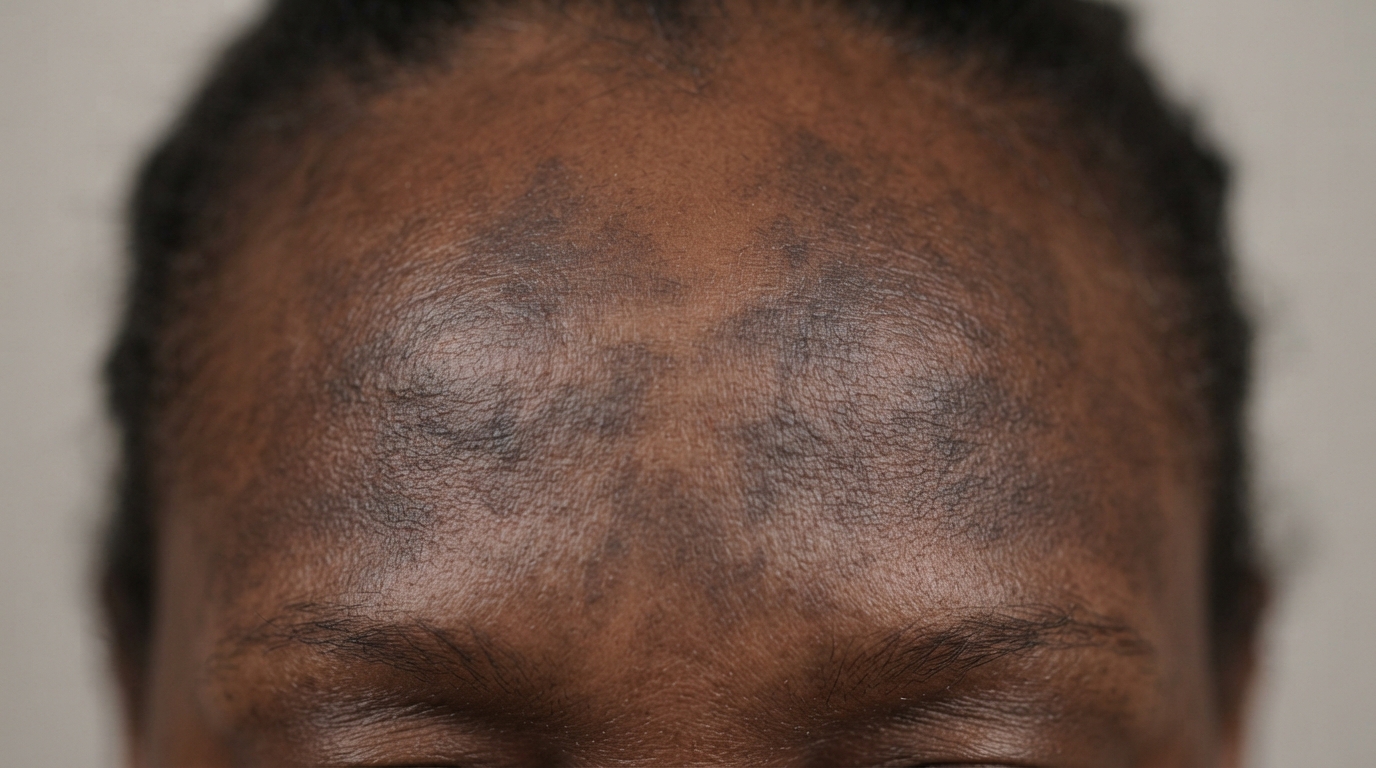
The biggest avoidable risk on deep skin is the treatment itself. Strong peels, high-energy lasers, hair removal lasers used near a patch and hard scrubbing all inflame the skin, and inflamed skin with active pigment cells makes more pigment. That is how a course of treatment can leave a face darker than it started. Creams bought outside a doctor's care do the same: long, unbroken use of high-strength hydroquinone can cause a blue-black discoloration that is far more stubborn than the melasma was. Used properly, in supervised courses, hydroquinone is still one of the most effective treatments there is.

Rosacea happens in every skin tone, but the sign it is usually diagnosed from is redness, and on deeper skin tones the inflammation reads as dusky, violet, brown, or simply as an area that looks darker than the skin around it. Fine vessels are also much harder to see. The clues that stay reliable are warmth in the middle of the face, swelling, stinging with skincare or sun, and a history of the face heating up with hot drinks, spice, alcohol or exercise.

When the redness is hard to see, the bumps are often the first thing noticed, and rosacea on deeper skin tones is commonly treated as acne for years. The check that settles it is the same one used on any skin tone: rosacea does not produce blackheads or whiteheads. Bumps and pus-filled spots on the central face with no comedones point to rosacea, not acne.

A less common pattern of rosacea that is described more often on deeper skin tones. Instead of pus-filled spots it produces firm, dome-shaped brown or reddish-brown bumps, usually around the mouth and the eyes, on skin that may not look inflamed at all. It is easily mistaken for other bumpy conditions, and it is one of the reasons a biopsy is occasionally needed.

Rosacea inflammation on deeper skin tones leaves flat dark patches where the bumps were, and they can take many months to fade. That is why calming the inflammation early matters more than treating the marks afterward, and why daily sunscreen is part of the plan. Laser and light treatment for vessels and redness is possible on deeper skin tones, but ask a practitioner how often they treat skin like yours and ask for a test patch.
Melasma
Brown or grey-brown
Never red. Pigment sitting deeper in the skin looks greyer or slate-coloured.
Rosacea
Pink to red
Press a finger on it and the skin goes pale for a second, then refills.
Melasma
Soft, blurry, symmetrical
Patches fade gradually into normal skin, and one side of the face broadly mirrors the other.
Rosacea
Diffuse redness plus separate spots
The redness has no border at all. Any bumps are scattered, with clear skin between them.
Melasma
Like nothing
No heat, no stinging, no itch. Melasma is something you see, not something you feel.
Rosacea
Warm, stinging, gritty eyes
Flushes feel hot. Products other people tolerate can sting on contact, and the eyes can feel dry or gritty.
Melasma
Cheeks, forehead, upper lip, jawline
Sometimes the forearms and the sides of the neck as well. It sticks to skin the sun reaches.
Rosacea
Cheeks, nose, chin, centre of forehead
It spares the skin around the eyes and the sides of the face.
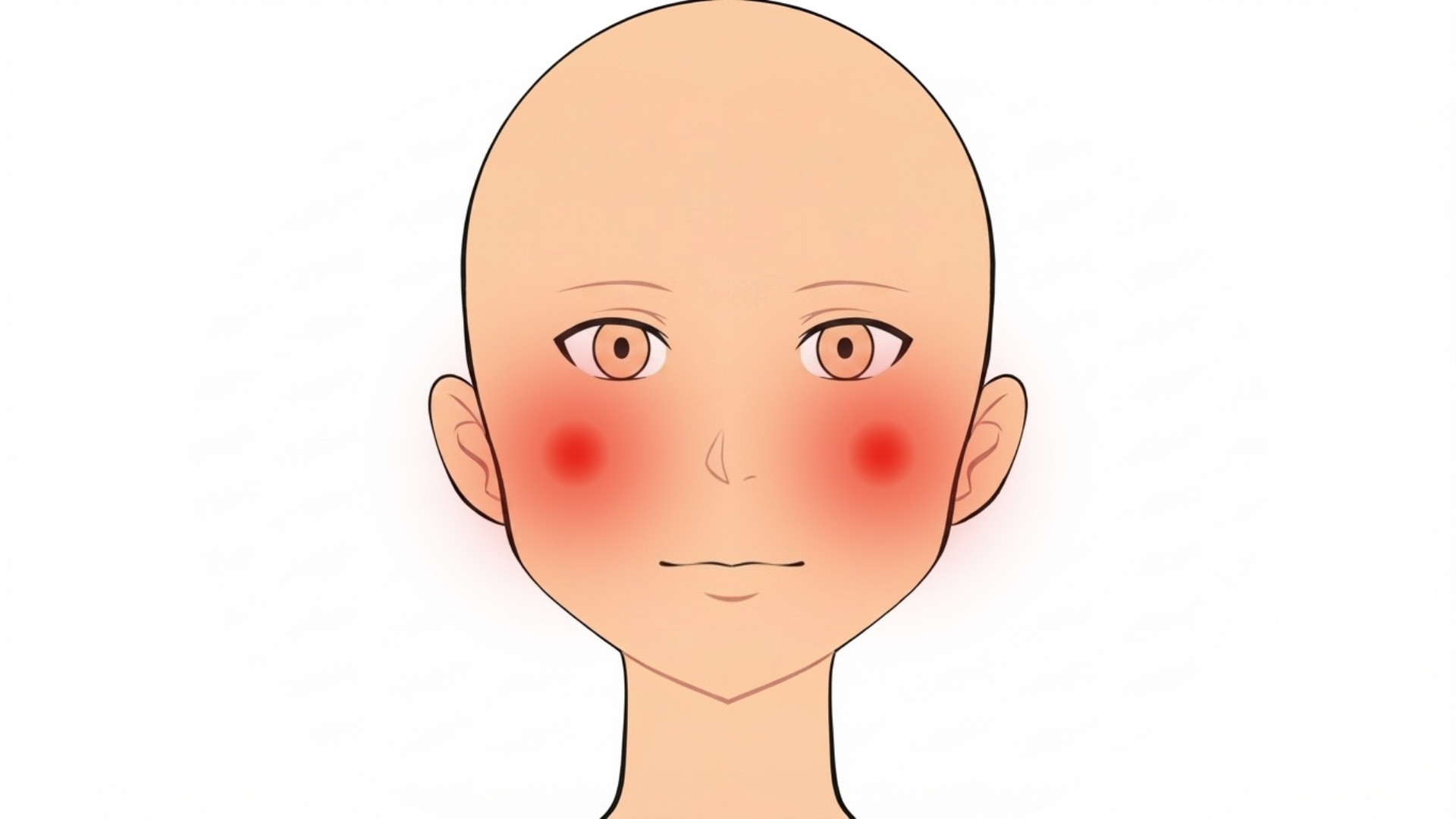
The most common pattern. The patches sit on the cheekbones and spread out toward the temples, and they are close to symmetric — a patch on one cheek almost always has a match on the other.
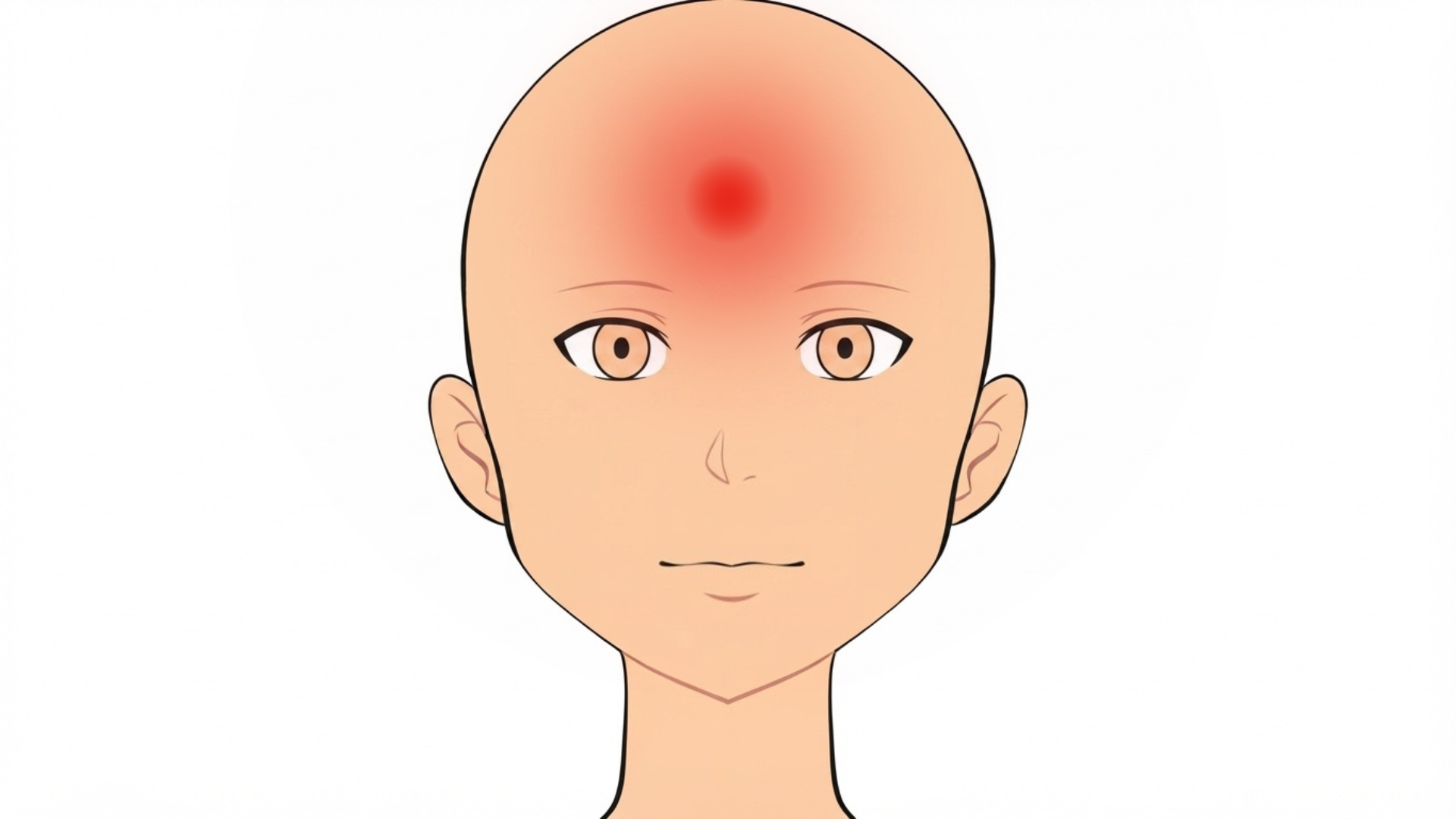
A band across the forehead, strongest at the sides and fading up into the hairline. It is easy to mistake for a tan, because it follows the part of the face the sun reaches first.
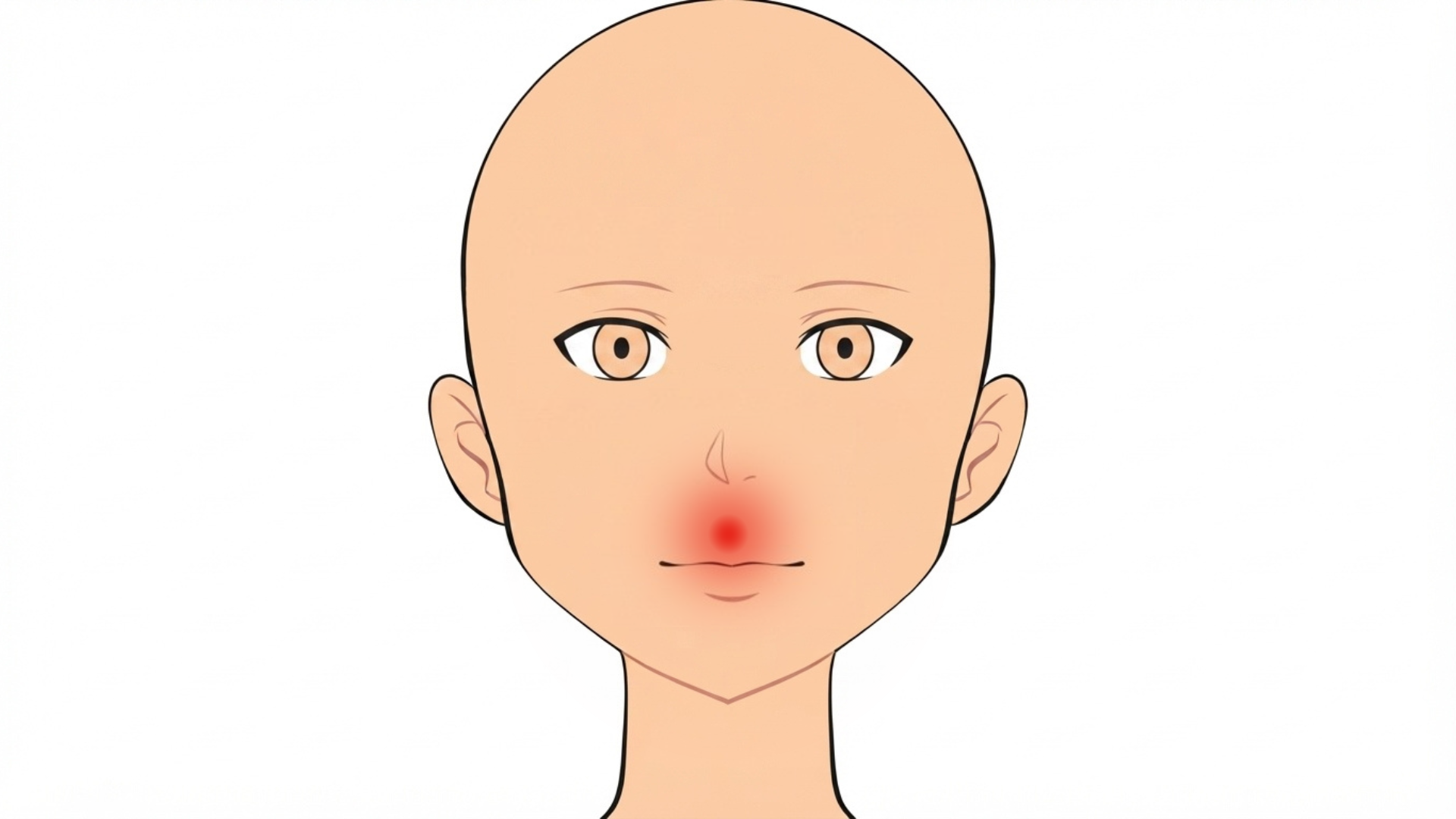
A brown band above the lip, shaped like a moustache. This is the one people recognize least, and the one most often blamed on waxing or other hair removal.
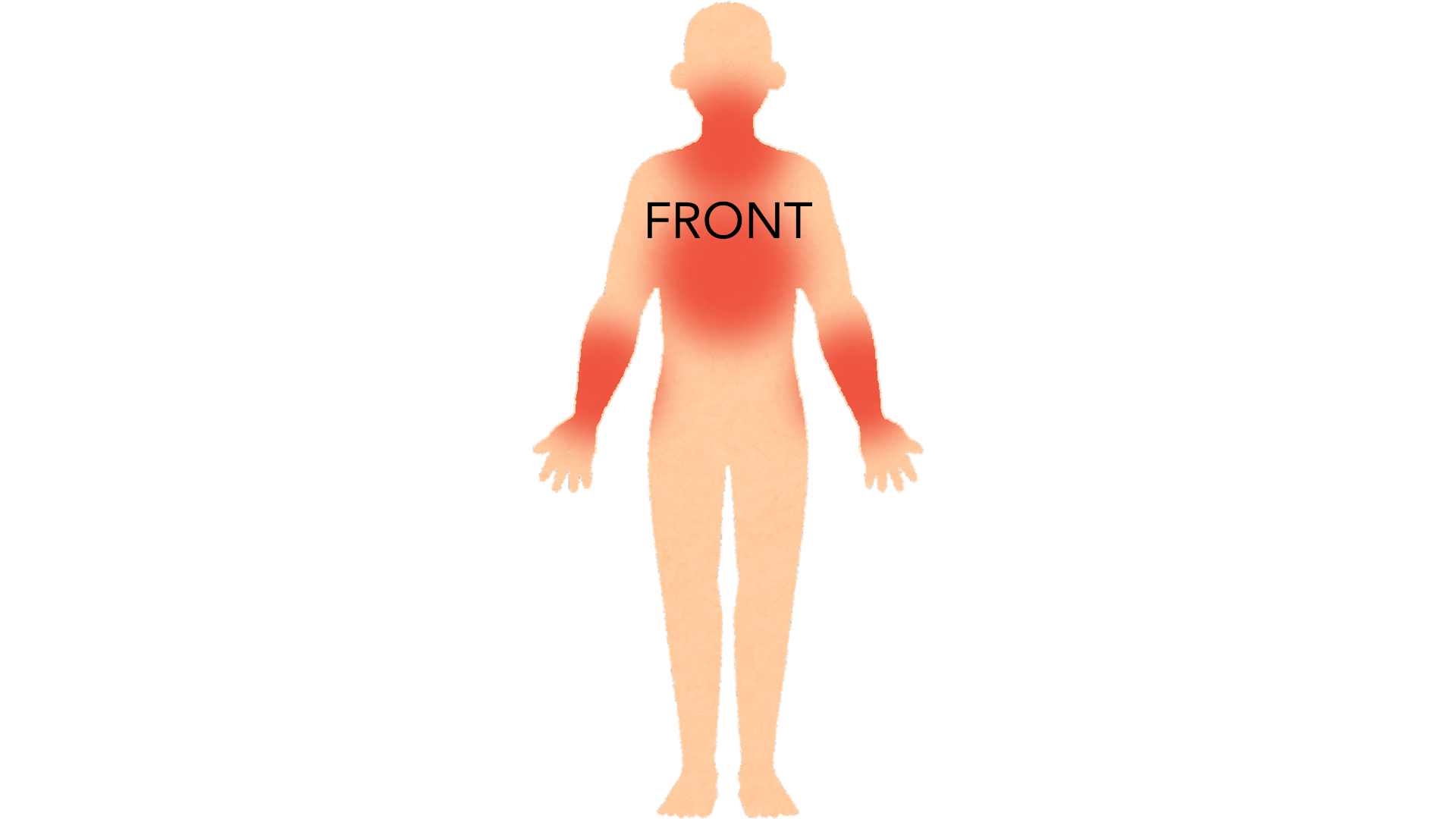
It can also appear on the forearms, the front of the neck and the upper chest, which are the other places the sun reaches every day. These patches respond more slowly than the ones on the face.
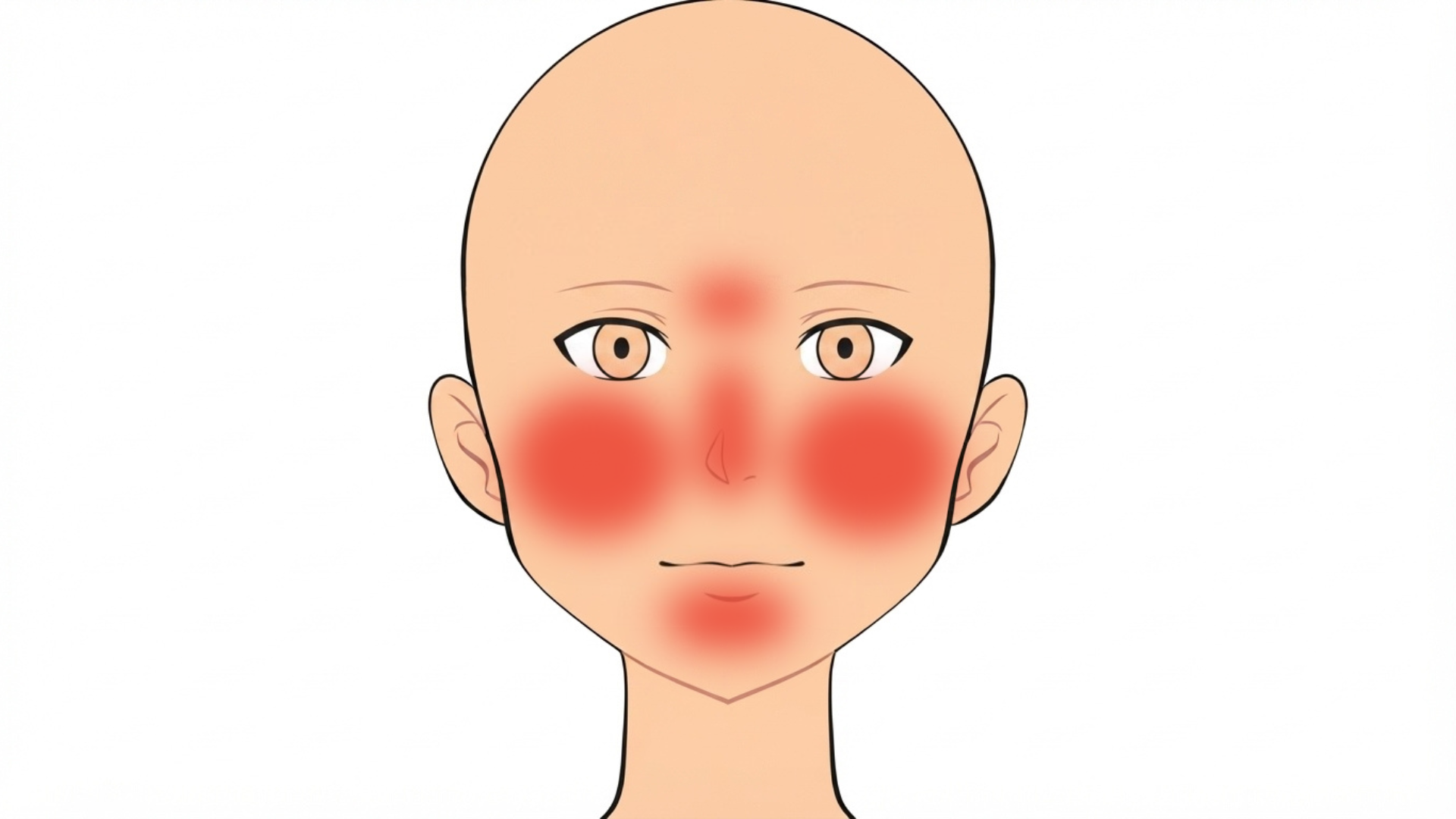
Rosacea sits on the central face: the cheeks, the nose, the chin and the skin between the eyebrows. It usually leaves the sides of the face and the skin right around the eyes alone, and that sparing is one of the things that separates it from other facial rashes.
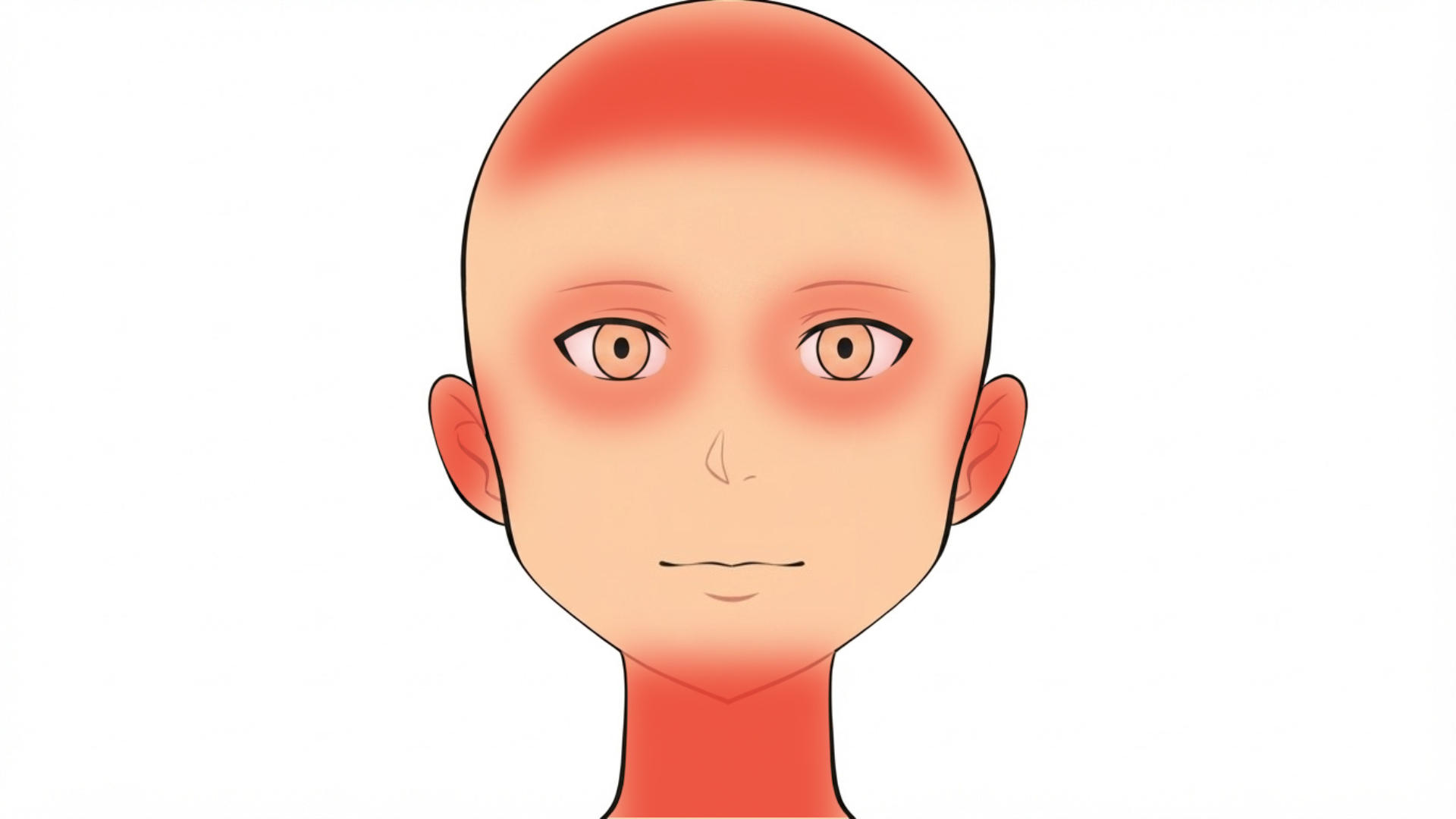
The eyes are involved in a large share of cases — gritty, dry, red lids — and that can start before anything shows on the skin. Less often it reaches the ears, the neck, the upper chest or the scalp.
Melasma
Sun, heat and hormonal changes
Including hormonal changes from hormonal birth control. Heat on its own is a trigger, so hot kitchens, saunas and a sunny car window all count.
Rosacea
Heat, sun, alcohol and spicy food
Also hot drinks, exercise, cold wind and stress. Triggers vary, and most people can name their own within a few weeks.
Melasma
Fades and returns
It lightens in winter and with treatment, then comes back with sun, heat or a hormonal change. It rarely clears once and stays clear.
Rosacea
Persists and can worsen
Flushing tends to become fixed redness over years, and untreated inflammation thickens the skin of the nose in a small number of people.
Melasma
Sun protection first, then fading creams
Daily broad-spectrum sunscreen, ideally tinted with iron oxides, is the treatment that matters most, and melasma comes back without it. Hydroquinone, azelaic acid, tranexamic acid and gentle peels lighten it. Lasers are used cautiously, because heat and light can darken it.
Rosacea
Trigger control and prescription creams
Sunscreen and gentle cleansing come first. Metronidazole, azelaic acid or ivermectin cream treat the bumps. Laser and intense pulsed light treat fixed redness and visible vessels.
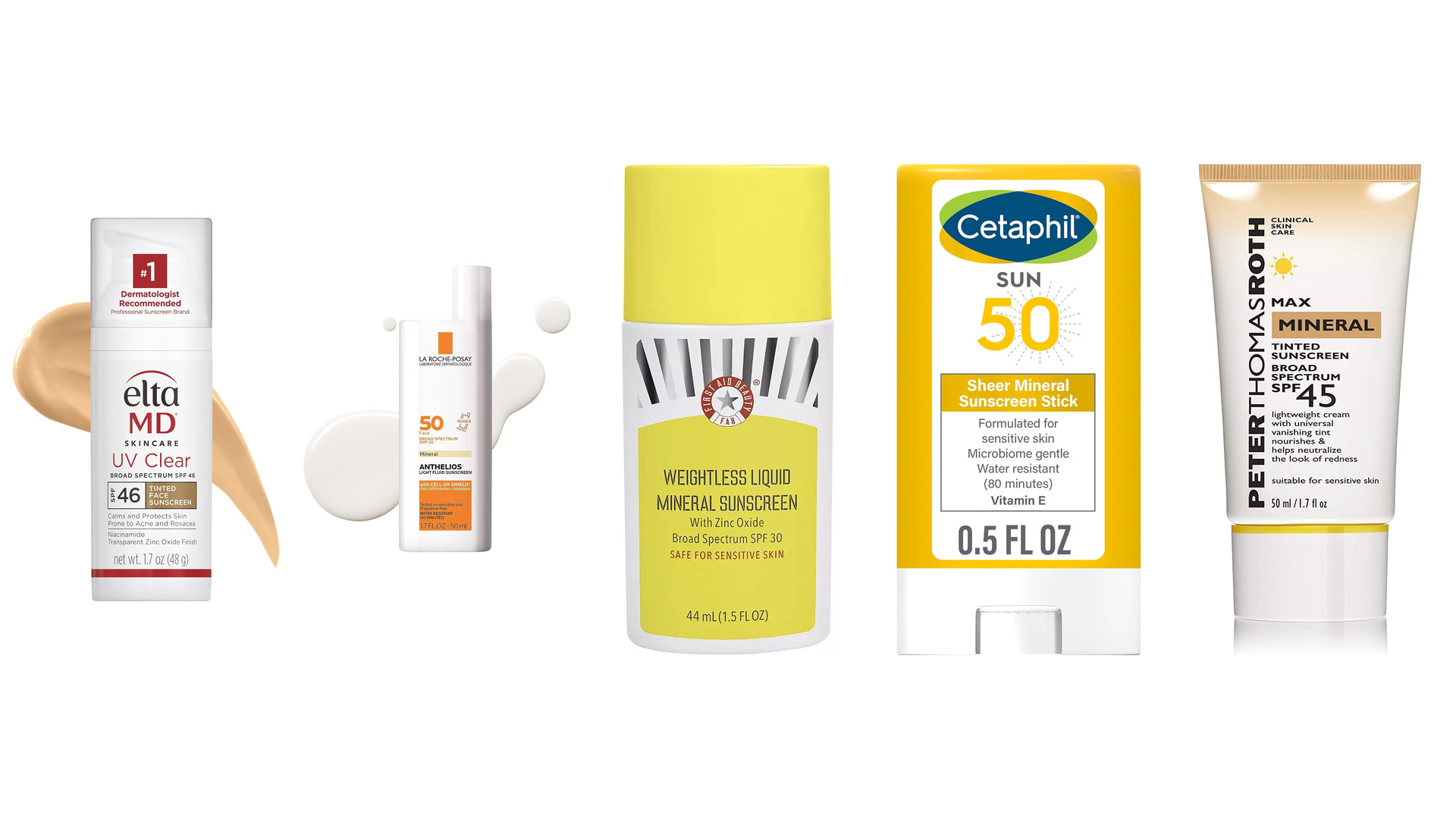
The single most useful thing on this page, and what makes everything else worth using. Broad spectrum, SPF 30 or higher, mineral and tinted: the iron oxides that give it color are what block visible light, and visible light drives melasma just as ultraviolet light does. A clear sunscreen does almost nothing to that part. A prescription cream worn without this loses ground every summer.
Calms overactive pigment cells without bleaching the normal skin around them, which is why it can be used for months at a time instead of in short courses. That makes it one of the better options for holding a result after a course of hydroquinone. The over-the-counter strength works slowly, and the prescription strength works better.
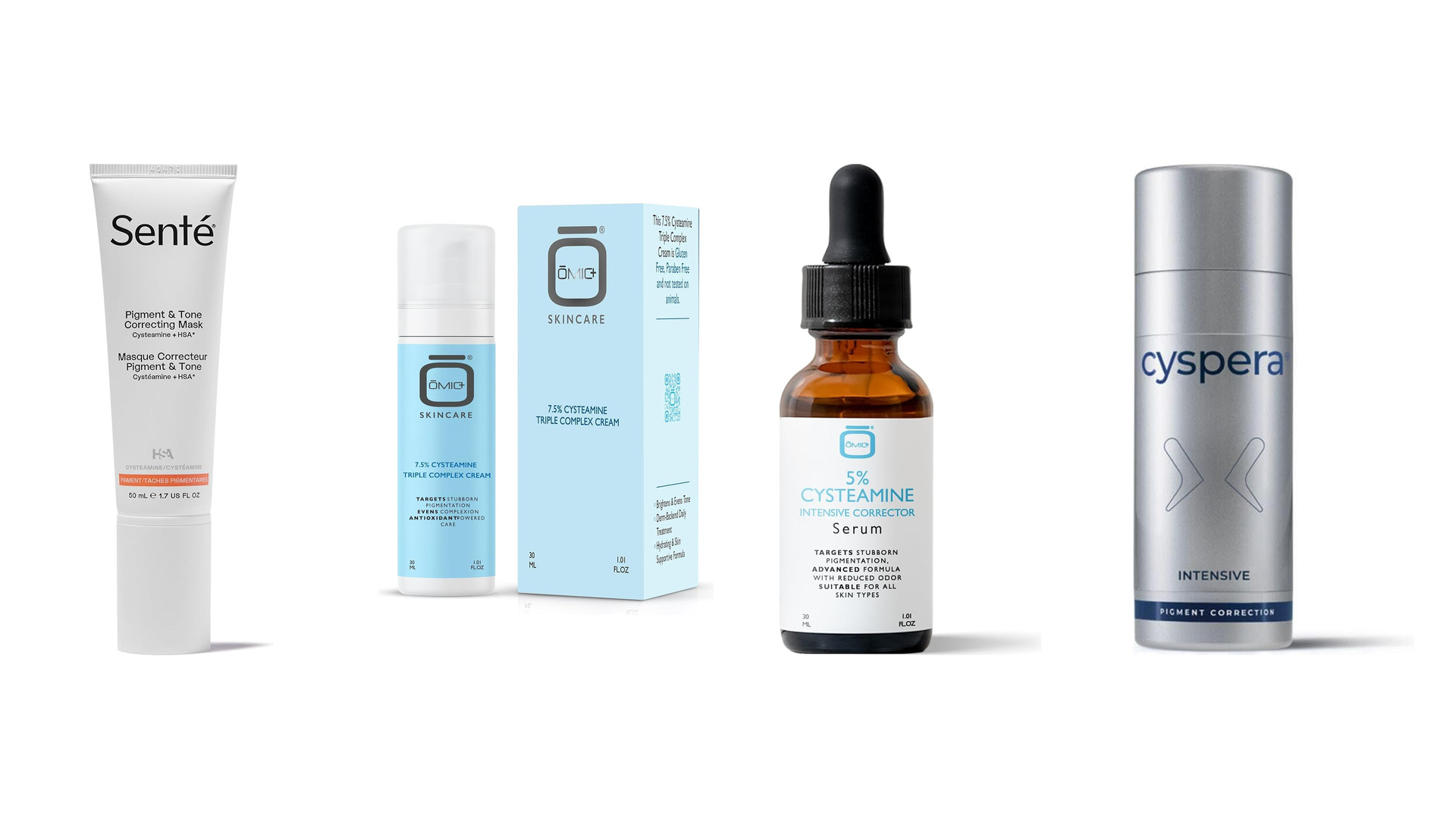
Put on dry skin, left for about 15 minutes and then washed off rather than left on overnight. It is the over-the-counter option with the most real trial evidence in melasma, and it suits people who want to avoid hydroquinone or need something for the gaps between courses. The smell is the usual reason people give up on it.
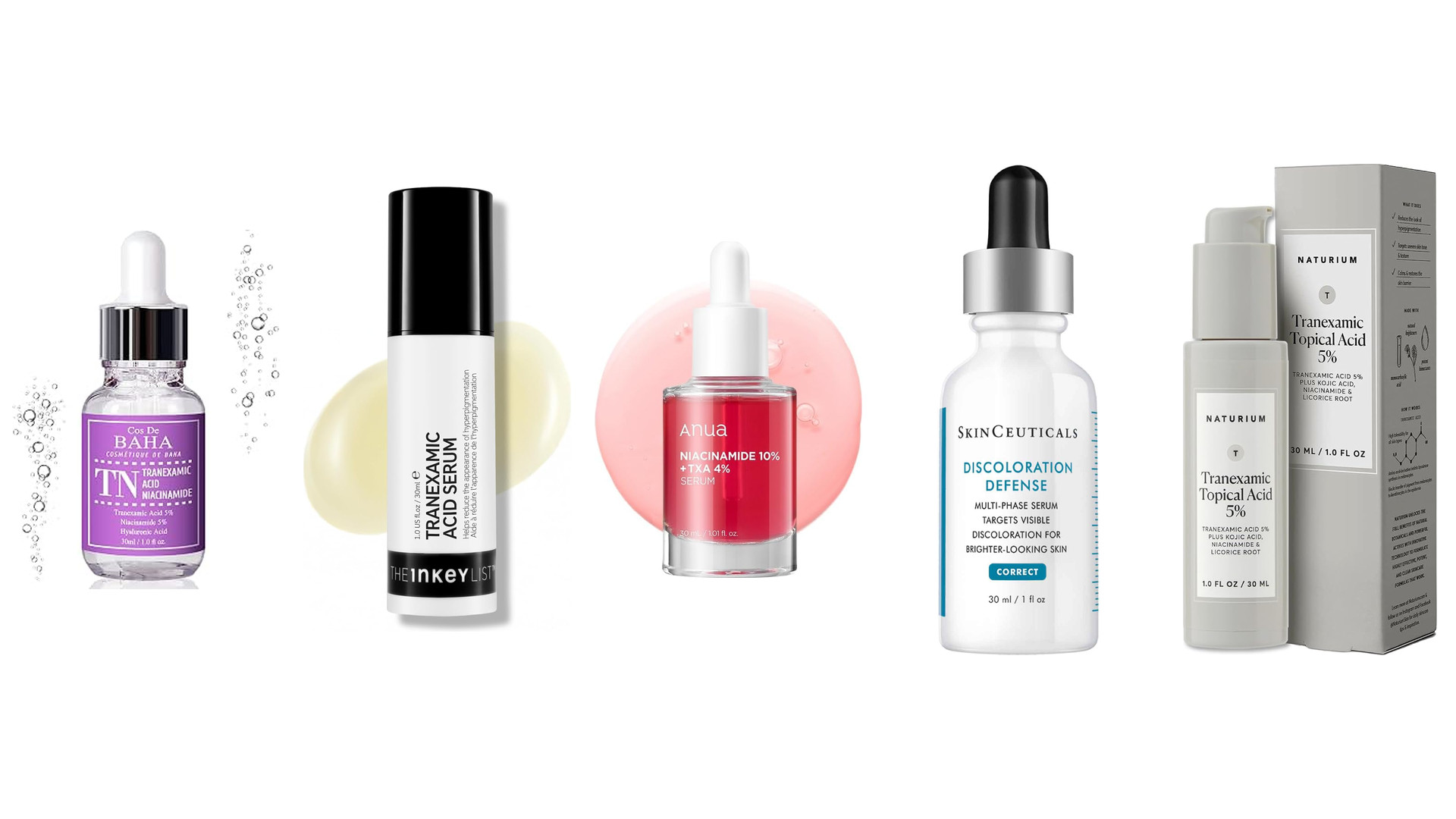
Works on a different part of melasma from the pigment-blocking creams. It quietens the signals coming from blood vessels and the skin underneath, which is the fourth step and the reason patches keep returning. That makes it a useful addition for stubborn melasma rather than a first treatment on its own. Twice a day, judged at three months.
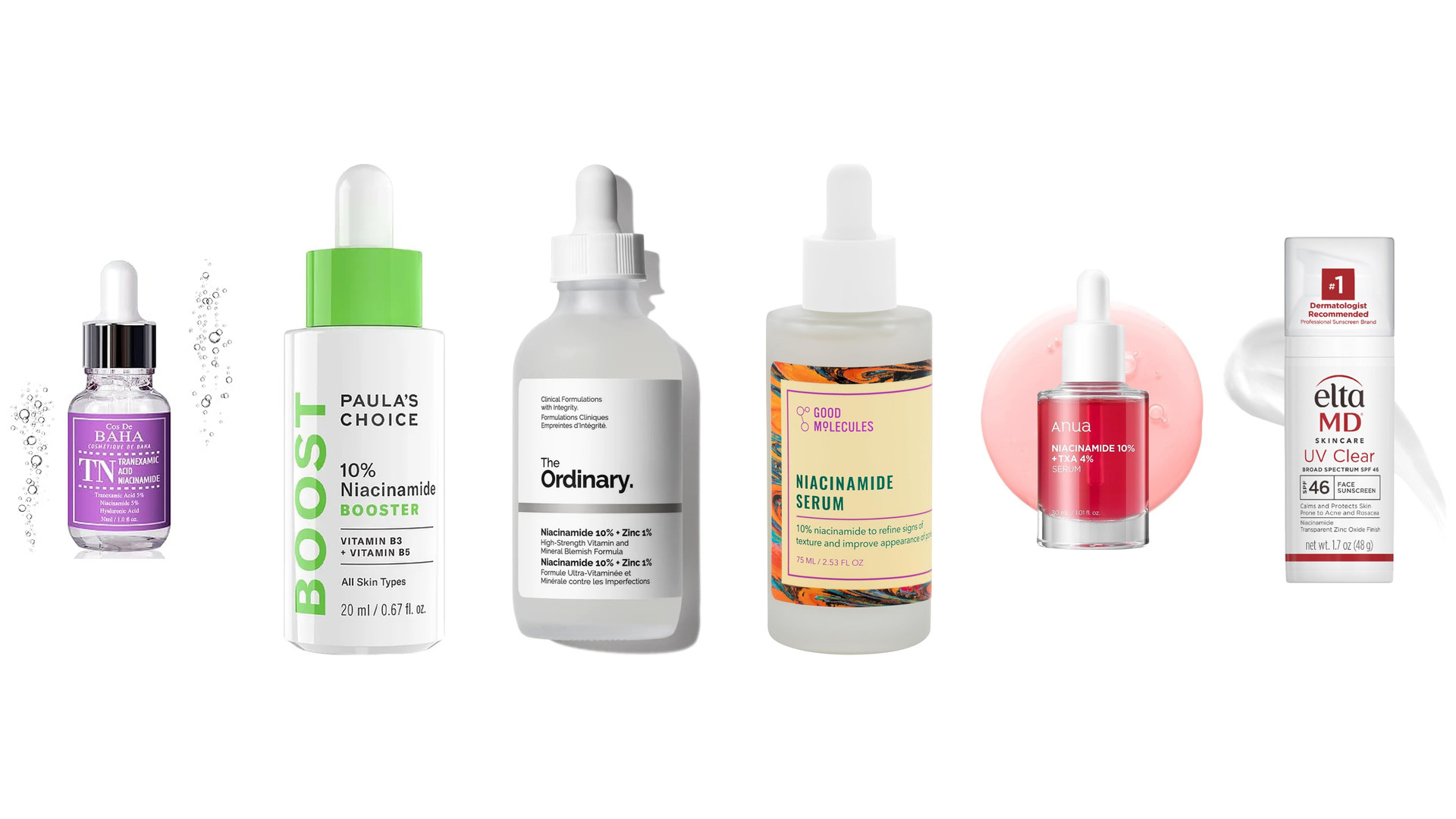
Slows the handover of pigment from pigment cells to the skin cells around them. Modest on its own and not something that will clear a patch, but it is well tolerated and it does not sting, which counts for a lot in a condition where irritation makes things worse. It sits comfortably alongside the stronger treatments.
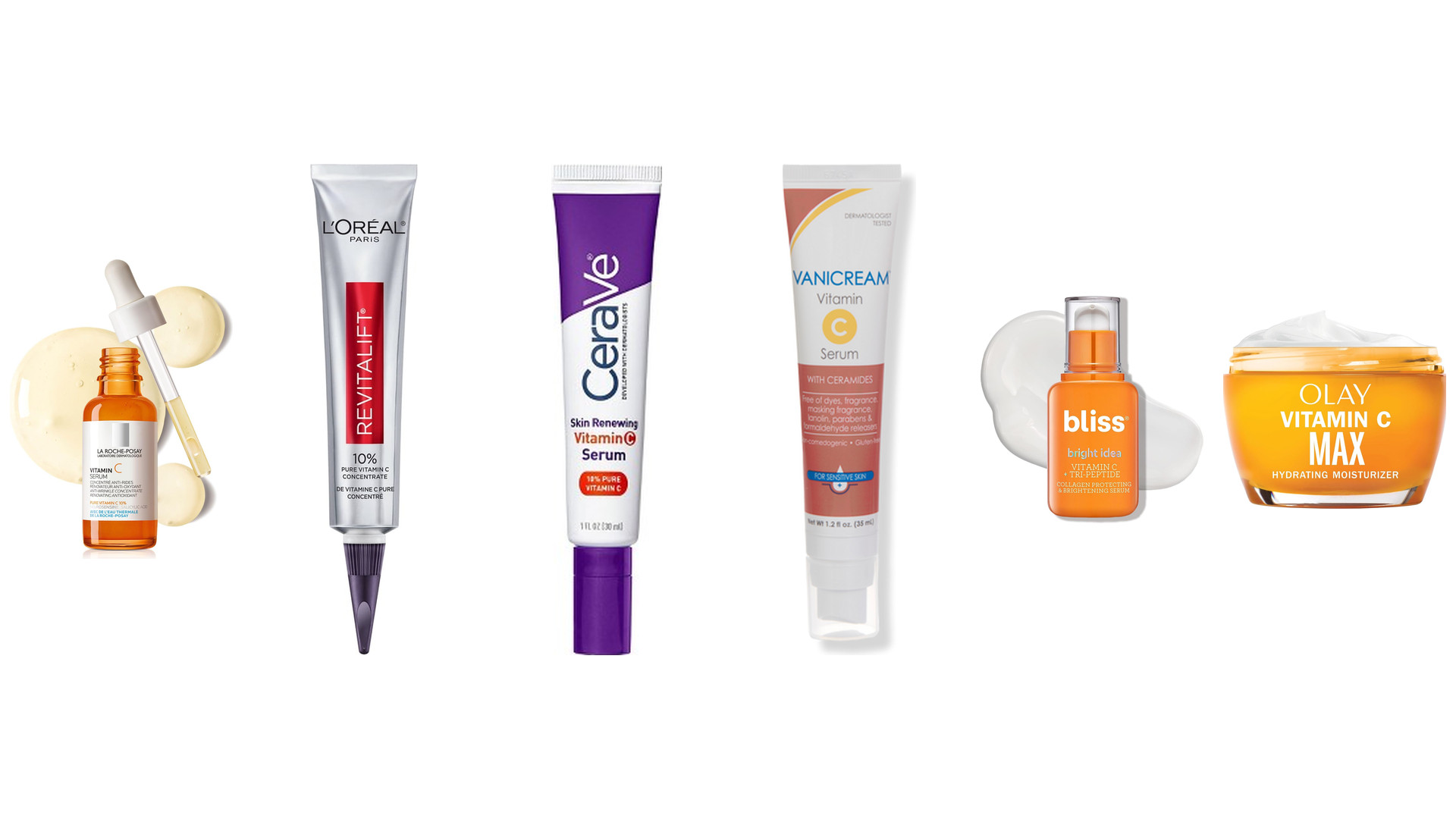
Lightens surface pigment a little and helps sunscreen do its job during the day. It is a reasonable thing to try in the three months before asking for a prescription, and a reasonable thing to keep for maintenance afterwards. On its own it rarely shifts an established patch, and it does not replace sun protection.
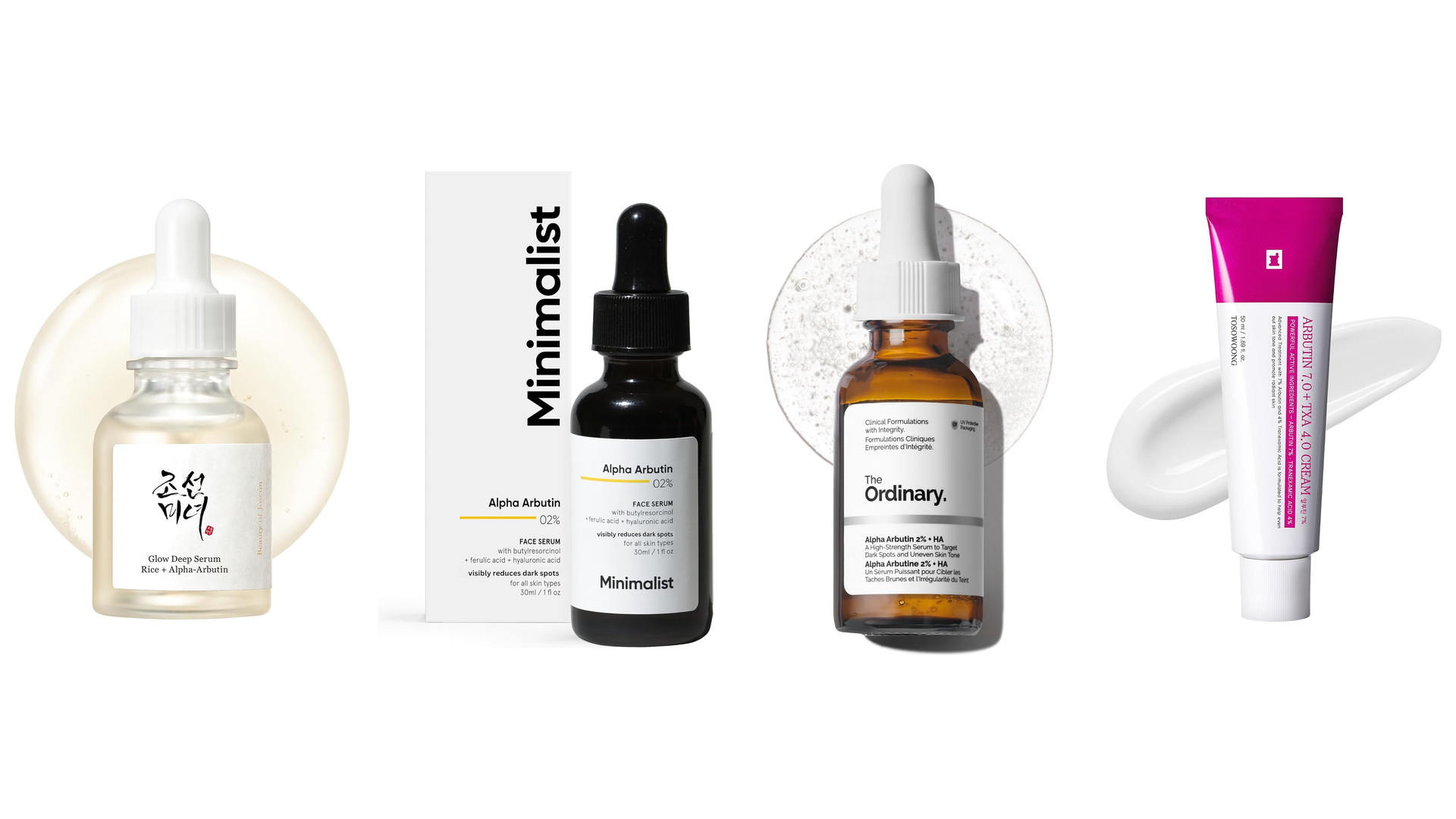
A gentler relative of hydroquinone that releases a small amount of it slowly in the skin. It suits people who want a lightening step running between supervised courses of the prescription version. The effect is milder and slower, and the studies behind it in melasma are small.
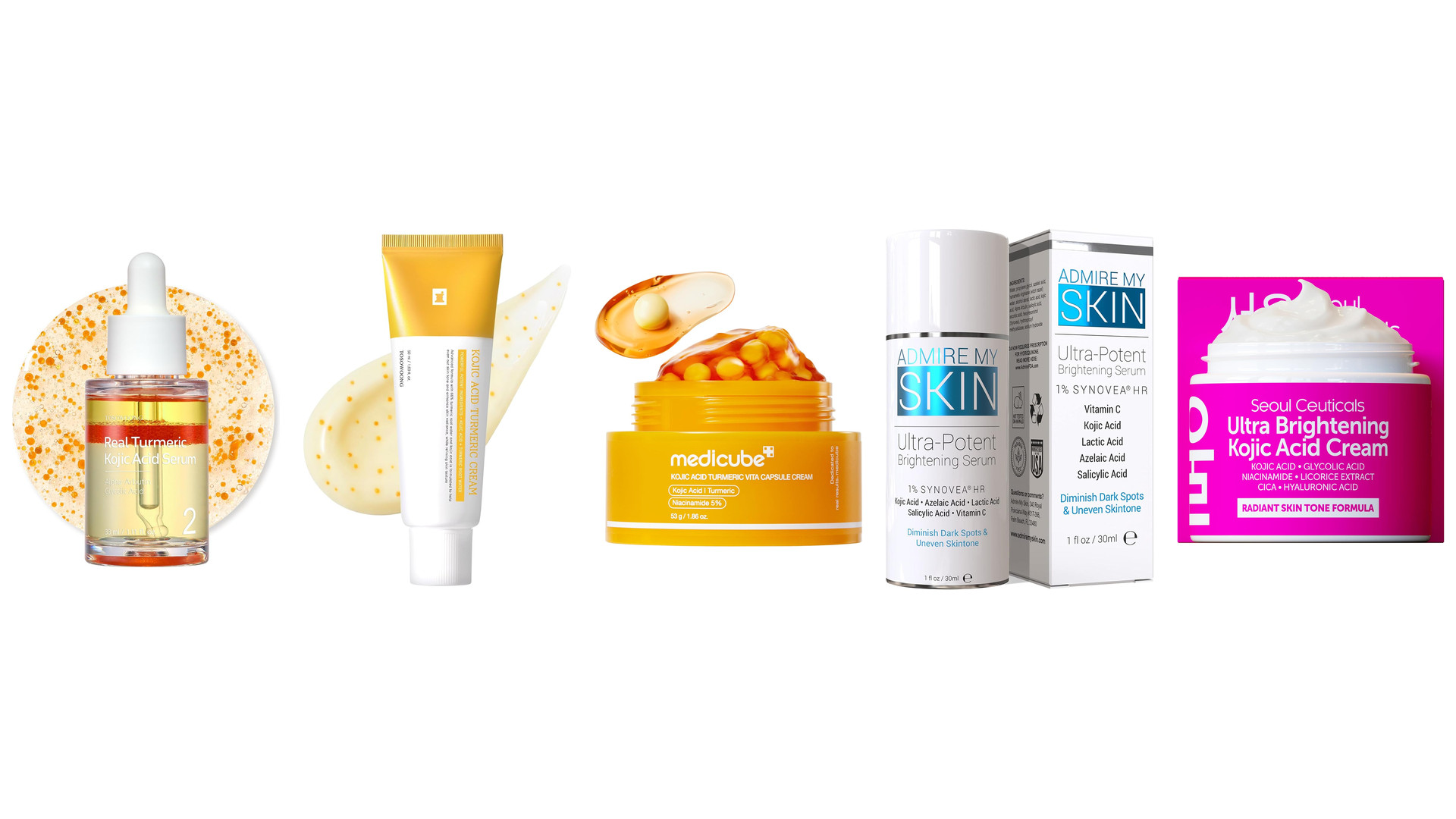
Blocks the same pigment-making enzyme hydroquinone does, more weakly. It is nearly always sold combined with other lightening ingredients, and the studies showing it work are studies of those combinations rather than of kojic acid alone. It stings some people, and stinging on a melasma patch tends to darken it.
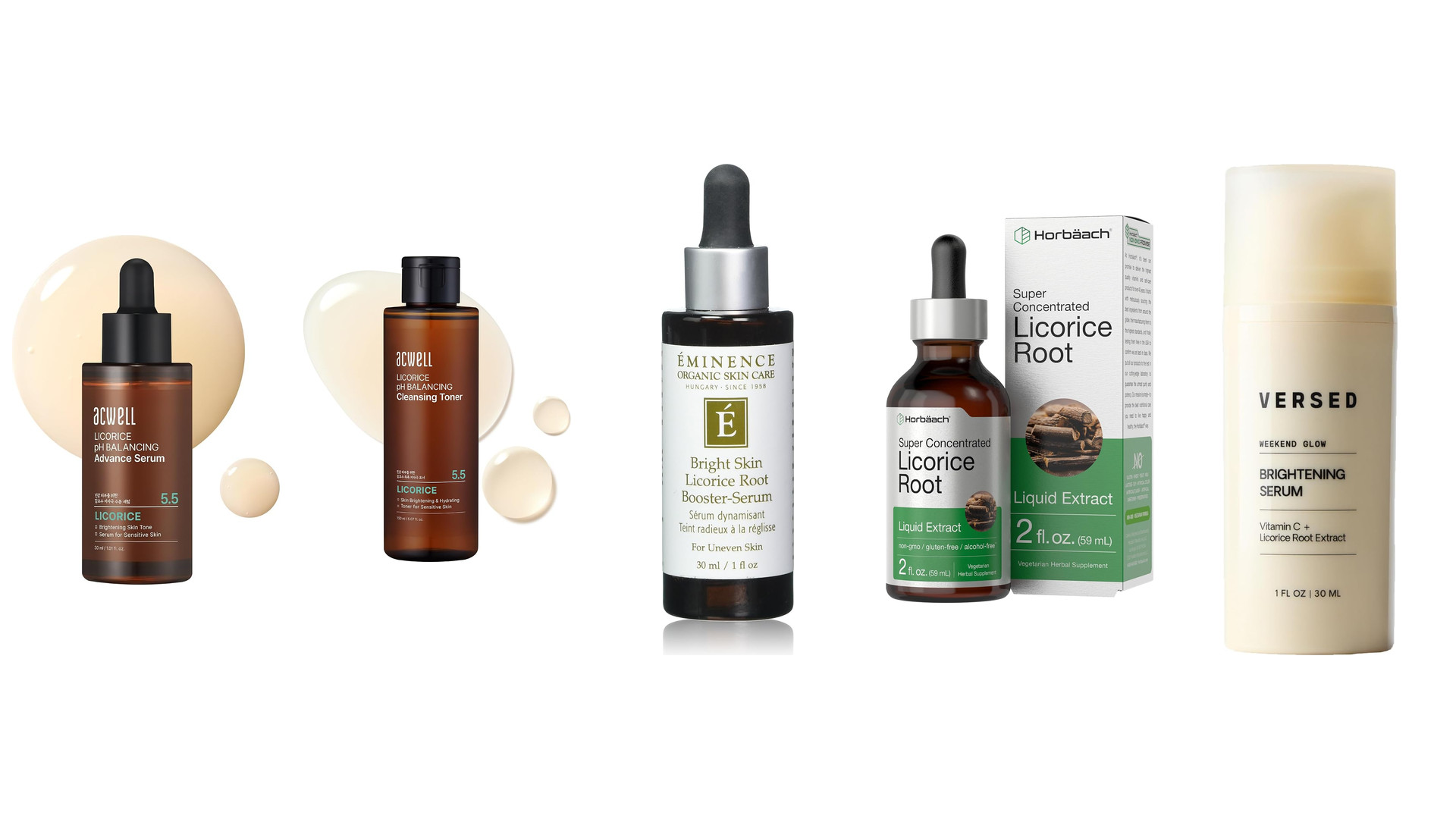
A common ingredient in brightening products, resting mainly on laboratory work rather than trials in people with melasma. It is gentle and unlikely to cause trouble, and it is also unlikely to be the thing that clears a patch. If a routine only has room for one active, this is not the one to pick.

Light peels, spaced out, speed up the clearing of surface pigment when they are added to creams and sun protection. They are an addition and never a replacement. Depth is the whole issue: a peel strong enough to leave the skin red and peeling can inflame it and leave the patch darker than it started, which is one of the commonest ways melasma gets worse.
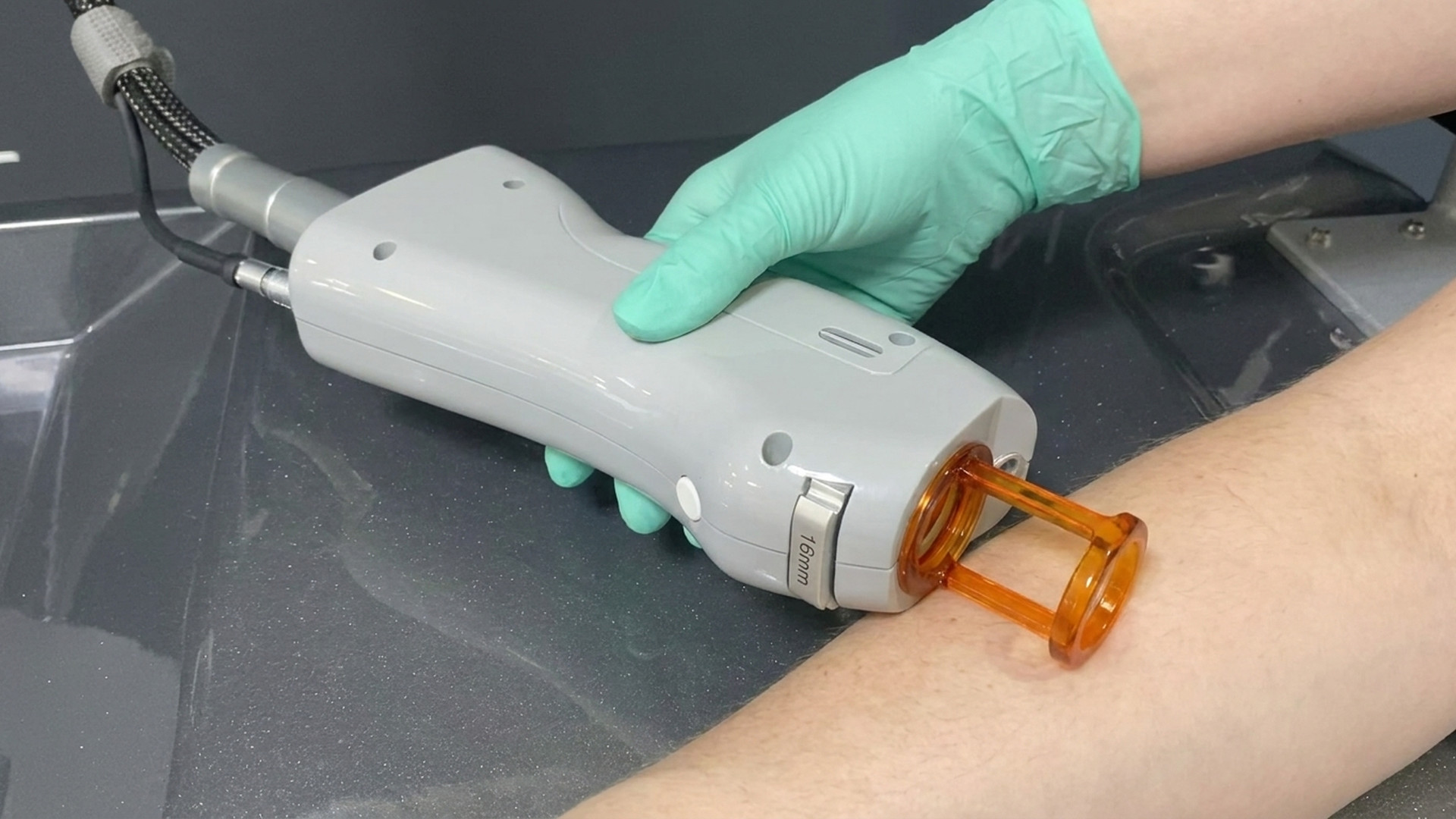
Used at low energy over several sessions to break up pigment that creams reach poorly. It can lighten stubborn patches, and the improvement often fades over the following months if creams and daily sun protection are not carrying on behind it. Pushed too hard it causes patchy loss of color or rebound darkening, so settings stay low and a test patch first is sensible.

A newer laser that delivers very short pulses at low energy, aimed at the deeper pigment creams struggle with. The melasma studies so far are small and cautiously encouraging. Like every device used here it is an addition to creams and sun protection rather than a shortcut past them, and results still fade without them.

Fine needles make temporary channels that help tranexamic acid or other treatments reach deeper, and that combination is where the evidence sits — not needling on its own. It has to be done gently. Aggressive needling inflames the skin, and inflamed skin with active pigment cells makes more pigment, not less.
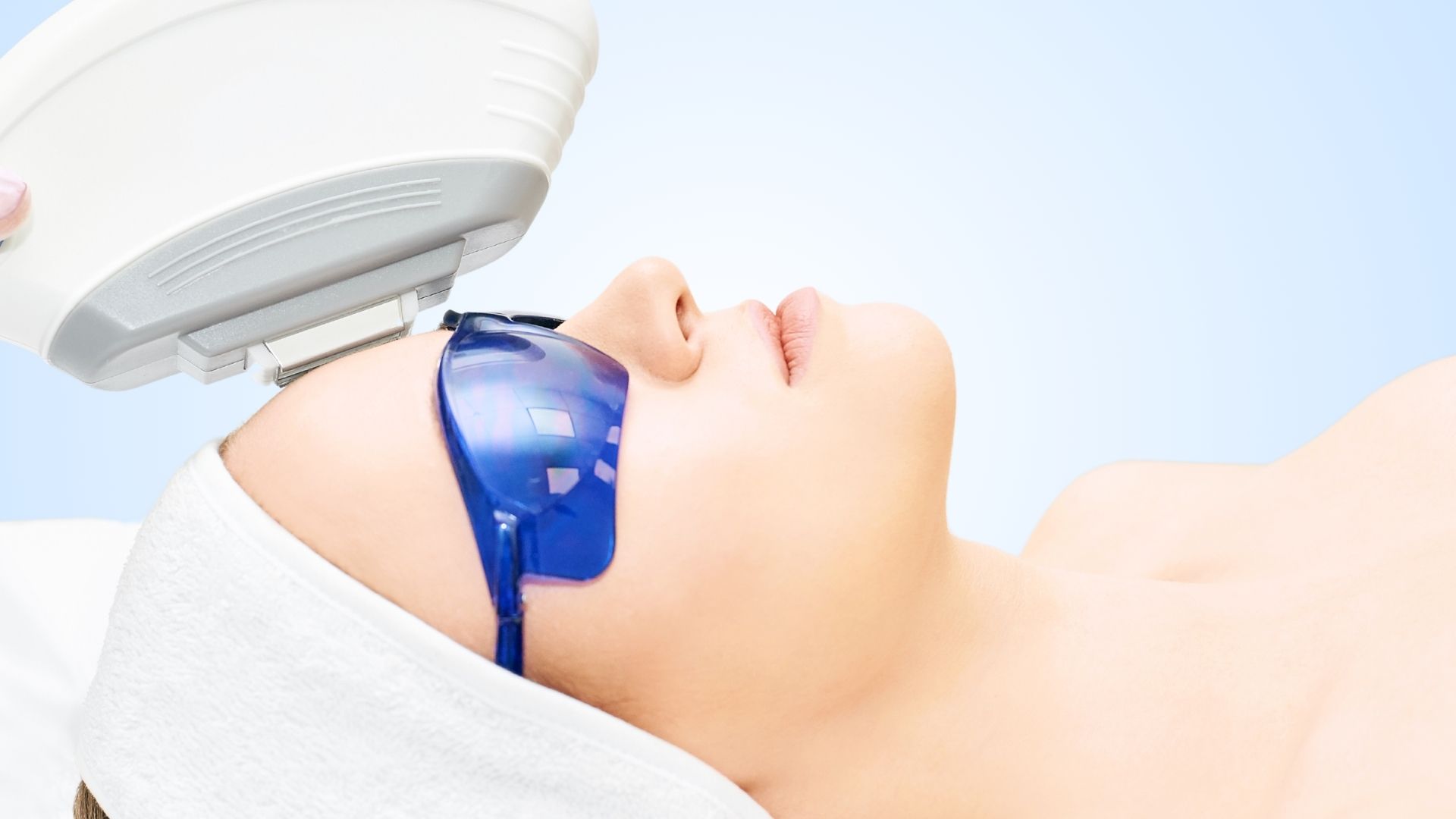
Often offered for facial pigment, and often the wrong choice for melasma. It can lighten patches briefly and then bring them back darker within weeks, because the heat it delivers is itself a trigger for pigment cells. It works far better on sun spots, which is part of why telling the two apart matters before booking anything.
An ablative resurfacing laser with a real risk of making melasma worse, particularly on medium and deep skin tones. Any benefit tends to be short-lived and the rebound darkening can last a long time. If a clinic is offering aggressive resurfacing as the answer to melasma, that is a reason to get a second opinion.
A low-dose tablet, usually taken for a few months, for melasma that has not answered creams and daily sun protection. It works on the blood vessel and signalling side of the condition rather than by bleaching, and the trials behind it are reasonable. It is not for everyone: a history of blood clots or certain other risks rules it out, so it comes after a proper history. Melasma usually returns once it is stopped, so sun protection carries on.
The combined pill, the patch, the implant and menopausal hormone therapy can all set melasma off or keep it dark. Stopping sometimes helps and sometimes does not, and it can take many months to show. Never stop a prescribed hormone on your own. Ask the prescriber whether a different method makes sense, and weigh that against what the contraception is doing for you.
Hydroquinone, a retinoid and a mild steroid in one cream, used at night on the patches. It is the most effective topical treatment for melasma and the one with the best trial evidence, given as a course of a few months rather than indefinitely. It is also the one that most needs a doctor watching it, because the steroid thins skin with long use and the hydroquinone is meant to be stopped and restarted.
The most established single prescription cream for melasma, applied thinly at night to the patches only. It is used in courses of about three to four months with breaks in between, not continuously for years — unbroken long-term use at high strength is what causes the blue-black discoloration people have heard about. Expect the first month to look like nothing is happening.
Speeds up how quickly pigmented skin cells are shed, and helps the other creams get in, which is why it is more often part of a combination than used alone. Used by itself it works slowly and it can irritate, and irritation darkens melasma, so it is started at a low strength a few nights a week. Ask your doctor about it if you are pregnant or trying to become pregnant.
Steroid creams do fade pigment for a while, which is why they turn up in unregulated lightening products, but they are not a melasma treatment. Used on the face for months they thin the skin, bring up broken vessels and can cause a rash around the mouth, and the pigment comes back when they stop. In melasma a steroid belongs only inside a supervised combination cream.
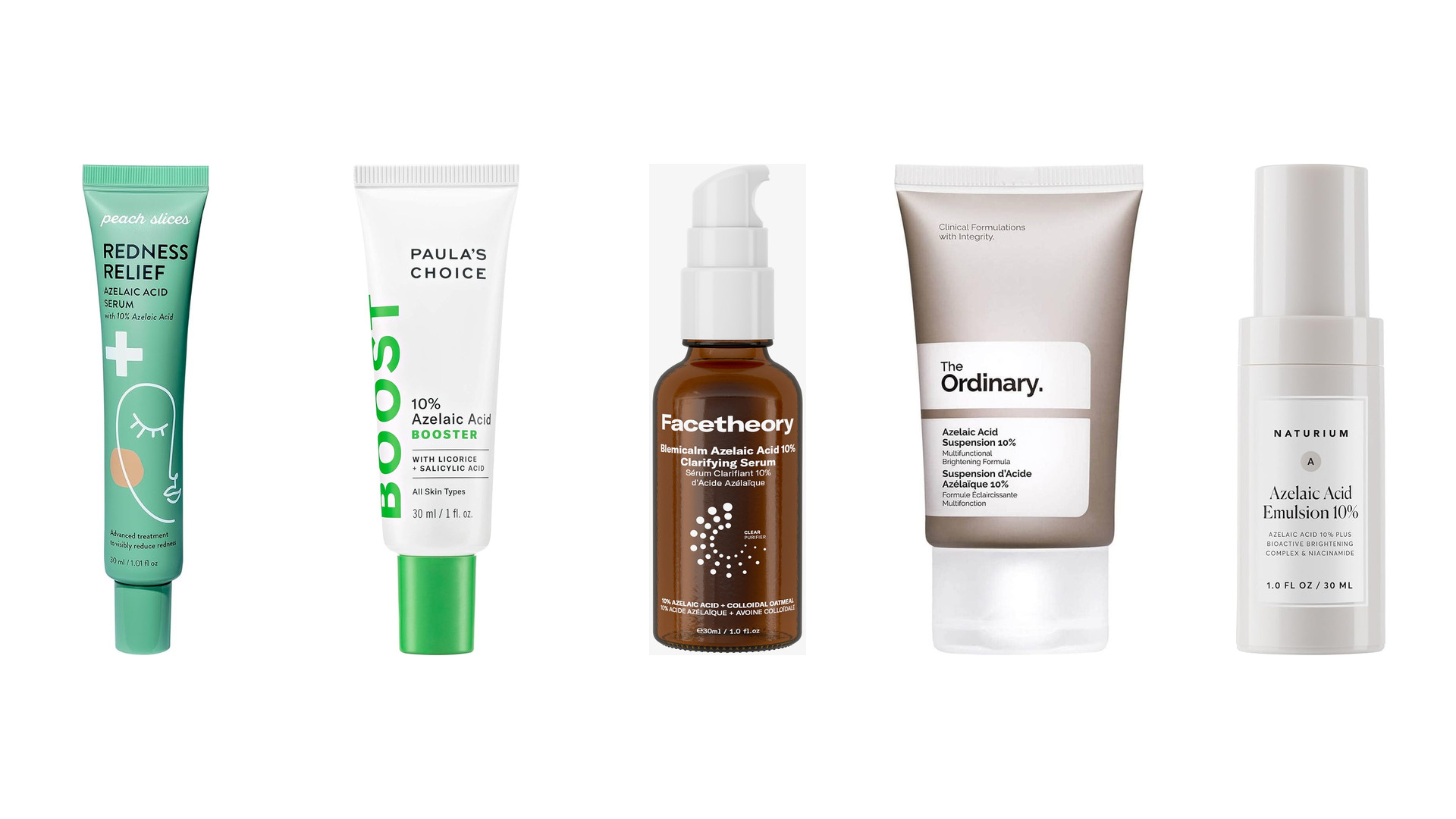
The one over-the-counter active with real evidence behind it in rosacea. At 10 percent it reduces the bumps and some of the redness, and it is better tolerated by reactive skin than acids or retinoids. Start every other night over moisturizer. The 15 percent prescription gel works better if this is not enough.
A mild anti-inflammatory that also helps the barrier hold water, which is the part of rosacea it is most useful for. Some people find it takes the edge off redness and stinging. It will not clear bumps and it does nothing for visible vessels, so treat it as support rather than treatment.
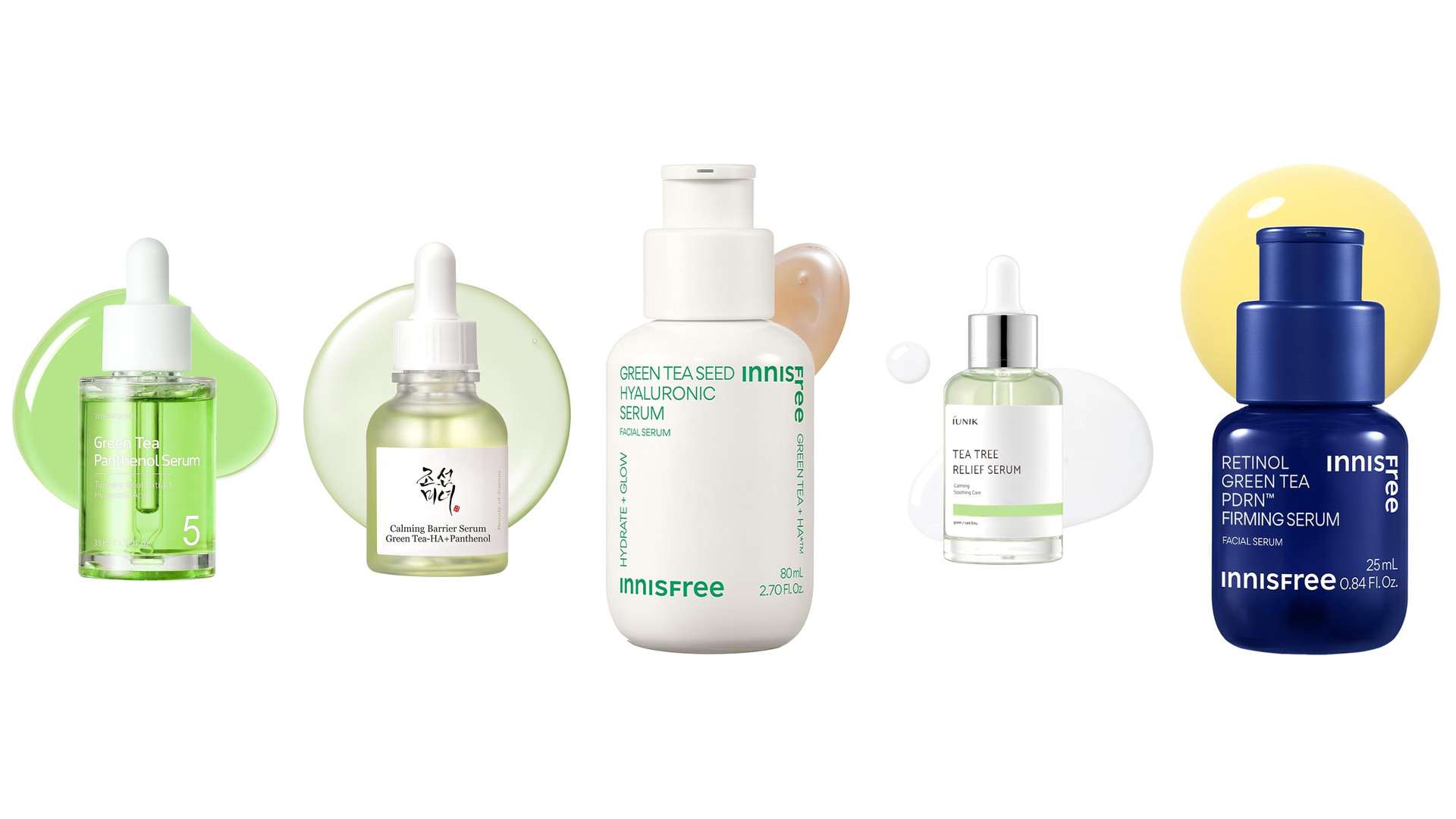
Sold widely for facial redness on the strength of small studies. It is soothing, it is unlikely to irritate, and some people like how their skin feels on it. There is no good evidence it changes flushing, bumps or visible vessels, so do not let it delay a prescription that would.

For ocular rosacea: a warm compress held over closed lids for several minutes, then gentle cleaning along the lash line, done daily. It unblocks the oil glands in the lid margin, which is where the grittiness and the repeated styes come from. It is unglamorous and it has to be kept up, but it is the single most useful thing for the eye side of rosacea.

Included because so many people arrive already doing it. Rosacea skin has a damaged barrier, and scrubbing, brushing or layering acids strips it further, which increases redness and stinging. This is not a treatment that works slowly — it makes rosacea worse. Almost everyone improves when the routine gets gentler instead of stronger.
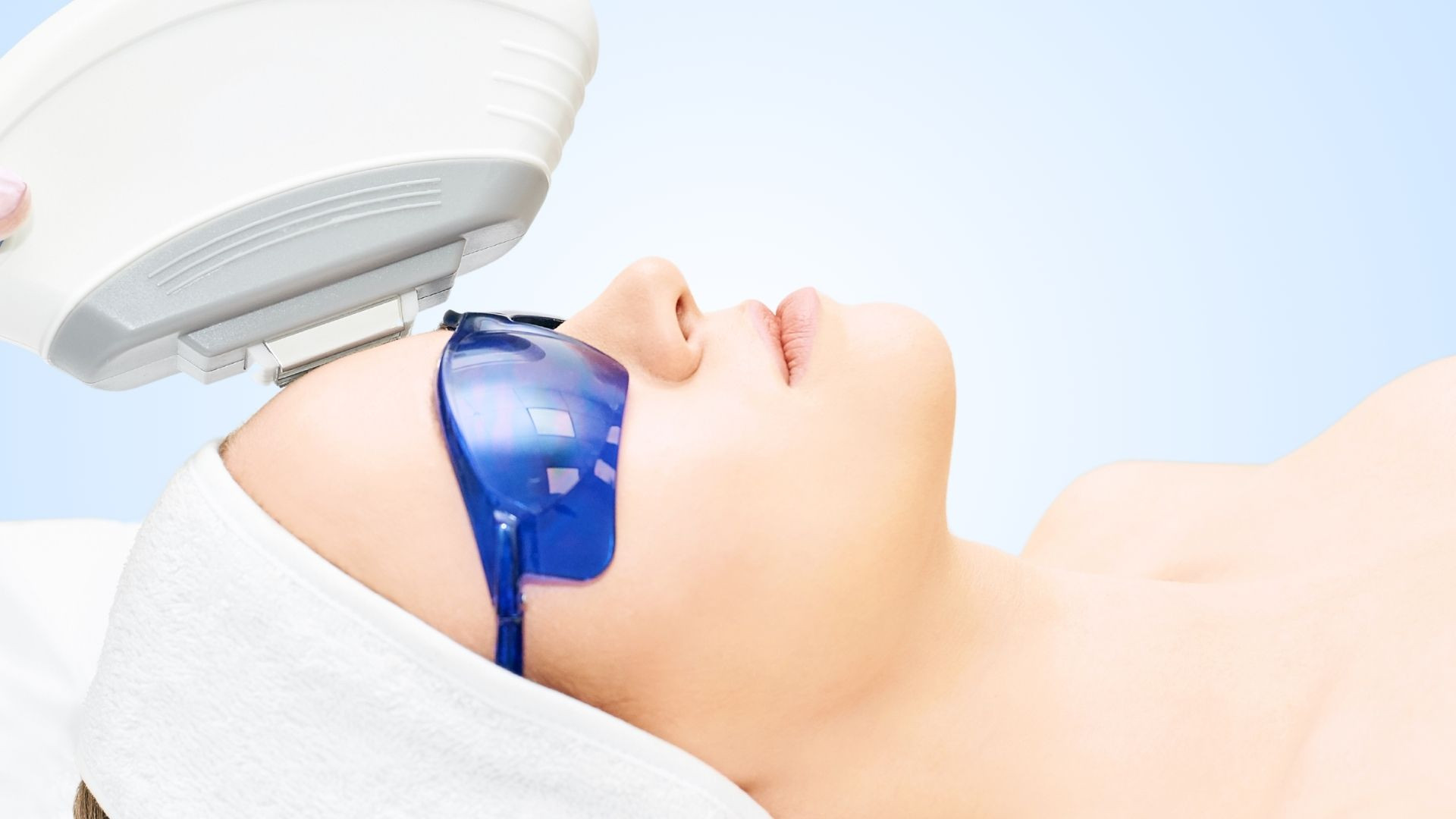
The treatment of choice for visible thread veins and settled background redness — the parts of rosacea that creams and tablets do not touch. It targets the blood in the vessel and closes it. Expect a course of about three sessions rather than one, expect bruising for a few days at stronger settings, and expect occasional top-ups, because rosacea carries on making new vessels.
Light rather than laser, and about as effective as pulsed dye laser for diffuse redness across the cheeks, with less bruising. It is often the better choice when the problem is a general flush rather than a few distinct threads. It needs an experienced practitioner and a test patch on deeper skin tones, because the wrong settings can cause lasting pigment change.
A longer wavelength that reaches deeper, larger vessels — the thicker blue-red threads beside the nose that pulsed dye laser sometimes leaves behind. It is also the device more often chosen for deeper skin tones, because it passes over surface pigment more safely. It is less useful for general background redness.
Used to reshape a nose that has thickened, by removing the excess tissue layer by layer. This is the answer for rhinophyma, since creams and tablets do not reverse it. It is a real procedure with real downtime of a couple of weeks, and results are strongly dependent on who does it.
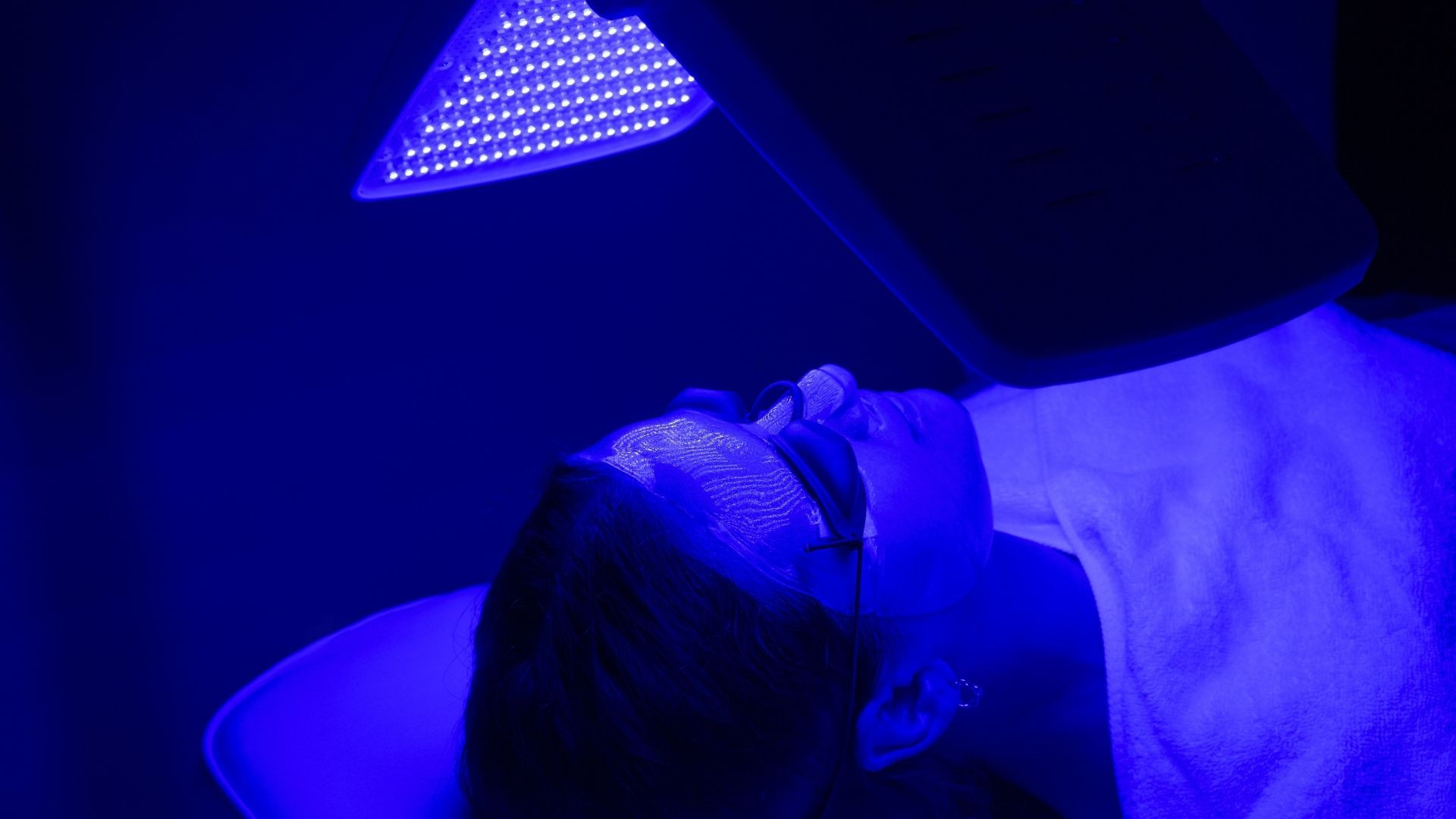
Asked about constantly, usually as a home device. Red and near-infrared light is mildly anti-inflammatory and it is very unlikely to do harm. There is no good evidence it clears rosacea bumps or removes vessels, so it is a pleasant addition rather than a substitute for the treatments that do.
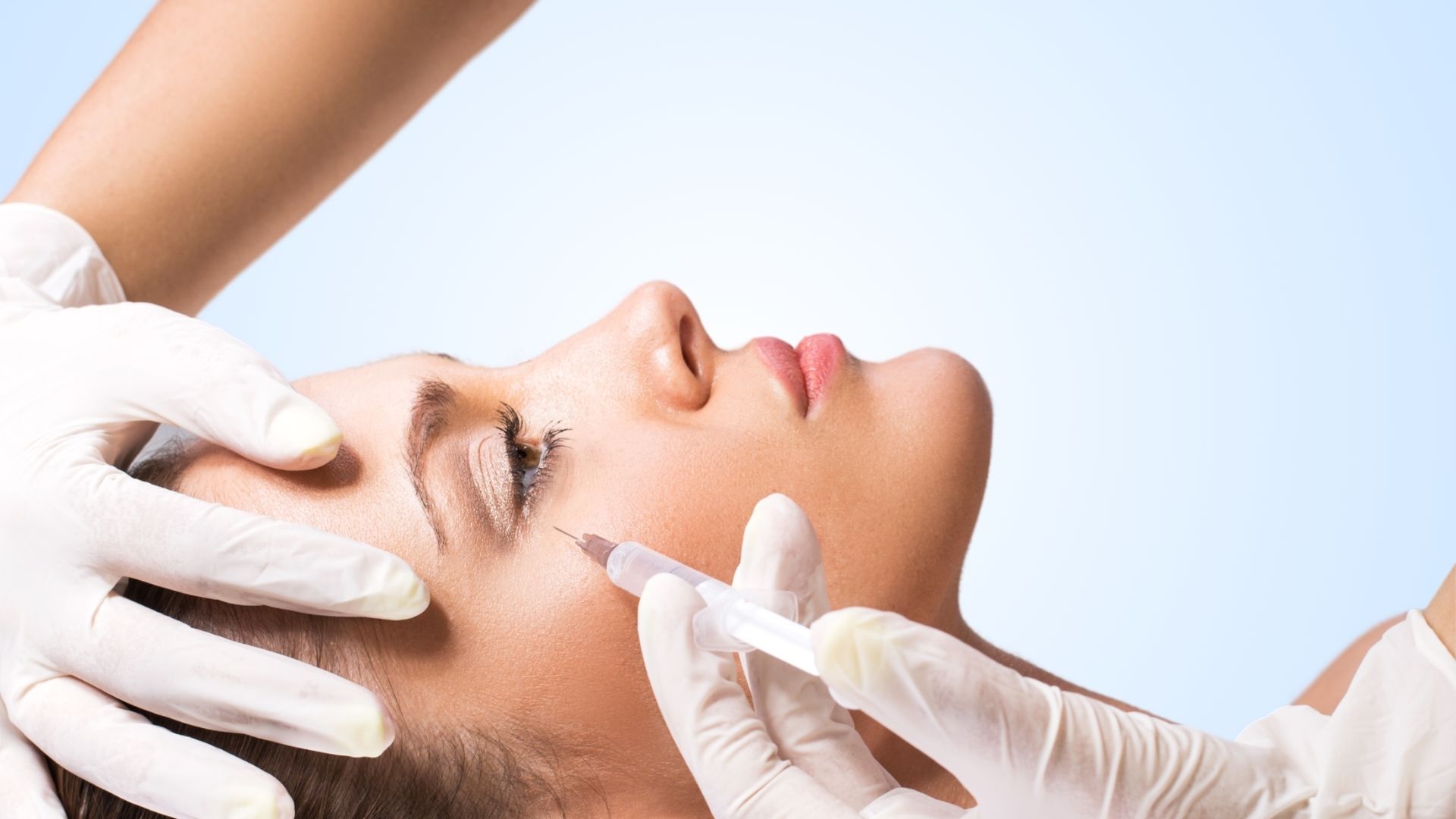
Very small amounts injected into the surface of the skin, not the muscle, to reduce flushing and background redness. Early studies are encouraging and dermatologists do use it for stubborn flushing. It is off-label for rosacea, it is not usually covered, and it wears off in a few months.
A 40 mg dose taken once a day, deliberately too low to act as an antibiotic — it is used purely for its anti-inflammatory effect, which means it does not drive antibiotic resistance. This is the usual next step for moderate to severe bumps when creams alone are not holding them, and it also helps ocular rosacea. It is normally stepped down to a cream once things settle.
An alternative tablet for the bumps when doxycycline does not suit or has not worked. It is used at full antibiotic doses, so it is generally kept for shorter courses. It can cause dizziness, and rarely a blue-gray discoloration of the skin with long use, so it is not the first tablet reached for.
Low-dose isotretinoin under specialist care, for severe bumps that tablets and creams have not controlled, or for early skin thickening. It works well, and it is not a cure — rosacea usually returns after the course. It requires strict pregnancy prevention and monitoring, so it is a considered decision rather than a routine step.
Low doses of propranolol or carvedilol are sometimes tried when flushing is the dominant problem and nothing else has touched it. The evidence is small studies rather than trials, and they lower blood pressure and slow the heart, so they do not suit everyone. Worth asking about only after triggers, laser and light have been addressed.

Often the best single treatment for the bumps and pus-filled spots, because it works on the Demodex mites and on the inflammation at the same time. Once a night, a pea-sized amount for the whole face. It usually beats metronidazole head to head, and it does nothing at all for flushing or visible vessels.

A prescription-strength gel or foam for the bumps, and one of the better options if your skin is too reactive for other creams. It also helps the marks rosacea leaves behind on deeper skin tones. Expect stinging for the first week or two, which usually settles if you apply it over moisturizer.
The longest-established prescription cream for rosacea bumps, used once or twice a day, and generally very well tolerated. It is a reasonable first choice and a common maintenance treatment once things are controlled. Newer options often work a little better, and none of them touch the redness itself.
An antibiotic put on the skin rather than swallowed, for the bumps. It suits people who would rather not take tablets, or who cannot. It is newer and usually more expensive than the older creams, and like them it does nothing for flushing or vessels.
A gel that narrows facial vessels and takes the redness down for several hours at a time. It treats nothing — it borrows time, and everything comes back when it wears off. Some people get rebound redness worse than they started with, so test a small area before you use it on the whole face and before any event that matters.
The same idea as brimonidine, using a different vessel-narrowing drug, applied once each morning. Rebound redness is reported less often with it, which is why some people move across after a poor experience. It still only lasts the day, and it does not stop rosacea progressing.
A steroid cream calms rosacea for a few days, then makes it worse. The redness and bumps come back stronger when you stop, so it is easy to keep reapplying and end up in a cycle. Used for weeks, steroids on the face thin the skin, bring out visible vessels and can cause a rosacea-like rash of their own. If one has been prescribed for your face, ask about coming off it rather than stopping suddenly.
Melasma
Melasma is a pigment problem, so it is brown. Extra pigment sits in the skin. Pressing on it changes nothing, because no blood is involved.
Rosacea
Rosacea is a blood vessel problem, so it is red. Press a finger on rosacea and the skin blanches for a second, then refills as the vessels open again. That one second is the most useful test on this page.

Melasma is the condition where pushing hard backfires most often. A strong peel, a high-energy laser or an irritating cream can inflame the skin and leave it more pigmented than it began, and that extra pigment can take many months to settle. It is the reason melasma is treated gently and slowly, and the reason a test patch is worth doing before any device is used across the whole face.

Melasma does not hurt and is not dangerous, which is exactly why its effect gets underestimated. People describe avoiding photographs, spending time and money on makeup that only half covers it, and feeling worse every summer as it darkens. It is a reasonable thing to ask for treatment for, and saying it out loud in the appointment usually changes what gets offered.
Both are flat brown marks on the face and both show up more on deeper skin tones. The difference is the shape. Marks left by inflammation copy whatever came first, so they sit as separate spots where acne spots were, or in the outline of a rash, and they are rarely symmetric. Melasma is a spreading patch with soft edges that mirrors itself on both sides of the face. Plenty of people have both at the same time, and they are treated differently.
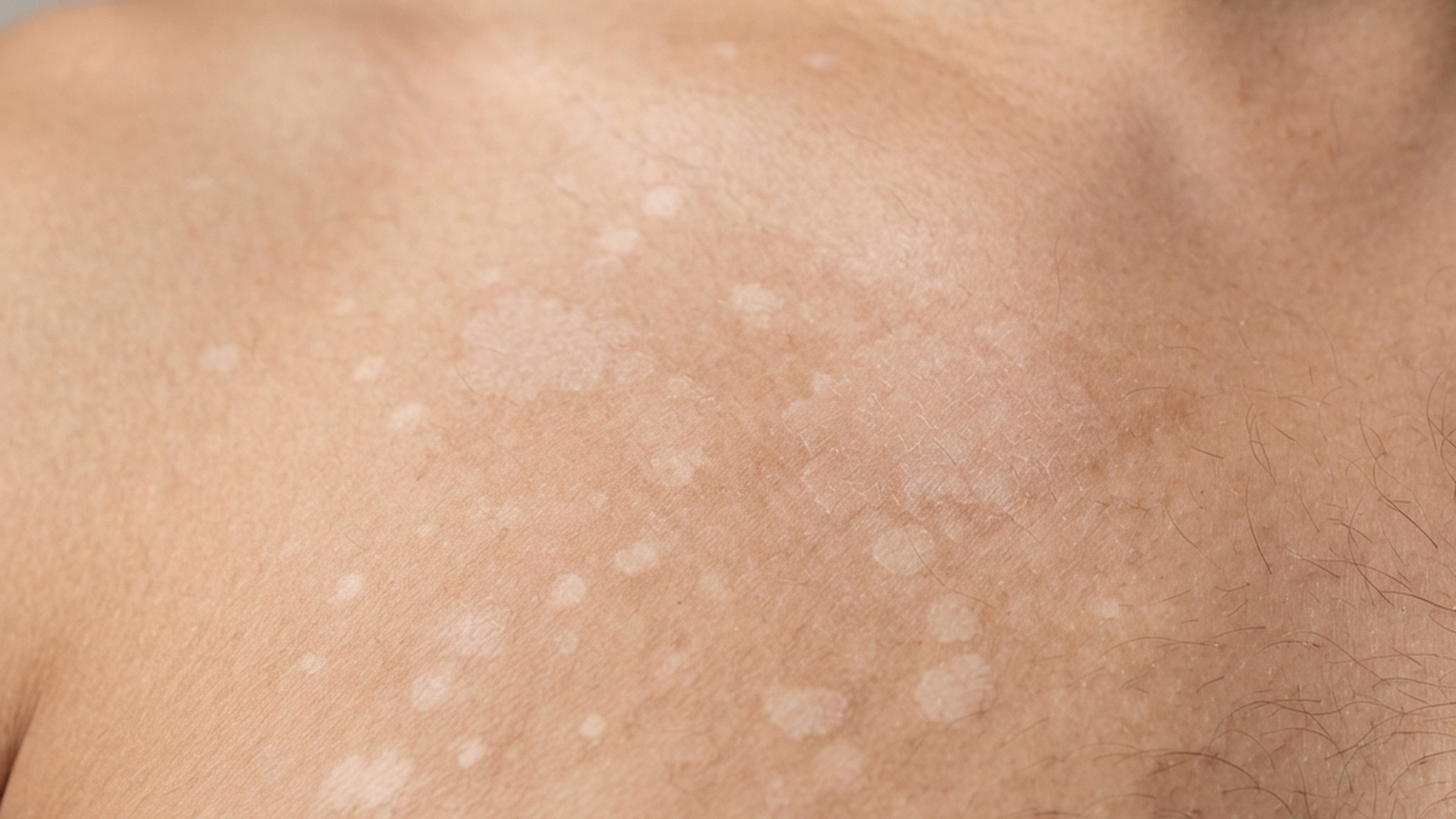
A common yeast overgrowth that leaves flat patches which can be light brown, pink or paler than the skin around them, so it gets read as uneven pigment. It usually sits on the chest, back, shoulders and neck rather than the cheeks, it is not symmetric, and the patches show a fine dusty scale when they are scraped. It clears with an antifungal, which does nothing at all for melasma.
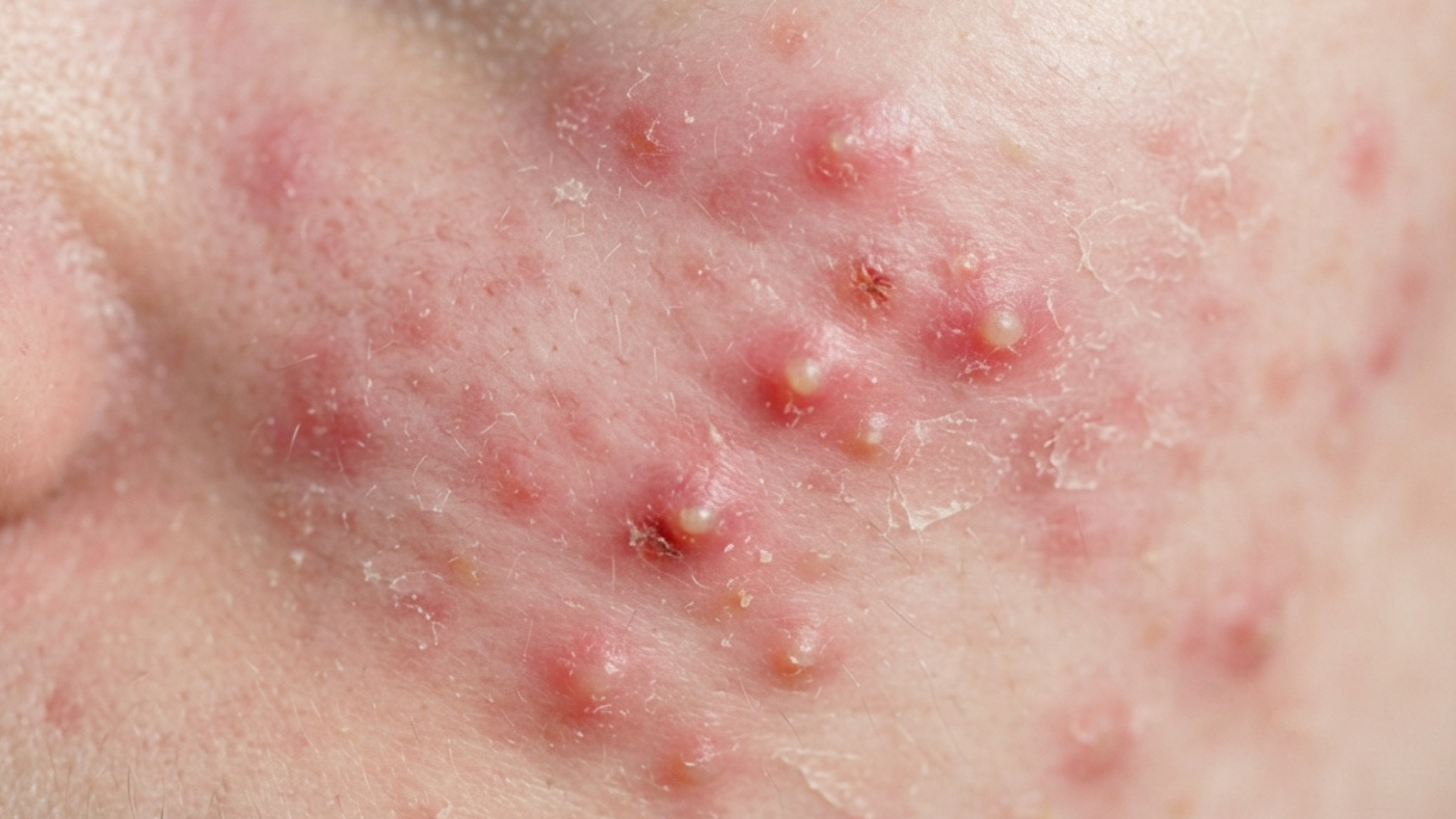
This is the mix-up that costs people the most time. Both produce red bumps and pus-filled spots on the face, and plenty of people arrive certain they have adult acne. The difference that settles it is blackheads and whiteheads: acne has them, rosacea does not. Acne also spreads to the forehead, jawline, back and chest, while rosacea stays on the middle of the face and comes with flushing and stinging.
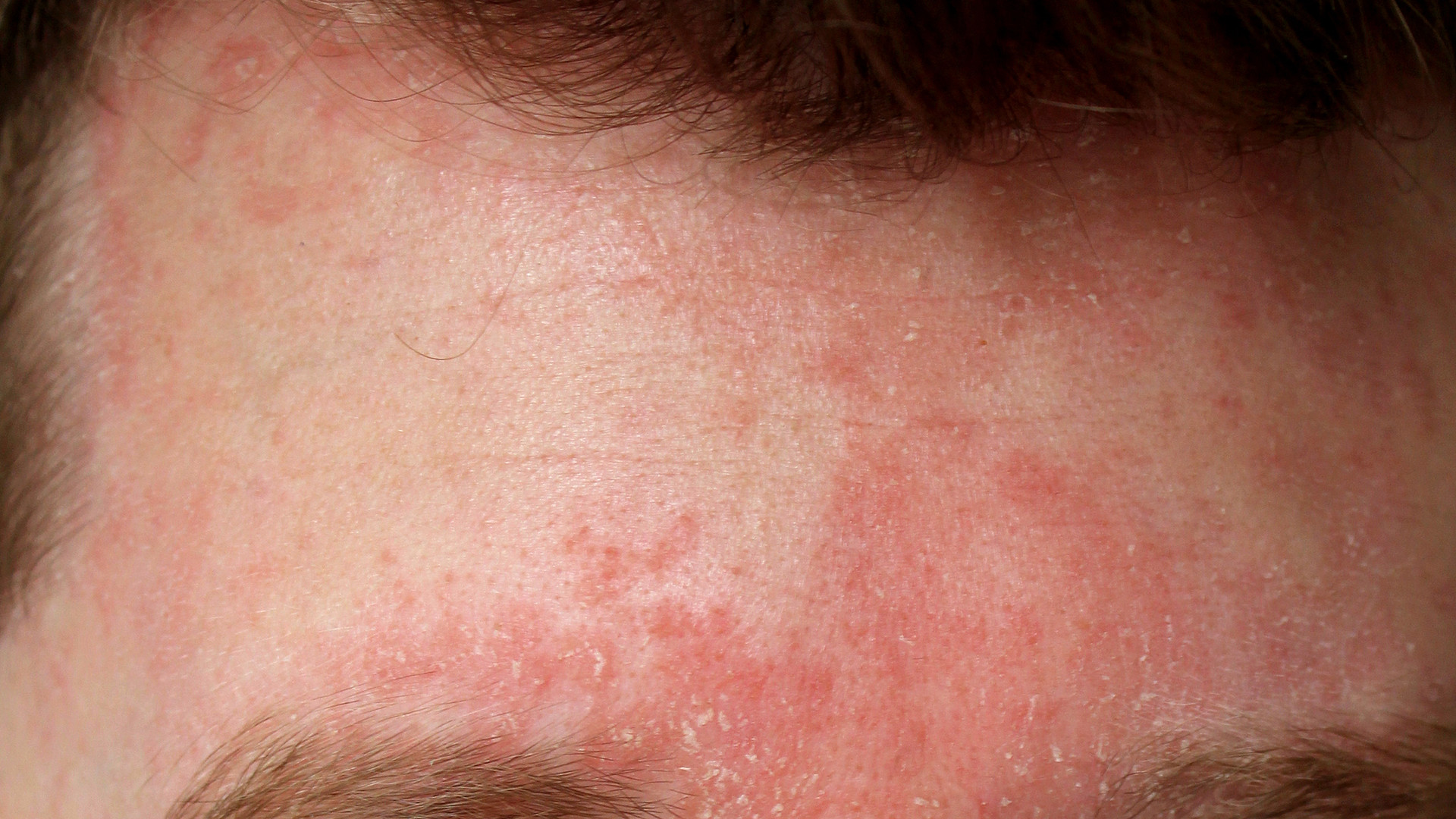
Both make the middle of the face red, and the two often sit on the same face at once. Seborrheic dermatitis adds greasy yellowish scale and sits in the folds beside the nose, in the eyebrows and behind the ears, and it usually itches. Rosacea is smoother, has no scale, comes with flushing and bumps, and stings rather than itches. Treating one and not the other is a common reason a face only half improves.
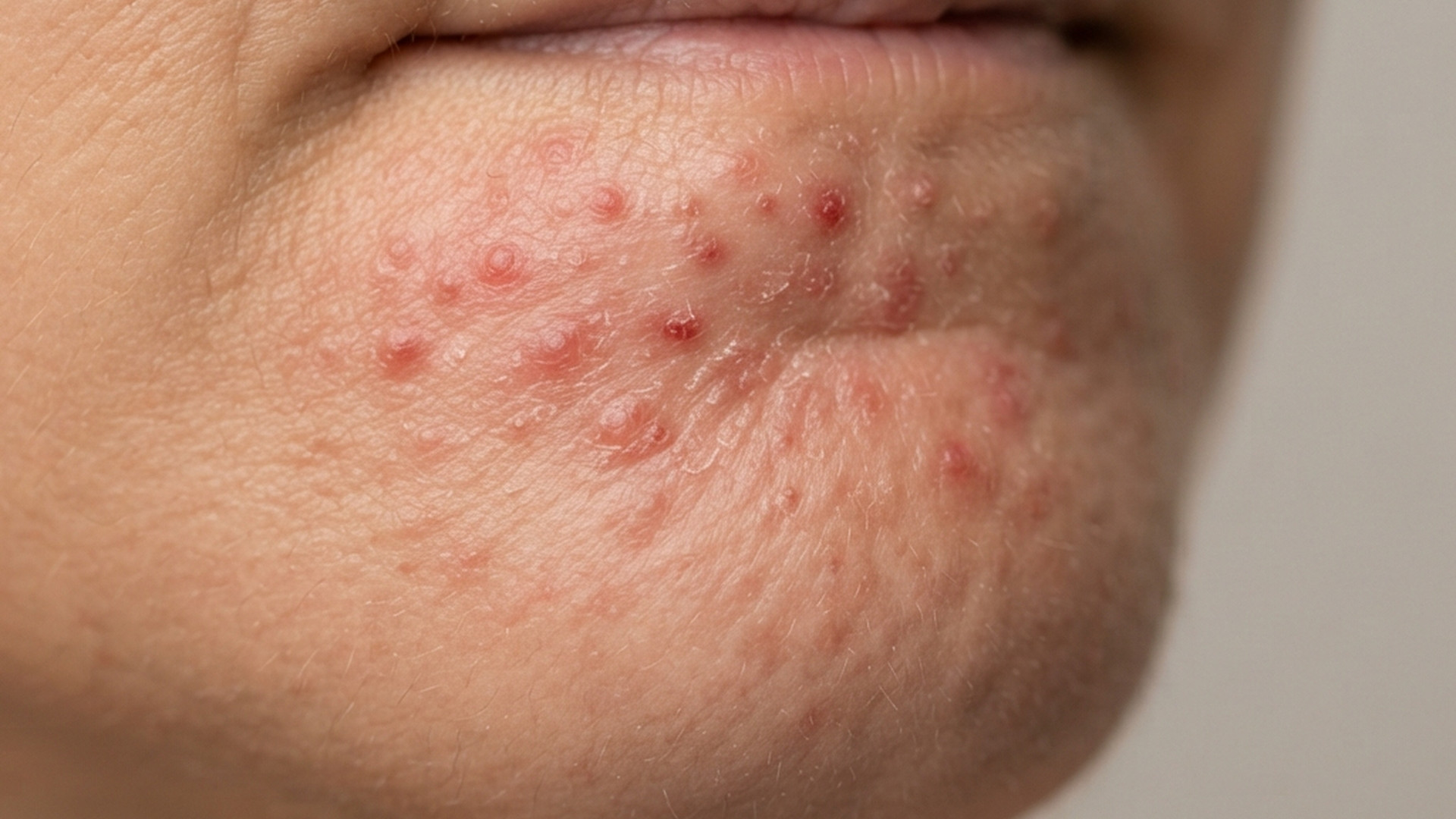
Both give small red bumps on a red background on the lower face, and both get worse with steroid creams. Perioral dermatitis rings the mouth, the nostrils or the eyes, and it characteristically leaves a clear rim of untouched skin right at the lip border. Rosacea covers the cheeks and nose, spares the skin around the mouth, and brings flushing and visible vessels with it.
Common questions