Arbutin
Slows pigment production, gently Arbutin is a hydroquinone molecule with a sugar attached. Skin enzymes cut that bond slowly, so only a little is released at a time.
Arbutin is the gentle, buy-it-yourself pigment blocker. It fades dark spots slowly, it rarely irritates, and there is no reason to stop using it. Hydroquinone is the strongest fader most people will ever be offered, and in the United States it needs a prescription. It works faster and goes further, but it is used in courses with an end date rather than kept in the routine.
| The difference | Arbutin | Hydroquinone |
|---|---|---|
| What it does | Slows pigment production, gently | Switches off pigment production |
| How long until it works | About 8 to 12 weeks | About 4 to 8 weeks |
| Cost | Inexpensive | Varies a lot |
Slows pigment production, gently Arbutin is a hydroquinone molecule with a sugar attached. Skin enzymes cut that bond slowly, so only a little is released at a time.

Side by side
Arbutin
Slows pigment production, gently
Arbutin is a hydroquinone molecule with a sugar attached. Skin enzymes cut that bond slowly, so only a little is released at a time.
Hydroquinone
Switches off pigment production
It blocks tyrosinase, the enzyme pigment cells use to build melanin. Less new pigment goes into the skin, so the patch fades.
Arbutin
A serum, once or twice a day
Smoothed over the whole area rather than dabbed on spots, under moisturizer and sunscreen. It layers with almost anything.
Hydroquinone
A cream at night, for a set period
Applied to the patch, usually at night, as part of a plan your dermatologist starts and stops.
Arbutin
Dark spots losing contrast
Sun spots, melasma patches and marks left by old acne gradually stop standing out from the skin around them.
Hydroquinone
The same, faster and further
On a stubborn patch it does more than anything sold over the counter, which is why it is still the standard.
Arbutin
About 8 to 12 weeks
Hydroquinone
About 4 to 8 weeks
Arbutin
As long as you like
There is no stop date. Many people use arbutin as their everyday ingredient and between hydroquinone courses.
Hydroquinone
Three to six months, then a break
It is prescribed as a course. Your dermatologist stops it, often for a couple of months, before deciding whether to run another.
Arbutin
Mild, and mostly slowness
Occasional stinging or a little redness. The real drawback is that it will not shift a deep, stubborn patch on its own.
Hydroquinone
Irritation, and one rare problem
Stinging and dryness are common early on. Long unsupervised use can cause a blue-grey staining of the skin called exogenous ochronosis, which is harder to treat than the patch you started with.
Strong evidence. Slower and much gentler, usable continuously, and the usual choice during pregnancy. Hydroquinone is more effective on stubborn melasma.
Moderate evidence, including trials run against hydroquinone directly. Can be used for longer stretches and has not been linked to ochronosis, but it smells strongly of sulfur.
Moderate evidence, stronger for the oral form than the cream. Often used to hold melasma between hydroquinone courses. Oral use needs medical supervision because of clotting risk.
Limited evidence. Very well tolerated and easy to add to anything, but far weaker on established patches.
Limited evidence. Gentle and cosmetic, reasonable as maintenance, and nowhere near hydroquinone on active melasma.
Arbutin
Inexpensive
Sold in drugstore and online serums. Price mostly buys the texture of the product and the packaging.
Hydroquinone
Varies a lot
Plain hydroquinone is cheap. Compounded blends and branded combination creams cost considerably more.
Arbutin
Arbutin is already the at-home one
There is no prescription arbutin. It sits on the shelf on purpose, and it is the same idea as hydroquinone turned right down.
Hydroquinone
Real alternatives exist on the shelf
Hydroquinone was pulled from US drugstore shelves. Arbutin, azelaic acid, vitamin C, niacinamide and tranexamic acid are the over-the-counter options, and they do work — more slowly, with less risk. Anything sold openly online as strong hydroquinone is worth being cautious about.
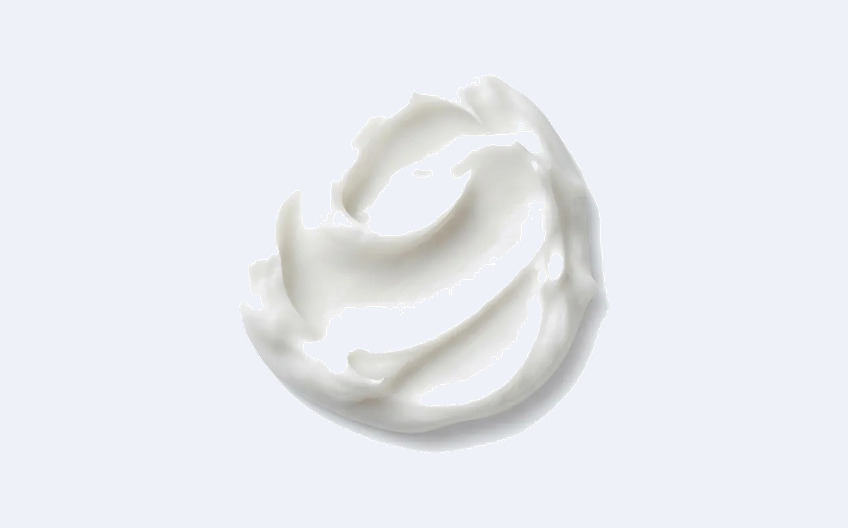
The most common form. Applied to the marks only, not the whole face.
Works faster and cannot be used indefinitely, because of the steroid.

A lighter base for the same drug. Less widely prescribed.
Arbutin
Arbutin has no end point. It is mild enough to sit in a routine the way niacinamide or vitamin C does, and stopping it simply lets pigment drift back over time.
Hydroquinone
Hydroquinone has a job with an end point. Once the patch has faded, keeping it on the skin adds risk without adding benefit. So a course runs a few months and then stops.
Arbutin
Start with arbutin for mild or moderate marks. Post-acne marks, light sun spots and early melasma respond to it, and you can buy it today without an appointment.
Hydroquinone
Ask about hydroquinone for a patch that has not moved. Deep melasma and long-standing pigment are what it is for, and a dermatologist watching the course is part of using it well.
Hydroquinone
Common questions
Not as strong, no. Hydroquinone fades a stubborn patch faster and further. Arbutin is gentler and can be used indefinitely, which suits mild to moderate marks better.
Close to it. Arbutin is a hydroquinone molecule with a sugar attached, and the skin releases it slowly. That slow release is why it irritates less and works more gradually.
They are usually used one after the other rather than at once. A common plan is a hydroquinone course to clear a patch, then arbutin and sunscreen to hold the result.
In the United States it was taken off drugstore shelves, so it is now dispensed under supervision. Products sold openly online as strong hydroquinone are worth treating with caution.
Usually eight to twelve weeks before the change is obvious. Photographing the area on day one in the same light makes it much easier to judge.
They are two forms of the same ingredient. Alpha arbutin is the more stable of the two and is the version used in most serums.