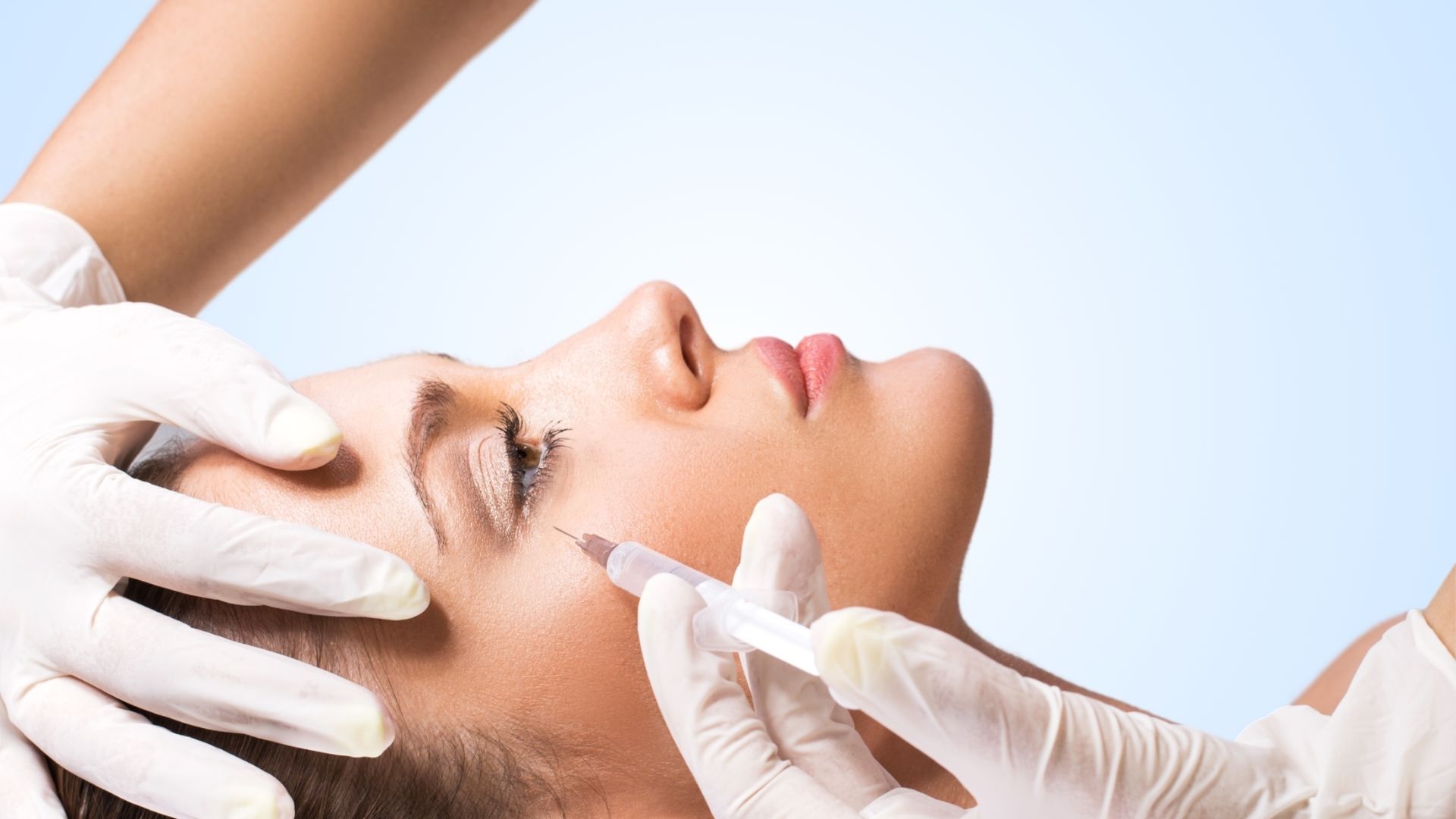
If this is your first time, start with half a syringe. That is the usual advice, and it is a reasonable one — but no trial has ever compared 0.5 ml against 1 ml, so it comes from practice, not from evidence. What has been measured is that 1 ml works: in a study of 36 women, a fixed 1 ml made lips measurably fuller at 4 weeks and at 12 weeks. Starting small buys you a second look in the mirror. It does not buy you a lower risk of the rare complications.
At a glance
The difference
0.5 mL Lip Filler
1 mL Lip Filler
Cost
Less than a full syringe
The unit most clinics quote
A
0.5 mL Lip Filler
Usually part of a 1 ml syringe Lip fillers are normally sold in a 1 ml syringe. The FDA labels do not set a syringe size at all — they simply say the volume is whatever the syringe and carton state. So for most products, 0.5 ml means your injector used part of a 1 ml syringe.
B
1 mL Lip Filler
Side by side
The differences that matter
8 comparison points
01
What you are actually buying
0.5 mL Lip Filler
Usually part of a 1 ml syringe
Lip fillers are normally sold in a 1 ml syringe. The FDA labels do not set a syringe size at all — they simply say the volume is whatever the syringe and carton state. So for most products, 0.5 ml means your injector used part of a 1 ml syringe.
1 mL Lip Filler
The size lip filler is normally sold in
One syringe is the standard unit of sale for the fillers approved for lips. It is the amount a clinic quotes you and the amount a price list counts.
02
What you can expect to see
0.5 mL Lip Filler
Nothing has been measured at this amount
No study has used 0.5 ml as a treatment arm and measured what happened. There is no imaging and no blinded comparison at that amount.
1 mL Lip Filler
More volume and projection at 12 weeks
36 women each had a fixed 1 ml, measured with 3D photography. Lip volume and projection were significantly greater than before treatment at 4 weeks and again at 12 weeks. The peak was at 4 weeks. That study sorted people by which product was used, not by how much.
More photographs
1 mL Lip Filler
03
What it will not do
0.5 mL Lip Filler
Not a lower-risk amount
A small amount is not a safety margin. In a cadaver study, it took an average of 0.085 ml of filler to fill the supratrochlear artery in the forehead, the vessel most often discussed in filler-related vision loss. The range was 0.04 to 0.12 ml — under a tenth of a syringe. The lip has its own arteries and its own risks, but the scale of the point holds. Blockage is about where the needle is, not how much you bought.
1 mL Lip Filler
Not a predictable look
Nothing published links syringe size to how the lips end up looking.
04
How long it lasts
0.5 mL Lip Filler
No figure exists at half a syringe
No study has followed a 0.5 ml lip treatment over time.
1 mL Lip Filler
Months, and it fades on a curve
In the Juvederm Ultra XC lip study, 79% of people were still improved by at least one grade at 3 months, and 56% at 12 months. Restylane Kysse held 60% at week 48. Restylane Silk was at 77% at week 8 and 59% at week 24.
05
The downside
0.5 mL Lip Filler
A leftover part-syringe
If only part of a 1 ml syringe went in, there is a remainder. The labels state that these syringes are for single-patient use. There is no published data on what clinics do with the rest, so it is a fair thing to ask before you book.
1 mL Lip Filler
It all goes in at one visit
Nothing is left over. There is also no second sitting to adjust with unless you buy more.
06
If you change your mind
0.5 mL Lip Filler
Dissolvable
Every filler named here is a hyaluronic acid gel. An enzyme called hyaluronidase breaks that gel down. So the result can be undone.
1 mL Lip Filler
Dissolvable
The same enzyme works the same way, whatever the amount that went in.
07
Cost
0.5 mL Lip Filler
Less than a full syringe
Half a syringe usually costs less on the day. If you come back for the rest, ask first what that second visit will cost.
1 mL Lip Filler
The unit most clinics quote
One syringe is the unit of sale, so it is the figure you are usually given.
08
Who tends to be happy with it
0.5 mL Lip Filler
Best for — Someone who has never had lip filler and wants to see how their own lips take it.
The mindset — A first step, judged at a review visit rather than on the day.
1 mL Lip Filler
Best for — Someone who has had filler before and knows how they settle.
The mindset — One planned treatment, with a touch-up available afterwards.
Common questions
Questions Patients Ask
Is 0.5 ml of lip filler enough?
There is no published answer. No trial has compared half a syringe against a full one for appearance, so "enough" is a judgement your injector makes by looking at your lips, not a figure with evidence behind it. What is measured is that a fixed 1 ml produced a significant increase in lip volume and projection at 4 and 12 weeks in a 36-patient study using 3D photography.
Will 0.5 ml even be noticeable?
Probably, but nobody has measured it. The only quantitative lip volume study used 1 ml in every patient. A half syringe is a smaller amount of the same gel placed in the same tissue, so a smaller change is a reasonable expectation — it is just not a documented one.
Is a half syringe safer than a full one?
Not established. The volume needed to fill the supratrochlear artery from the glabella to its bifurcation averaged 0.085 ml, less than a tenth of a 1 ml syringe, so small volumes are not protective. A 2026 case report describes vascular occlusion after low-volume chin filler. Nothing published links syringe size to complication rate.
Do all lip fillers come in a half syringe?
No. Juvederm Ultra XC and Volbella XC have an FDA-approved 0.55 ml fill, and Restylane and Restylane-L come in 0.5 ml as well as 1 ml. For other products, 0.5 ml means part of a 1 ml syringe was used. There is no published data on what happens to the remainder.
How long does 0.5 ml last compared with 1 ml?
Unknown. Every published duration figure comes from a trial that injected more than 1 ml. Juvederm Ultra XC's lip trial reported 79.1% of treated people meeting a one-grade improvement at month 3 and 56.4% at month 12. Restylane Kysse reported 60% at week 48. Those figures belong to those products at those volumes and do not transfer.
Can I start with 0.5 ml and add more later?
Yes, and the approval trials were built that way — an initial treatment with a touch-up visit afterwards. In the RHA 3 lip trial the mean initial volume was 1.43 ml and the mean touch-up 0.60 ml. There is no evidence that splitting the amount produces a better or worse result than doing it in one go.
If I hate it, can it be removed?
Every product approved for lips in the US is a hyaluronic acid filler, and hyaluronidase breaks hyaluronic acid down. Dissolving filler is an off-label use of hyaluronidase in the US, there is no standardised dose, and repeat dosing is normal. Hyaluronidase does nothing to Radiesse, Sculptra or Bellafill, which are not hyaluronic acid.
Is one syringe of lip filler a lot?
Less than the trials used. The mean volume in the Restylane lip pivotal was 2.9 ml at initial treatment including touch-up, and the approved labeling for Juvederm Ultra XC describes about 2.2 ml as typical for the lips and perioral area. That is not an argument for injecting more — it is an argument that "one syringe" is a unit of sale rather than a clinical dose.
Safety to keep in mind
Syringe size is not set by the FDA labeling. The Juvederm Ultra XC and Restylane Kysse instructions both say the volume in each syringe is whatever the syringe label and carton state. Smaller syringes are a packaging choice, not an approved dose.
One syringe is less than the lip trials used. Restylane Kysse: a median total of 2.5 ml, about 1.7 ml of it in the lips. Juvederm Ultra XC: a median of 2.2 ml, range 0.3 ml to 4.8 ml, with 44% returning for a touch-up. RHA 3: 1.43 ml at the first treatment, plus another 0.60 ml on average for the 58% who had a touch-up.
FDA-approved for the lips in the US: Juvederm Ultra XC and Volbella XC from Allergan; Restylane, Restylane-L, Restylane Silk and Restylane Kysse from Galderma; and RHA 3. The approved labels describe use in adults over the age of 21.
Not approved for the lips: Juvederm Ultra Plus XC, Voluma XC, Vollure XC, Volux XC, Skinvive, Restylane Lyft, Refyne, Defyne, Contour and Eyelight. Using them in the lips is off-label. That is legal and it happens routinely, but it means no lip trial sits behind the choice.
Dissolving filler with hyaluronidase is off-label in the US. The FDA labeling for Hylenex lists three uses, and dissolving filler is not among them.